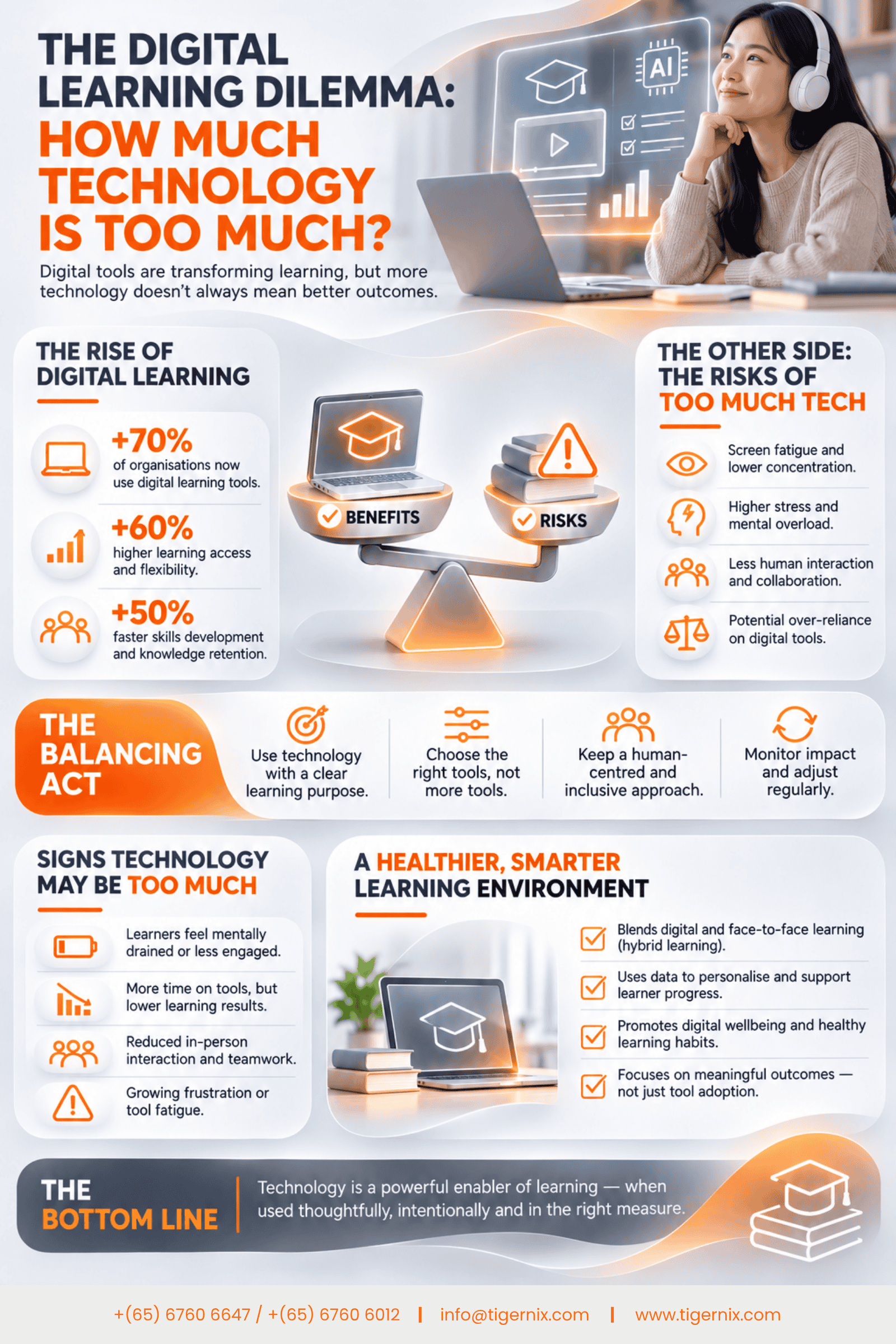

Digital tools have broadly expanded -especially due to AI intervention- access to learning, enabled collaboration and made it super easy to deliver training across disparate institutions and schedules. Yet more technology does not automatically produce better learning. Long periods in front of screens, poorly designed platforms, constant notifications and too many tools can contribute to fatigue, distraction and reduced opportunities for interaction. The challenge is to choose technology that supports learning objectives rather than allowing the tools to become the focus. A balanced approach may combine digital resources with face-to-face discussion, activities, breaks and human guidance. Organisations should consider accessibility, learner wellbeing, privacy, and whether digital tools aim to improve learning outcomes. The right balance will differ depending on learners, subject matter and context, so reviewing feedback and progress is essential. How can educators and organisations make technology work without overwhelming learners? Explore the infographic below for warning signs and practical ways to create a healthier digital learning experience.