

Are you familiar with a small manufacturing company struggling to process orders piling up faster than your staff can handle? Sales data sat in spreadsheets, inventory records were outdated by the hour, and finance teams spent nights correcting manual errors. As the owner, you knew the business was growing, but the growth had become chaotic rather than profitable.
This story is familiar across industries. Businesses often expand faster than their systems can support. That is exactly why companies worldwide are adopting Odoo Open Source ERP as a unified business management solution that transforms disconnected operations into a streamlined digital ecosystem.
This article covers
- What Is Odoo Open Source ERP?
- What Makes Odoo Open Source ERP Different From Traditional ERP Systems
- Core Features That Make Odoo Open Source ERP Powerful
- How Odoo Open Source ERP Supports Long-Term Business Growth
- Industries That Benefit Most From Odoo Open Source ERP
- Common Challenges Businesses Face During Odoo ERP Implementation
- Why Odoo Open Source ERP Is the Future of Scalable Business Management
- FAQs About Odoo Open Source ERP
What is Odoo Open Source ERP?
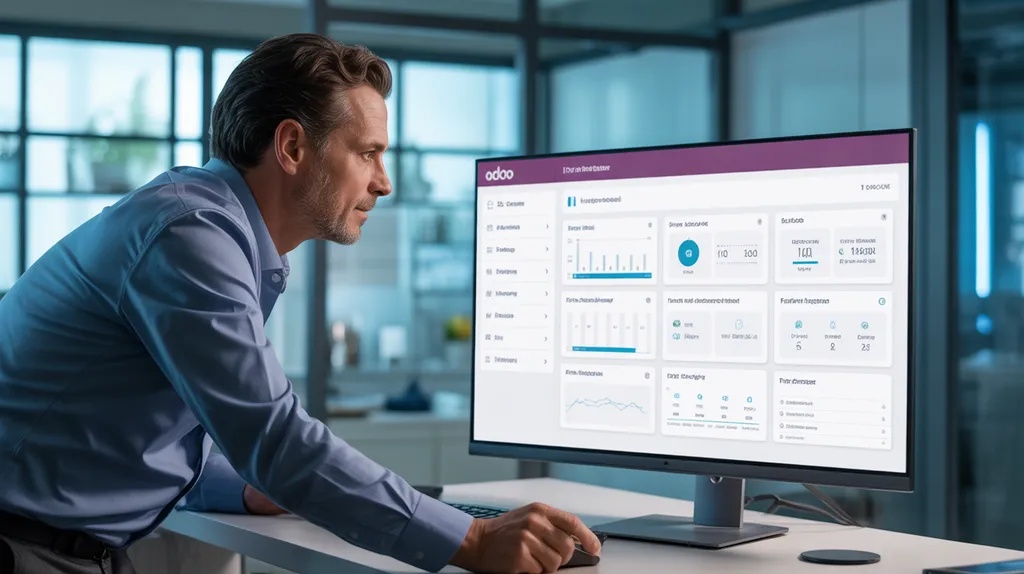
Odoo Open Source ERP has emerged as one of the most flexible enterprise resource planning platforms available today. Unlike traditional ERP systems that demand massive investments and rigid infrastructure, Odoo offers a modular, scalable, and highly customisable framework that allows businesses to manage operations efficiently without overwhelming costs.
The appeal of Odoo lies in its open-source architecture. Organisations are not locked into restrictive licensing models or limited functionality. Instead, they gain the freedom to customise workflows, integrate third-party applications, and adapt the system according to evolving operational demands.
From manufacturing and retail to healthcare, logistics, education, and professional services, Odoo Open Source ERP supports businesses that want digital transformation without sacrificing agility. Its ability to centralise data while improving operational visibility makes it a strategic asset in an increasingly competitive marketplace.
As digital acceleration continues to reshape global industries, companies are seeking ERP platforms that can evolve with technological and operational changes. Odoo positions itself as a future-ready solution that combines enterprise-grade functionality with accessibility and affordability.
Key Takeaways
- Odoo Open Source ERP centralises business operations on a single integrated platform.
- Its modular architecture allows businesses to scale ERP capabilities gradually.
- Real-time analytics and automation improve operational efficiency and decision-making.
- Successful Odoo deployment requires clear planning, clean data migration, and employee training.
What Makes Odoo Open Source ERP Different From Traditional ERP Systems
Traditional ERP systems were often designed for large corporations with extensive budgets, complex infrastructure, and dedicated IT departments. Smaller and mid-sized businesses frequently found themselves excluded because of high implementation costs, rigid configurations, and long deployment cycles.
Odoo Open Source ERP completely changes this dynamic.
At its core, Odoo provides a modular structure that allows businesses to activate only the features they need. Instead of purchasing a massive system filled with unnecessary components, companies can gradually expand their ERP environment as operational requirements evolve.
A retail company may initially implement inventory and sales management modules. As the business expands, it can integrate accounting, CRM, eCommerce, procurement, and HR functionalities without replacing the existing infrastructure. This flexibility significantly reduces digital transformation risks.
Another defining advantage of Odoo is its user-friendly interface. ERP systems have historically gained a reputation for complexity, but Odoo focuses heavily on usability. Employees can navigate dashboards, automate workflows, and access operational insights without extensive technical training.
Its open-source foundation also creates a thriving global developer ecosystem. Thousands of developers continuously contribute applications, integrations, and improvements that enhance the platform’s capabilities. Businesses benefit from innovation at a much faster pace than with proprietary ERP systems, which have slower update cycles.
Scalability is another major factor driving adoption. Many companies begin their ERP journey with basic operational management needs, only to realise later that rapid growth requires stronger process control. Odoo accommodates this growth seamlessly by supporting both small enterprises and large-scale multi-company operations.
Perhaps most importantly, Odoo empowers businesses to maintain greater control over their technology environment. Companies can host the platform on-premise, in the cloud, or through hybrid infrastructure models, depending on operational and security preferences.
This combination of flexibility, affordability, scalability, and innovation has positioned Odoo Open Source ERP as one of the most disruptive ERP solutions in the modern business landscape.
Core Features That Make Odoo Open Source ERP Powerful
Odoo Open Source ERP is powerful because it combines integrated business management, automation, real-time analytics, modular scalability, and customisation capabilities into one flexible platform that supports long-term business growth.
Integrated Business Management Across Departments
One of the most transformative aspects of Odoo Open Source ERP is its ability to unify business functions within a single platform. Instead of relying on disconnected software systems, organisations can centralise operations and create a seamless flow of information between departments.
When a sales order is created, inventory updates automatically. Procurement teams receive real-time stock visibility, while accounting systems synchronise financial transactions instantly. This interconnected environment reduces duplication, minimises errors, and improves organisational efficiency.
Businesses gain a clearer understanding of operational performance because data no longer remains trapped in departmental silos. Decision-makers can monitor activities across finance, sales, supply chain, customer service, and HR from one unified dashboard.
Flexible Modular Architecture
Odoo’s modular design allows businesses to implement ERP functionality gradually rather than undergoing overwhelming full-scale deployments. This flexibility is particularly valuable for growing businesses that require phased digital transformation strategies.
Companies can start with essential modules such as CRM, inventory, or accounting before introducing advanced features like manufacturing resource planning, quality management, or business intelligence analytics.
This approach significantly lowers implementation complexity while improving user adoption rates. Employees can adapt to the system gradually rather than face drastic operational disruptions.
Strong Automation Capabilities
Automation sits at the centre of modern operational efficiency, and Odoo Open Source ERP excels in this area. Businesses can automate repetitive tasks, including invoicing, procurement approvals, inventory replenishment, employee attendance tracking, and customer communications.
Automation reduces human error while accelerating business processes. Teams spend less time handling manual administrative tasks and more time focusing on strategic initiatives that drive growth.
For example, a logistics company can automate shipment tracking notifications, invoice generation, and warehouse stock updates simultaneously. The result is improved operational speed and enhanced customer satisfaction.
Advanced Reporting and Real-Time Analytics
Data-driven decision-making has become essential in competitive industries. Odoo Open Source ERP provides real-time dashboards and reporting capabilities that enable businesses to continuously monitor key operational metrics.
Executives can evaluate sales performance, monitor financial health, analyse production efficiency, and identify operational bottlenecks without waiting for manually compiled reports.
The platform transforms raw operational data into actionable insights, enabling organisations to make faster and more accurate strategic decisions.
Customisation and Developer Flexibility
No two businesses operate the same way. Odoo recognises this reality by offering extensive customisation capabilities that allow organisations to adapt workflows according to industry-specific requirements.
Developers can create custom modules, automate specialised processes, and integrate third-party systems using Odoo’s open-source framework. This adaptability makes the platform suitable for highly specialised industries that require unique operational configurations.
Instead of forcing businesses to change their workflows around software limitations, Odoo allows the software to evolve alongside business processes.
Cost-Effective Digital Transformation
ERP implementation costs often discourage businesses from pursuing digital transformation initiatives. Odoo Open Source ERP addresses this concern by reducing licensing expenses while maintaining enterprise-level functionality.
Businesses gain access to a powerful ERP ecosystem without committing to excessive upfront investments. This affordability enables smaller organisations to compete more effectively using modern operational technology.
The open-source model also reduces dependence on expensive proprietary vendors, allowing businesses to allocate budgets toward strategic innovation rather than recurring software constraints.
Continuous Innovation Through Community Support
The global Odoo community contributes significantly to the platform’s rapid innovation cycle. Developers, consultants, and businesses continuously improve modules, fix issues, and introduce new functionalities.
This collaborative ecosystem ensures that Odoo evolves rapidly in response to changing business and technological trends. Companies benefit from ongoing innovation without waiting years for major platform upgrades.
The strength of this global developer network has helped Odoo become one of the fastest-growing ERP ecosystems worldwide.
How Odoo Open Source ERP Supports Long-Term Business Growth

Businesses rarely fail for lack of ambition. More often, they struggle because operational complexity outpaces management capabilities. As companies expand, disconnected systems, inconsistent data, and manual workflows begin creating inefficiencies that limit scalability.
Odoo Open Source ERP helps businesses overcome these barriers by establishing a digital operational foundation that supports sustainable, long-term growth.
Imagine a mid-sized distribution company entering new regional markets. Without a unified ERP system, managing inventory across multiple warehouses becomes increasingly difficult. Customer orders experience delays, procurement lacks visibility, and finance departments struggle with reporting inconsistencies.
With Odoo, operational visibility improves dramatically. Warehouse managers monitor inventory movements in real time, finance teams generate accurate consolidated reports, and executives gain strategic insights into overall business performance.
This operational transparency enables businesses to scale with confidence.
Another major advantage lies in customer experience management. Modern consumers expect faster responses, accurate deliveries, and personalised service interactions. Odoo helps businesses meet these expectations through integrated CRM, order management, and customer communication tools.
As businesses grow, maintaining consistent service quality becomes challenging. Odoo simplifies this process by centralising customer data and automating service workflows.
The platform also effectively supports workforce expansion. HR teams can manage recruitment, attendance, payroll, and employee performance within the same ecosystem used for operational management. This integration creates stronger organisational alignment and improves internal collaboration.
In industries experiencing rapid technological disruption, adaptability becomes a competitive necessity. Odoo’s open-source structure allows organisations to integrate emerging technologies such as AI analytics, IoT systems, eCommerce platforms, and mobile applications without rebuilding their operational infrastructure.
This future-ready flexibility ensures that businesses remain agile even as market conditions evolve.
For startups, Odoo provides an affordable digital foundation that supports rapid scaling. For established enterprises, it offers the operational intelligence required to optimise complex business environments.
Ultimately, Odoo Open Source ERP is not simply software. It becomes a strategic operational framework that empowers organisations to grow efficiently, innovate continuously, and compete effectively in increasingly digital markets.
Industries That Benefit Most From Odoo Open Source ERP
Industries that benefit most from Odoo Open Source ERP include manufacturing, retail, logistics, healthcare, and professional services, as the platform improves operational efficiency, automation, data visibility, and cross-departmental collaboration.
- Manufacturing and Industrial Operations
Manufacturing companies often face operational challenges involving inventory management, production scheduling, procurement coordination, and quality control. Odoo Open Source ERP helps manufacturers create a connected production ecosystem where every operational activity becomes visible in real time.
A growing industrial company, for instance, may struggle with delayed production cycles because procurement teams cannot accurately forecast raw material requirements. With Odoo, inventory levels, supplier activities, production planning, and warehouse movements become interconnected. This integration improves operational accuracy while reducing downtime and material waste.
Manufacturers also benefit from predictive planning capabilities that support demand forecasting and resource allocation. Instead of reacting to operational issues after they occur, businesses can proactively optimise production efficiency.
- Retail and eCommerce Businesses
Retail businesses operate in highly competitive environments where customer expectations evolve rapidly. Odoo Open Source ERP enables retailers to unify point-of-sale systems, inventory management, customer relationship management, and eCommerce operations on a single platform.
Imagine a retailer managing both physical stores and online sales channels. Without integrated systems, stock discrepancies and delayed updates can quickly damage customer trust. Odoo synchronises inventory data automatically across multiple channels, ensuring accurate product availability information at all times.
The platform also strengthens customer engagement by centralising purchasing history, loyalty programs, and communication workflows. Retailers gain deeper visibility into consumer behaviour, enabling more personalised marketing strategies and improved customer retention.
- Logistics and Supply Chain Management
Logistics companies depend heavily on operational visibility and timing accuracy. Delays, inventory mismatches, and communication gaps can create major financial and customer service problems.
Odoo Open Source ERP supports logistics providers through integrated warehouse management, shipment tracking, procurement automation, and fleet coordination functionalities. Real-time operational monitoring allows businesses to identify supply chain disruptions before they escalate into larger issues.
By streamlining transportation workflows and improving inventory accuracy, logistics providers can reduce operational costs while enhancing delivery performance. In industries where speed directly impacts profitability, this level of operational coordination becomes extremely valuable.
Common Challenges Businesses Face During Odoo ERP Implementation

Common challenges businesses face during Odoo ERP implementation include employee resistance, poor data migration, unclear project goals, inadequate training, and underestimating customisation requirements, all of which can affect deployment success and operational efficiency.
Resistance to Organisational Change
Even the most advanced ERP system can fail if employees resist operational changes. Many organisations underestimate how deeply existing habits influence day-to-day workflows.
When businesses transition to Odoo Open Source ERP, employees may initially feel uncomfortable adapting to new processes and digital environments. Teams accustomed to spreadsheets or disconnected legacy systems often require time to embrace integrated workflows.
Successful ERP implementation depends heavily on communication, training, and leadership support. Businesses that invest in employee onboarding and change management strategies typically achieve faster adoption rates and stronger operational outcomes.
Poor Data Migration Planning
Data migration remains one of the most critical stages of ERP implementation. Inaccurate or incomplete migration processes can create operational disruptions that undermine the effectiveness of the new system.
Businesses frequently discover inconsistencies in historical records, duplicated entries, or outdated databases during ERP transitions. Without proper preparation, these issues can negatively affect reporting accuracy and operational continuity.
Organisations implementing Odoo should conduct detailed data audits before migration begins. Clean, structured, and validated data significantly improves implementation success while reducing long-term system inefficiencies.
Lack of Clear Implementation Objectives
Some businesses adopt ERP systems simply because competitors are doing so, without clearly defining operational goals. This lack of strategic direction often leads to confusion in implementation and unrealistic expectations.
Odoo Open Source ERP delivers maximum value when organisations identify measurable objectives before deployment. Whether the goal involves improving inventory accuracy, automating financial workflows, enhancing customer service, or scaling operations, clear priorities help guide successful implementation strategies.
Companies that align ERP deployment with long-term business objectives are more likely to achieve meaningful operational transformation instead of temporary system upgrades.
Underestimating Customisation Requirements
Although Odoo provides extensive flexibility, businesses sometimes underestimate the importance of proper configuration and customisation. Every organisation operates with unique workflows, compliance requirements, and operational structures.
Rushing implementation without fully analysing process requirements can lead to inefficient configurations that create operational friction later. Businesses should carefully evaluate which workflows require standardisation and which require tailored modifications.
Strategic customisation ensures that Odoo supports operational efficiency without creating unnecessary system complexity.
Why Odoo Open Source ERP Is the Future of Scalable Business Management
Businesses today operate in an environment where speed, visibility, and adaptability determine long-term success. Companies that continue relying on fragmented systems and manual workflows often struggle to keep pace with evolving market expectations.
Odoo Open Source ERP provides a modern alternative designed for flexibility, scalability, and operational efficiency. Its modular architecture, automation capabilities, real-time analytics, and open-source adaptability make it one of the most powerful ERP solutions available for businesses seeking sustainable digital transformation.
What truly separates Odoo from traditional ERP systems is its ability to grow alongside the organisation. Whether supporting a startup building its operational foundation or a large enterprise managing complex multi-department operations, Odoo adapts to changing business realities without compromising agility.
As industries continue embracing digital transformation, businesses need ERP systems that do more than manage processes. They need platforms capable of driving innovation, improving decision-making, and supporting long-term strategic growth.
Odoo Open Source ERP delivers exactly that balance between technology, flexibility, and business empowerment.
FAQs About Odoo Open Source ERP
Odoo Community is the free open-source version with core ERP functionalities, while Odoo Enterprise includes advanced modules, official support, enhanced scalability, and proprietary business management features.
Yes, Odoo Open Source ERP supports API-based integrations with CRM platforms, eCommerce systems, payment gateways, IoT devices, and external business applications for seamless operational connectivity.
Odoo is highly suitable for manufacturing because it supports production planning, inventory control, procurement automation, quality management, maintenance scheduling, and real-time operational monitoring on a single platform.
Odoo ERP implementation timelines vary based on business complexity, customisation requirements, data migration scope, and module selection, but most mid-sized deployments take several weeks to several months.
Yes, Odoo Open Source ERP supports cloud, on-premise, and hybrid deployment models, allowing businesses to choose infrastructure configurations based on scalability, security, and operational requirements.