

Did you know that the global retail market size is estimated to reach $34.87 trillion by the end of 2025? In such a rapidly moving retail environment, warehouses take the centre stage as one of the must-haves to make a business successful. Yes, they are more than simply storage facilities in the contemporary retail landscape; they are strategic centres that clear the road for high speed, efficiency, and customer satisfaction.
The year 2020 gave wings to the e-commerce domain. In this environment, you can see that consumer expectations are rising day by day when it comes to same-day delivery. Plus, with ever-increasing operating expenses, retailers simply cannot be brave enough to overlook their warehouse operations. This means the future of business belongs to warehouses, which are also smart, sustainable, and adaptable.
In this article, we dive into the warehouse trends for businesses, which you cannot ignore.
Key Warehouse Trends for Businesses
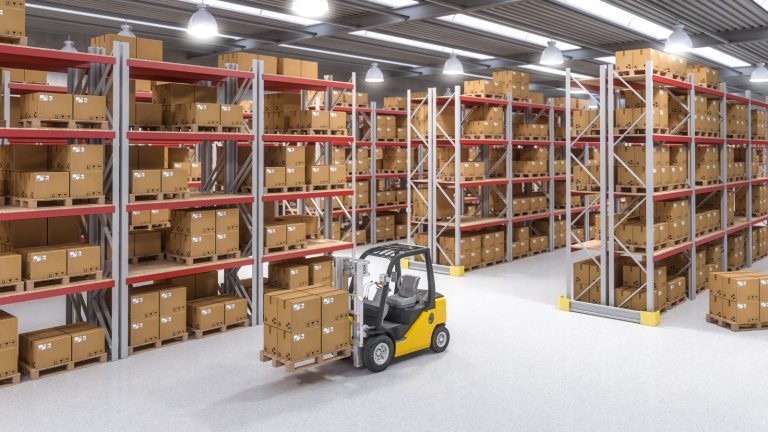
Automation and Robotics
Automation is not a dream that the business world sees from a distance. Now it has become an essential component when it comes to the modern warehouse strategy.
You may know that many successful retailers are rapidly using autonomous mobile robots (AMRs) and automated guided vehicles (AGVs).
Most of the businesses leverage technologies such as robotic arms and collaborative robots (cobots) as they have proven to improve the whole process from picking, sorting, and loading.
These solutions are excellent at reducing human error, cutting labour expenses, and accelerating processes. This results in a more dependable and productive warehouse architecture.
Furthermore, robots-as-a-Service (RaaS) has made automation available to even smaller stores. The latter supports them in integrating robots without requiring huge upfront costs. Plus, there are some advanced robots with AI capabilities, namely touch-sensitive technologies, and these are good at improving precision while handling fragile objects.
For retailers, automation and robotics act as the best engine to facilitate speedier order fulfilment, with fewer mistakes. With this technological warehouse trend, they get the opportunity to increase operations without being framed by labour shortages.
Smart Warehouses with Data, AI and Connectivity
The future warehouse will take a data-driven approach. The reason is quite clear. Internet of Things (IoT) sensors are making way for real-time monitoring of inventory levels and equipment health, while also keeping in touch with environmental factors like temperature and humidity.
When combining AI and machine learning, retailers have the power to estimate demand accurately and optimise product placement. This also helps with dynamic labour planning and even identifying equipment maintenance needs before they arise.
Digital twins, or virtual duplicates of warehouse operations, let managers play around with layout changes before making them real or process improvements before physically adopting them. Not to say this would significantly bring down risk and expense.
With cloud computing and 5G connection, these smart warehouses make data zip around the system in real time and make calls on the spot without waiting for reports.
Retailers get the upper hand not just from making the whole place run faster and smoother, but also from actionable insights that take service quality up a notch and keep resources from slipping through the cracks.
Micro-Fulfilment and the Urban Warehouse Revolution
As e-commerce grows, the enthusiasm for speedier deliveries stems from the growth of micro-fulfilment centres (MFCs). These are known as tiny, yet highly automated hubs, and they are located much closer to urban consumers.
This helps retailers to make way for same-day or even two-hour delivery, even without incurring exorbitant shipping expenses.
In addition, on-demand warehousing, also known as Warehousing-as-a-Service (WaaS), is what enables retail businesses to rent flexible storage space. This surely supports scaling capacity as the best solution to seasonal peaks or market swings.
Since this agility provides retailers with a strategic edge, it sort of lowers inventory holding costs and helps keep up with excellent service levels.
Yes, in other words, this combination of micro-fulfilment and on-demand storage gives you an effective option when handling modern retail supply chains.
Sustainability through Green Warehousing as a Business Strategy
If you still think that sustainability is an alternative, you have got it all wrong! The latter is a commercial requirement.
Since the primary objective is to lower the environmental impact, nowadays modern warehouses have started using energy-efficient lighting and solar panels. Similarly, they tend to opt for smart HVAC systems and eco-friendly packaging to be mindful of the environment as well. From energy monitoring to insulation and rainwater harvesting, all are increasingly being included in facility design.
Did you know that green storage benefits retail firms beyond compliance and cost savings? It is a fact that it boosts brand recognition among environmentally conscientious customers.
If you look around, you will notice that some of your forward-thinking competitors have discovered the beauty of sustainability. They might have realised that sustainable operations may generate real returns due to their ability to lower energy costs, which eventually results in increasing consumer loyalty and distinguishing their brand in competitive marketplaces.
Flexibility, Scalability and Space Optimisation
There is no doubt when it comes to the fact that modern warehouses must be adaptable and expandable, Right?
This is where the Cloud-based warehouse management systems (WMS) and modular automation set things in motion for organisations in order to increase operations rapidly without incurring significant capital costs.
Vertical space optimisation, such as high-bay storage, has the potential to increase cubic capacity while making the whole storage area take up way less space, squeezing the most out of every inch.
Furthermore, on-demand warehouse models give merchants the freedom to temporarily increase their storage footprint, smooth over those crazy busy spikes, or Expand into untapped business territories, avoiding being tied down with long deals. This great combination of adaptability, scalability, and optimal space utilisation removes the blockages from retail organisations to respond quickly to market changes while running lean operations.
Human + Robot Collaboration as Workforce
There is no change in the fact that human workers continue to take the centre position in warehouses despite automation. Labour shortages are driving a shift from repetitive work to managerial, technical, and maintenance positions.
This is when the training technologies like augmented reality (AR), virtual reality (VR), and wearable gadgets enter the warehousing scenario to help employees walk through complicated procedures with increased productivity and protection.
As we see, the future of the warehouse is promising, with places where humans and robots work together harmoniously. They can leverage the best out of each other’s skills. This presents a hybrid approach for the workforce, and it not only eliminates mistakes but also frees up human resources to concentrate on higher-value tasks.
Stepping into the Future of Warehouses with Emerging Warehouse Trends
As we mentioned, modern warehouses are making a move from being static storage facilities to dynamic, strategic centres. If you wish to stay ahead, your retail business must embrace automation, along with data-driven analytics, micro-fulfilment, while balancing sustainability and workforce innovation.
Those who disregard these trends risk falling behind on speed, efficiency, and customer satisfaction. Why would you take that risk? This is where you will get the best out of a robust Warehouse Management System like TigernixWMS. It is enriched with comprehensive features like customizability, eco-friendliness, integration with AI, IoT, Digital Twin, AR & VR, etc., Tigernix solution obtains the trust of many organisations across Singapore and Asia.
Unleash the future of warehouse with Tigernix today. Call for a free demo!