

Did you know that a business can reduce up to 50% of errors in its operations using demand forecasting? Demand forecasting is a supply chain operations method that predicts future customer demand by utilising historical data for demand planning.
It helps businesses manage their inventory levels, improves forecasting accuracy in real-time, and directs data-driven business decisions. In order to foresee demand, forward-thinking companies are using automation, predictive analytics, machine learning, and artificial intelligence (AI) capabilities.
Utilising these cutting-edge technologies encourages businesses to approach supply chain management proactively and improves customer requirement forecasting. As AI has an impact on other aspects of businesses, such as sales intelligence, AI-powered inventory management, and AI-driven analytics, forecasting is changing and evolving.
In this article, we are going to reveal how to perform demand forecasting for your business in 2026.
Why is Demand Forecasting Important?
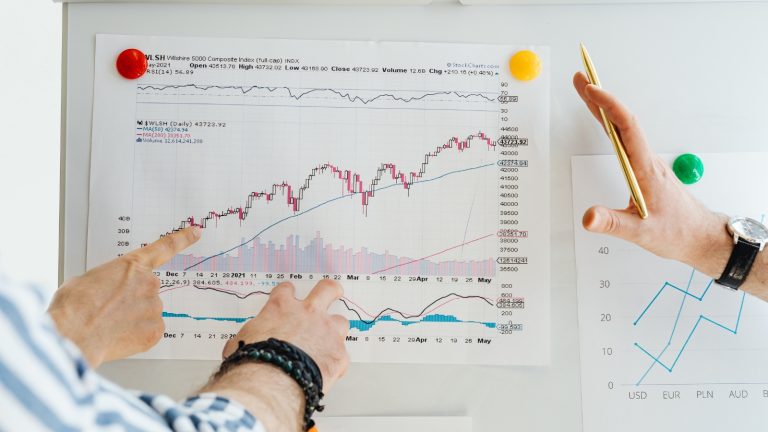
Demand forecasting gives businesses the resources and information they need to anticipate future demand and make better decisions that can save them money and time. Organisations can accurately forecast sales and cash flow through thorough data analysis and pattern recognition, enabling well-informed future decisions.
Businesses and their stakeholders have more control and oversight over day-to-day operations due to the demand forecasting strategy.
With utilising a variety of data sources, including databases, historical sales, and spreadsheets, accurate forecasting guarantees appropriate stock keeping units (SKUs) and sufficient product inventories.
Organisations run the danger of overstocking or understocking inventory without this strategy, which could result in stockouts or backorders.
Precise demand forecasting can foster more strategic corporate plans and increase consumer satisfaction.
Key Takeaways
- Demand forecasting is a process of gathering and analysing all customer related data to anticipate future trends, enabling smart decision-making.
- With demand forecasting, businesses can stay away from overstocking or understocking and save money.
- Accurate demand forecasting can be facilitated by CRM software tools to increase customer satisfaction.
Key Steps to Demand Forecasting
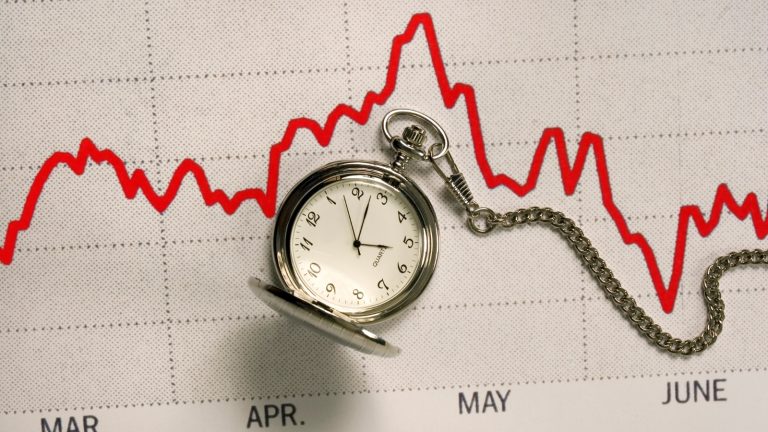
Demand forecasting can be done in a variety of ways. It all relies on the organisation’s goals and the circumstances it finds itself in. Although there are numerous approaches to take into account, the majority of demand forecasting teams can benefit from a few universal characteristics.
Encourage Teamwork
You need to create a working group by selecting a few important individuals from the marketing, sales, operations, and pertinent technical areas.
Until demand planning becomes more predictable, this core team will be in charge of creating and overseeing the reforecasting procedure during the launch phase.
Determine and Accept the Underlying Presumptions
Your teams must examine all of the available quantitative and qualitative information from buyer surveys, market testing, and market research. It is advised to determine a set of presumptions that can serve as the foundation for a demand forecasting model using the data.
This should ideally include presumptions regarding:
- The target market’s consumer count.
- The percentage anticipated to purchase the item.
- The anticipated time of their purchase.
- Recurring and replacement purchase patterns.
To fill in any significant data gaps, be ready to commission more study or speak with other industry experts. Additionally, always allow the working group to determine a reasonable range of values for each assumption using their collective judgement.
Construct Detailed Models
Not every customer will buy a new product at the same rate. While some might be willing to stand in line around the block all night to obtain it, others would choose to hold off until later iterations, when any unanticipated bugs have been fixed, and prices are usually reduced.
This is where your organisation must create a forecasting model that is sufficiently detailed to account for how, when, and at what price various market segments in various regions might buy the product.
Go with Flexible Time Frames
Any new product’s first few days and weeks of sales should be closely watched since they will immediately reveal how demand is likely to increase going forward.
It is beneficial to create thorough daily estimates for the first quarter in order to monitor actual sales, even if the sales and finance departments might only be interested in monthly data.
Create a Variety of Forecasts
To provide a variety of forecasts, you must run the model via several iterations while altering different assumptions and probabilities.
If a modelling solution that can be recalculated in real-time is implemented, this may be accomplished with ease because business executives and internal specialists can quickly create and test different scenarios.
Provide the Results That Customers Require in a Timely Manner
In order to avoid stockouts at the most unpredictable time right after the launch, arrangements may have been made with several suppliers to deliver quick replacements.
However, a lot of that valuable time will be lost if reforecasting the precise replenishment requirements of each distribution point in the supply chain requires several steps.
Such delays are avoided, and the replenishment cycle is shortened by developing a fully integrated demand forecasting model that compares current stock levels and immediately creates a thorough replenishment report for each location as soon as any high-level assumptions change.
Combine Various Methods
There are several approaches to demand forecasting for new items besides bottom-up modelling based on purchase intentions.
Products in some areas, like technology and consumer electronics, can complete their life cycle in a few months. Because of these limited windows of opportunity, it is crucial to determine demand as precisely as possible.
The most detrimental scenario is when there is a shortage of inventory while the product is still in demand, which causes disgruntled customers to buy a rival product. Can you imagine the pressure?
These industries employ advanced modelling methods that predict how quickly new technology will replace older ones using substitution and diffusion rates. Although many firms may not be able to use such approaches, integrating various forecasting techniques yields more accurate results.
Verify the Forecast in Reality
Make sure the projection is realistic by comparing it to the sales evolution of similar products whenever trustworthy data is available.
In a similar vein, you should project how the market as a whole may expand and how your market share might change as new competitors enter this developing category.
Last but not least, be ready to revise the model’s underlying assumptions if this macro-overview is not reliable.
Continue Forecasting
It is important to keep a close eye on sales and qualitative input, such as product evaluations, media mentions, and customer comments, and discuss any changes to the model’s assumptions with the working group members.
You can opt for reforecasting every day if necessary.
Reduce Your Losses
As the last step, have a backup plan at all times.
Since a large percentage of new products fail, it is preferable to discontinue a failing product as soon as possible if it is unlikely to reach a sustainable level of profitability. Therefore, far in advance of the product launch, determine and agree upon the sales penetration level that defines failure.
Likewise, the decision can be made swiftly, and the current stock can be reduced in an economical manner.
Tigernix CRM for Advanced Demand Forecasting in 2026
Understanding the complexity of fluctuating consumer demands and the importance of forecasting them accurately, Tigernix presents our robust CRM –Customer Relationship Management solution that comes with deep forecast models to fulfil all your business requirements. Since TigernixCRM is powered by AI, ML, Automation, IoT, Predictive Analytics, etc., you can easily foresee the increasing or decreasing market demands and get ready to prevent loss in advance.
Call for a personalised demo today.
Tigernix-Foresee Sales Future With A Few Clicks
Spot the Demand Patterns for Boosted Sales
It is unnoticeable how important it is that you see what is going to occur in your sales in the future in order to prepare your stocks, warehouse spaces, teams and outlets, etc. With new technologies in the business scenario, accurate forecasting will not be a mere dream any longer; but only if you are open to accepting them into your daily business operations.
FAQs About Demand Forecast
Calculating demand forecasting begins with past sales data and math formulas that combine to assume how future customer needs would be. Moving Average (a method to average past sales) and Exponential Smoothing (recent months receive more focus) are the top ways to calculate a demand forecast.
Demand forecasting refers to a data-driven formula to help with predicting future customer sales, and its base is past data and trends. However, demand planning refers to a broader, strategic management mechanism that takes the data from demand forecasting and, based on that, aligns company resources, production, and inventory to make those predictions work.
Poor forecast accuracy results from bad data quality, unexpected market shifts, sudden trends, and communication gaps between sales and supply chain teams.
Demand forecasting estimates the quantities of consumer goods that are required. Revenue or financial goals are predicted via sales forecasting.