
The fashion industry moves at an unforgiving pace and is on track to become a $1.92 trillion powerhouse. One day, a design is trending on social media, and the next day, customers are already looking for the next big thing. For fashion manufacturers, keeping up with changing consumer demands, seasonal collections, supplier coordination, production schedules, and inventory management can feel like trying to complete a puzzle with pieces constantly changing shape.
Imagine a growing fashion brand preparing to launch its spring collection. The design team is busy creating new styles, sourcing sustainable fabrics, and refining specifications. Meanwhile, the operations team is managing supplier relationships, inventory levels, production timelines, and financial reporting. Without the right technology, information becomes fragmented, mistakes multiply, and deadlines slip.
This is where Product Lifecycle Management (PLM) and Enterprise Resource Planning (ERP) systems enter the picture. While both are essential for modern fashion manufacturing, they serve very different purposes.
In this article, we explore how each system works,d how they complement each other, and how they can help fashion companies improve efficiency, reduce costs, and accelerate time-to-market.
The article covers
- Understanding PLM in Fashion Manufacturing
- Understanding ERP in Fashion Manufacturing
- PLM vs. ERP: Core Differences
- Benefits of PLM for Fashion Manufacturing Companies
- Benefits of ERP for Fashion Manufacturing Companies
- Why Fashion Manufacturers Need Both PLM and ERP
- FAQs About Fashion Manufacturing With PLM and ERP Integration
Understanding PLM in Fashion Manufacturing
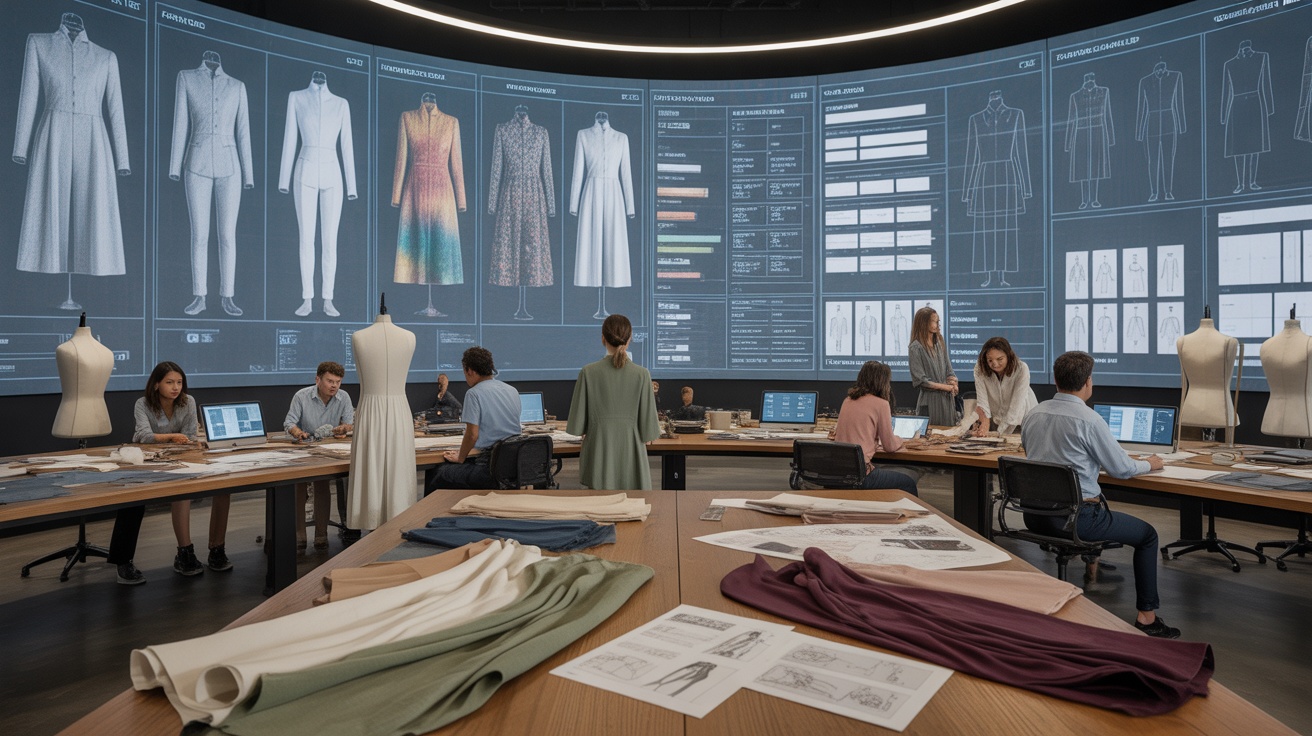
Product Lifecycle Management (PLM) helps fashion manufacturers streamline product development by centralising design, sourcing, specification, and collaboration processes throughout the product lifecycle.
Key Takeaways
- PLM manages product design, development, and lifecycle data in fashion manufacturing.
- ERP streamlines production, inventory, finance, and supply chain operations.
- PLM and ERP serve different functions but complement each other strategically.
- Integrating PLM and ERP improves efficiency, accuracy, and time-to-market.
What Is Product Lifecycle Management (PLM)?
Imagine a fashion designer sketching a new collection inspired by emerging runway trends. The design evolves through multiple stages, including concept creation, material selection, sample development, approvals, and production preparation.
Every step generates valuable information that needs to be organised and accessible.
Product Lifecycle Management (PLM) is a software solution designed to manage all product-related information throughout its entire lifecycle.
From the initial design concept to product retirement, PLM acts as a centralised hub where designers, merchandisers, product developers, sourcing teams, and manufacturers collaborate seamlessly.
In fashion manufacturing, PLM stores technical specifications, bills of materials (BOMs), fabric details, colourways, fit information, compliance requirements, and design revisions. Instead of relying on spreadsheets, emails, and disconnected systems, fashion teams can access accurate product information in one place.
This improves collaboration, reduces development errors, and helps brands bring new collections to market faster while maintaining product quality and consistency.
Key Functions of PLM Systems in Fashion Manufacturing
Fashion product development involves countless moving parts. Designers create sketches, sourcing teams identify materials, developers create samples, and quality teams review specifications. Without a structured process, communication gaps can lead to delays and costly mistakes.
PLM systems streamline these activities by providing tools specifically designed for product development.
Key functions include design collaboration, material management, sample tracking, BOM management, specification management, compliance documentation, workflow approvals, and version control.
For example, if a designer updates a garment’s fabric specification, the change becomes instantly visible to sourcing and production teams. This prevents miscommunication and ensures everyone works from the latest information.
PLM systems also maintain historical records, making it easier to compare product versions and track development decisions.
For fashion manufacturers managing multiple collections each year, PLM provides greater visibility throughout the product development process, enabling teams to work faster and more efficiently while maintaining creative flexibility.
Understanding ERP in Fashion Manufacturing
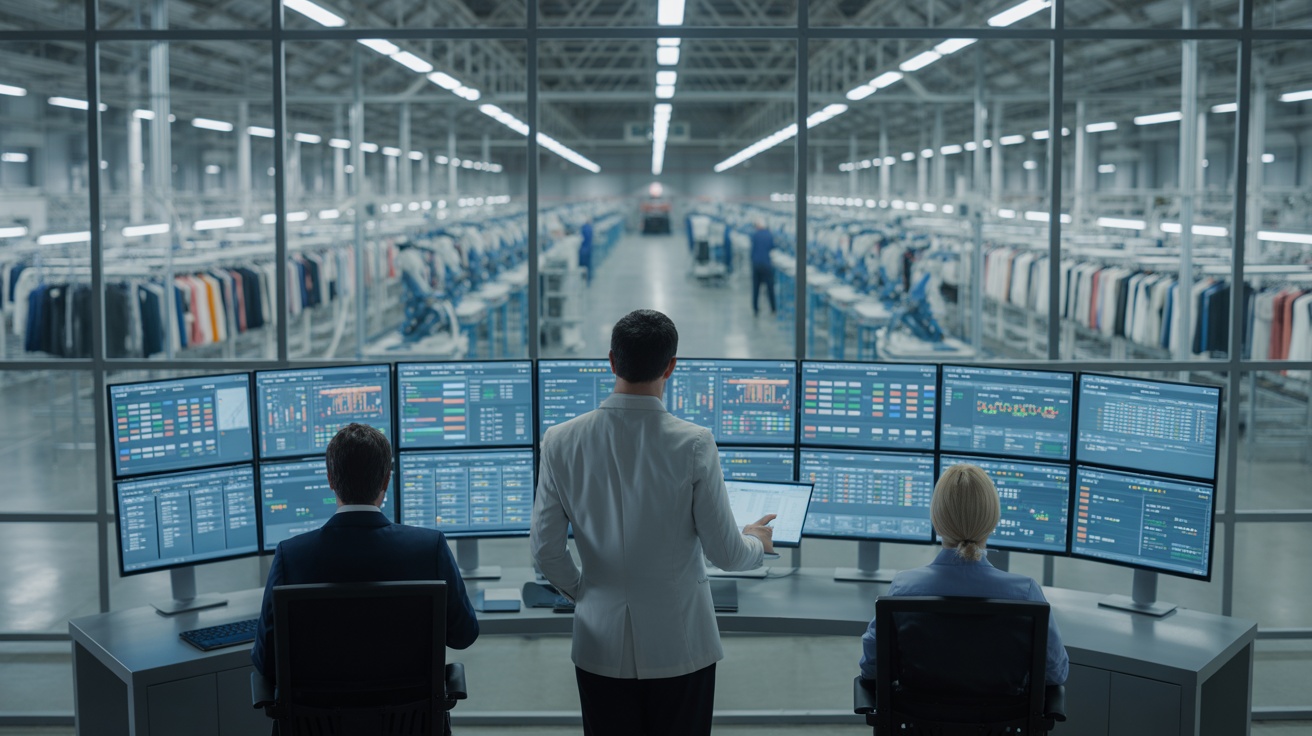
Enterprise Resource Planning (ERP) enables fashion manufacturers to manage core business operations, including production, inventory, procurement, finance, and supply chain activities from a unified platform.
What Is Enterprise Resource Planning (ERP)?
Now imagine that the same fashion collection has moved beyond design and is ready for manufacturing. Fabrics need to be ordered, production schedules finalised, inventory monitored, customer orders processed, and financial transactions recorded.
This is where Enterprise Resource Planning (ERP) systems become essential.
ERP is a business management platform that integrates and automates core operational processes across an organisation. Rather than focusing on product development, ERP concentrates on managing business operations such as procurement, inventory, production, finance, sales, human resources, and supply chain activities.
In fashion manufacturing, ERP acts as the operational backbone of the company. It provides real-time visibility into inventory levels, production performance, supplier management, order fulfilment, and financial health. Since it connects departments through a centralised system, ERP ensures that business decisions are based on accurate, up-to-date information.
The result is improved operational efficiency, better resource utilisation, reduced costs, and enhanced customer service throughout the fashion supply chain.
Key Functions of ERP Systems in Fashion Manufacturing
Fashion manufacturing involves far more than designing garments. Businesses must coordinate suppliers, monitor production schedules, track inventory movements, manage customer orders, and maintain financial control across multiple locations and channels.
ERP systems support these activities through integrated business functions.
Key capabilities include inventory management, production planning, procurement management, warehouse management, financial accounting, order processing, supply chain management, and performance reporting.
For example, when customer demand increases for a particular product line, the ERP system can automatically provide inventory availability, production capacity information, and procurement requirements. This enables managers to make informed decisions quickly.
ERP systems also improve data accuracy by eliminating duplicate data entry across departments. Because information flows through a single platform, finance teams, operations managers, warehouse personnel, and executives all work from the same source of truth.
For fashion manufacturers dealing with complex global supply chains, ERP provides the operational control necessary to maintain efficiency and profitability.
PLM vs ERP: Core Differences
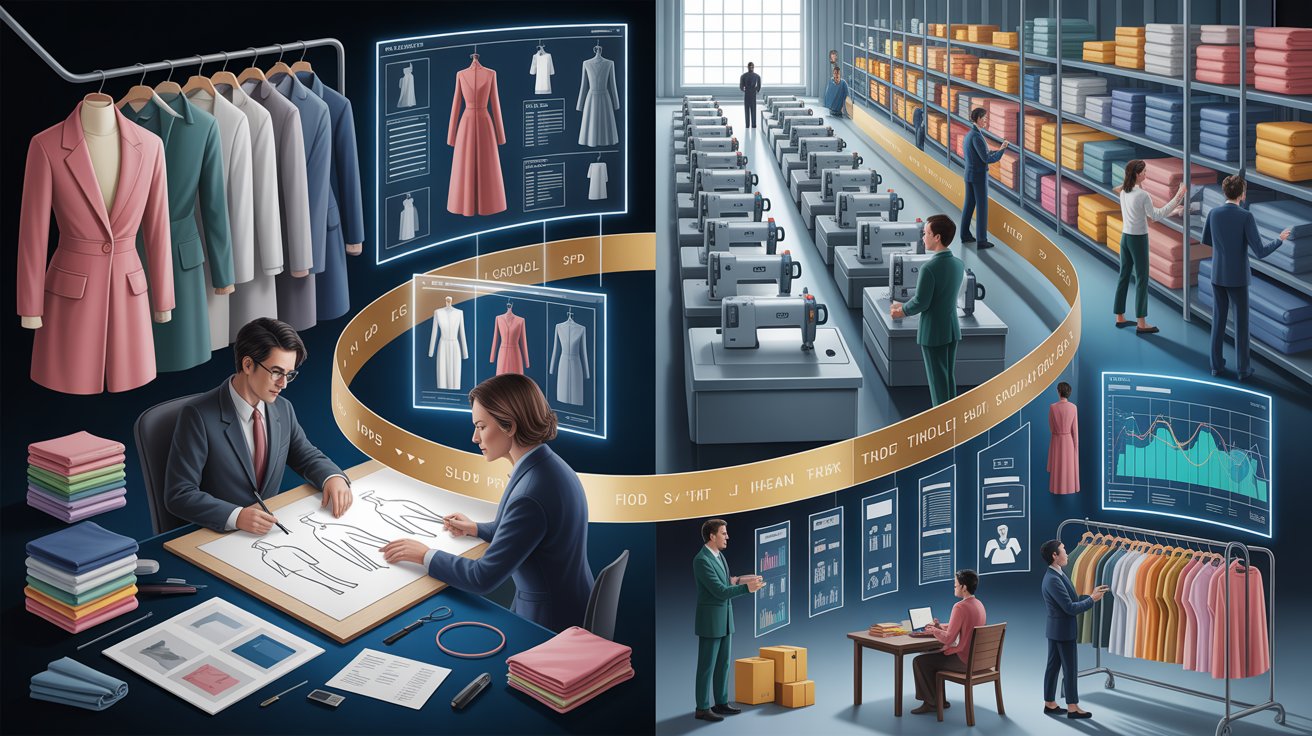
Although both systems support business growth, PLM focuses on product development while ERP manages the operational execution required to manufacture and deliver products efficiently.
Focus and Primary Objectives
Although PLM and ERP systems are often discussed together, they were created to solve different business challenges.
PLM focuses on product innovation and development. Its primary objective is to help teams create, refine, and manage products efficiently throughout their lifecycle. It supports collaboration among design, development, sourcing, and quality teams while ensuring product information remains accurate and accessible.
ERP, on the other hand, focuses on operational execution.
Its primary objective is to manage business resources, transactions, and processes after products are ready for production and distribution. ERP helps organisations optimise manufacturing, inventory, procurement, finance, and customer fulfilment activities.
A simple way to understand the difference is to think of PLM as the system that helps create the product, while ERP helps manufacture, distribute, and sell it.
Both systems contribute to business success, but they operate at different stages of the value chain.
Data Management and Business Processes
The type of data managed by each system represents another significant difference.
PLM manages product-centric information, including designs, specifications, materials, samples, technical packages, compliance documentation, and engineering changes. Its workflows revolve around product creation and development activities.
ERP manages transaction-based and operational data, including purchase orders, inventory records, production schedules, sales orders, invoices, payroll information, and financial reports. Its workflows support day-to-day business operations and resource management.
For example, a PLM system may store the approved fabric specifications for a new jacket, while the ERP system manages fabric purchasing, inventory levels, and production orders for that jacket.
Together, these systems ensure that product information flows smoothly from design to manufacturing while maintaining data integrity across the organisation
Users and Departments Served
PLM and ERP systems are also used by different groups within fashion organisations.
PLM primarily serves designers, product developers, sourcing specialists, merchandisers, quality assurance teams, and compliance managers. These users rely on PLM to collaborate on product development and maintain accurate product information throughout the design process.
ERP primarily serves operations managers, production planners, procurement teams, warehouse personnel, finance departments, sales teams, and executive leadership. These users depend on ERP to manage business processes and operational performance.
Consider a fashion company launching a new collection. Designers and product developers spend months working within PLM to finalise styles and specifications. Once products are approved for production, ERP takes over by coordinating material procurement, manufacturing schedules, inventory management, and order fulfilment.
This division of responsibilities highlights why many fashion manufacturers require both systems to achieve complete digital transformation.
Benefits of PLM for Fashion Manufacturing Companies
PLM provides fashion manufacturers with greater product visibility, faster development cycles, improved collaboration, and enhanced control over product quality and compliance.
- Faster Product Development and Innovation
Fashion trends evolve rapidly, making speed-to-market a critical competitive advantage. PLM systems accelerate product development by centralising information and enabling real-time collaboration among stakeholders.
When design teams, sourcing specialists, and manufacturers can access the same product data instantly, approval cycles become shorter, and communication delays decrease significantly. Teams spend less time searching for information and more time creating innovative products.
This improved efficiency allows fashion brands to respond quickly to emerging market trends, introduce collections faster, and capitalise on seasonal opportunities before competitors. In an industry where timing often determines success, PLM provides the agility necessary to stay ahead.
- Improved Product Quality and Compliance
Maintaining product quality across multiple suppliers and manufacturing locations can be challenging. PLM systems help enforce consistency by providing detailed specifications, standardised workflows, and centralised documentation.
Every stakeholder works from approved product information, reducing the likelihood of manufacturing errors, material substitutions, or specification mismatches. Quality assurance teams can monitor compliance requirements more effectively and ensure products meet regulatory standards before reaching consumers.
For fashion manufacturers producing garments for international markets, PLM also simplifies compliance management by tracking certifications, testing results, and regulatory documentation. This reduces risk while protecting brand reputation and customer trust.
Benefits of ERP for Fashion Manufacturing Companies
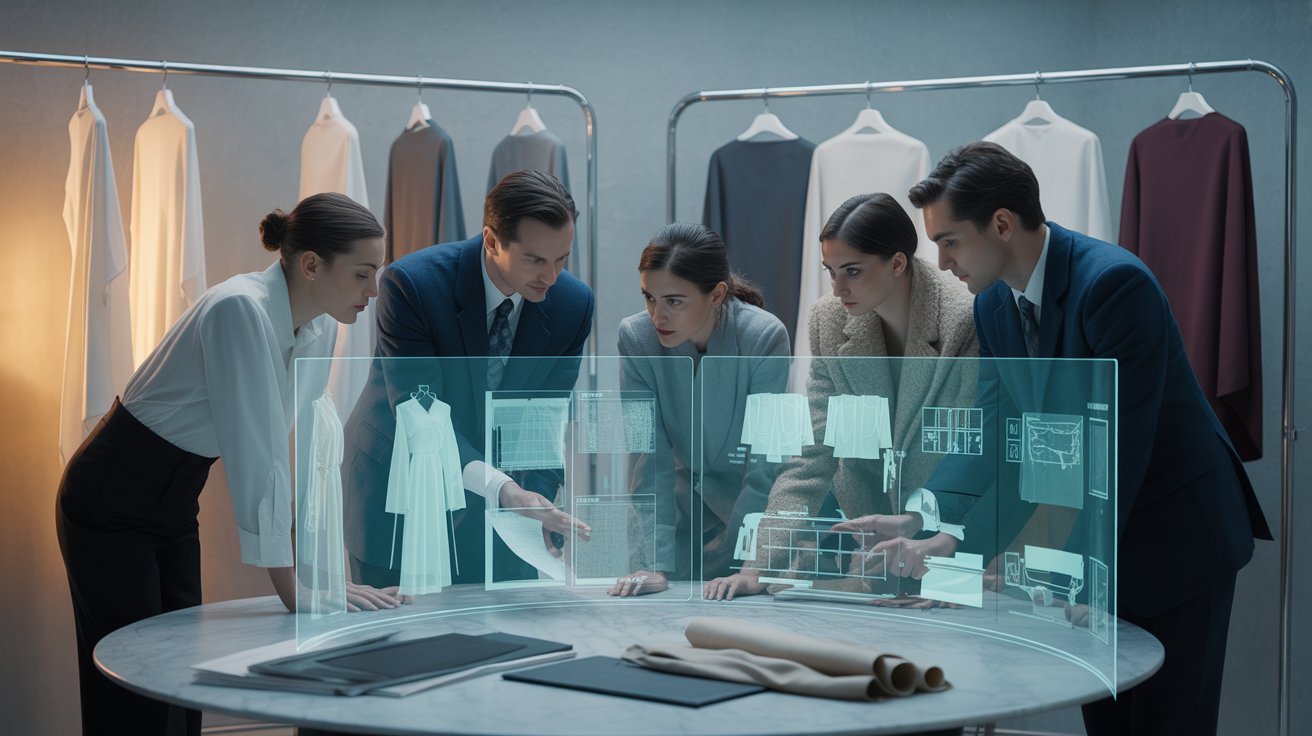
ERP helps fashion manufacturers optimise resources, improve operational efficiency, strengthen inventory management, and gain real-time visibility across business processes.
- Enhanced Operational Efficiency
As fashion businesses grow, operational complexity increases dramatically. ERP systems improve efficiency by integrating business processes into a single platform, eliminating information silos and reducing manual tasks.
Departments no longer need separate systems to manage inventory, purchasing, production, and finance. Instead, information flows automatically between functions, enabling faster decision-making and reducing administrative overhead.
For example, when inventory levels fall below predefined thresholds, ERP systems can automatically trigger procurement activities. This minimises stock shortages while reducing the need for constant manual monitoring.
The result is smoother operations, improved productivity, and better utilisation of organisational resources.
- Better Inventory and Supply Chain Management
Inventory management is one of the most challenging aspects of fashion manufacturing due to changing trends, seasonal demand, and diverse product assortments.
ERP systems provide real-time inventory visibility across warehouses, production facilities, and distribution channels. Managers can track stock levels, monitor supplier performance, forecast demand, and optimise replenishment strategies more effectively.
Improved visibility reduces overstocking, minimises stockouts, and lowers carrying costs. Additionally, ERP enables better coordination with suppliers and logistics partners, helping fashion companies maintain supply chain resilience even during disruptions.
For manufacturers seeking to improve profitability while maintaining customer satisfaction, ERP serves as a powerful tool for supply chain optimisation.
Why Fashion Manufacturers Need Both PLM and ERP
By integrating PLM and ERP systems, fashion manufacturers can create a connected digital ecosystem that aligns product innovation with operational excellence.
Creating a Connected Digital Fashion Enterprise
Imagine a fashion company preparing for a major seasonal launch. Designers finalise styles in PLM, sourcing teams approve fabrics, and product developers complete technical specifications. Once products move into production, ERP coordinates purchasing, manufacturing, inventory management, and order fulfilment.
Without integration, critical information must be transferred manually between systems, increasing the risk of errors and delays. However, when PLM and ERP work together, product data flows seamlessly from development to operations.
This integration creates a connected digital enterprise where product innovation and operational execution align perfectly. Teams gain end-to-end visibility, improve collaboration, reduce duplication, and accelerate time-to-market.
For modern fashion manufacturers, the question is no longer whether to choose PLM or ERP. Instead, the focus should be on leveraging both systems together to achieve greater efficiency, agility, and competitiveness.
The Future of Fashion Manufacturing With PLM and ERP Integration
PLM and ERP serve distinct but equally important roles in fashion manufacturing. PLM empowers product development teams to innovate, collaborate, and efficiently manage product information, while ERP enables organisations to optimise operations, manage resources, and drive business performance.
Fashion manufacturers operating in today’s fast-moving marketplace require both capabilities to remain competitive. By integrating PLM and ERP systems, companies can create a seamless digital ecosystem that connects product design, sourcing, manufacturing, inventory management, and customer fulfilment.
As fashion supply chains become increasingly complex and consumer expectations continue to rise, organisations that successfully combine PLM and ERP technologies will be better positioned to accelerate innovation, improve operational efficiency, and achieve long-term growth.
FAQs About Fashion Manufacturing With PLM and ERP Integration
A PLM database stores product-centric information such as designs, BOMs, specifications, and development workflows. An ERP database manages operational data, including inventory, procurement, production orders, financial transactions, and supply chain activities across the enterprise.
PLM-ERP integration enables seamless data transfer between product development and operational processes. It eliminates duplicate data entry, reduces manual errors, accelerates production readiness, improves visibility, and ensures consistent product information throughout the manufacturing lifecycle.
PLM manages engineering and product-development BOMs, including fabrics, trims, colours, and specifications. ERP manages manufacturing BOMs used for procurement, inventory planning, and production execution. Together, they ensure accurate alignment of product and production data.
PLM provides visibility into material sourcing, supplier specifications, and compliance documentation. ERP tracks inventory movements, procurement transactions, production activities, and shipment records. Combined, they create end-to-end traceability across the fashion supply chain.
While ERP can manage production, inventory, and financial processes, it lacks specialised product development capabilities. Fashion manufacturers relying solely on ERP often experience slower design cycles, fragmented product data, and reduced collaboration during collection development.