
Businesses today move faster than ever, yet many still rely on disconnected tools that slow growth and decision-making. Finance works in one system, HR in another, and operations somewhere else entirely. The result? Data chaos. Understanding ‘what is ERP’ reveals how modern organisations eliminate this problem using intelligent integration. ERP connects people, processes, and technology into one powerful ecosystem. From automation to analytics, companies now depend on ERP to stay competitive in digital economies. But ERP is more than software—it reshapes how businesses operate, scale, and innovate. Let’s explore how this transformational system truly works behind the scenes.
What Is ERP?

‘What is ERP’ refers to software that integrates business functions into a unified platform known as ‘Enterprise Resource Planning’ to manage operations efficiently.
The True ERP Meaning in Modern Organisations
The simplest ERP meaning focuses on integration. Businesses generate information across finance, supply chains, employees, procurement, and customers every day. Without integration, this information becomes fragmented and difficult to manage.
An accurate ERP software definition describes ERP as an integrated business management system that connects all operational activities into one digital environment. Instead of separate tools, organisations operate through shared workflows supported by centralised data management.
This structure allows companies to manage enterprise business operations from a single interface. Teams access identical datasets, eliminating reporting conflicts and manual reconciliation work. Modern ERP software acts as the foundation of business resource planning technology, ensuring resources such as labour, capital, and materials are aligned with organisational goals.
ERP platforms also encourage cross-departmental collaboration, allowing departments to function as interconnected units rather than isolated teams. Ultimately, ERP transforms operational complexity into structured, measurable processes that improve efficiency and organisational control.
Evolution of Enterprise Resource Planning Systems
The concept of enterprise resource planning evolved from early manufacturing planning systems used in the 1960s. These systems initially focused only on inventory tracking. Over time, businesses required broader visibility across departments. ERP expanded to include financial management systems, procurement tools, and workforce management capabilities.
Today, ERP supports advanced business process automation, enabling repetitive activities such as invoicing, approvals, and reporting to occur automatically. Cloud innovation further accelerated ERP adoption through Cloud-based enterprise platforms, allowing companies to deploy enterprise-grade systems without heavy infrastructure investments.
Modern ERP solutions now provide real-time business insights, helping organisations respond instantly to operational changes. This evolution shows that ERP is no longer just operational software—it is a strategic platform enabling long-term digital competitiveness.
ERP System Explained
An ERP system explained, connects multiple business departments through shared data and automated workflows to improve operational performance.
Core Components of an ERP System
To understand an ERP system, it is necessary to examine its modular architecture. ERP platforms consist of interconnected modules operating on shared databases. These modules enable seamless enterprise data integration, ensuring information entered in one department automatically updates across the organisation.
ERP systems support organisational workflow management by standardising approvals, reporting structures, and operational sequences. For example, a confirmed sales order automatically updates inventory levels while generating accounting entries. This automation creates end-to-end process visibility, allowing businesses to monitor entire workflows.
Such synchronisation enhances operational performance management, enabling managers to detect inefficiencies quickly. ERP platforms also strengthen collaboration between finance, procurement, and logistics teams through integrated processes.
The result is a unified operational ecosystem capable of supporting growth without increasing administrative complexity.
Role of Real-Time Intelligence in ERP
A defining capability of ERP systems is access to real-time business insights. Traditional reporting methods often rely on historical data, limiting proactive decision-making. ERP systems continuously collect operational information, supporting accurate forecasting.
This real-time visibility drives data-driven decision-making, helping executives evaluate performance instantly. ERP dashboards track financial performance, workforce productivity, procurement efficiency, and supply chain movement simultaneously.
Such insights enable organisations to improve business efficiency optimisation, ensuring resources are used effectively. Real-time intelligence also strengthens risk management by identifying disruptions before they escalate into operational failures.
Modern ERP platforms, therefore, act as live operational control centres rather than passive record-keeping systems.
How ERP Systems Work
How ERP systems work involves integrating business data into one platform that automates workflows and synchronises organisational activities.
- Data Flow Across Business Functions
ERP systems operate through continuous data exchange between departments. When transactions occur, information flows automatically across modules supporting enterprise business operations. This removes the need for duplicate data entry. ERP enhances supply chain integration by connecting suppliers, warehouses, logistics teams, and customer demand forecasts.
Organisations gain tighter control over inventory and procurement management, ensuring stock availability aligns with demand patterns.ERP automation also supports human resource management automation, simplifying payroll processing, recruitment tracking, and workforce analytics.
Because all departments rely on shared data, operational alignment improves significantly.This integrated flow reduces delays, improves forecasting accuracy, and strengthens enterprise coordination.
- Automation and Operational Synchronisation
Automation lies at the centre of ERP functionality. Through intelligent workflows, ERP enables large-scale business process automation, minimising manual intervention. Automated approvals enhance organisational workflow management, ensuring compliance and consistency across departments.
ERP platforms synchronise accounting updates, inventory adjustments, and procurement actions instantly. This synchronisation improves transparency while enabling faster response times. Organisations leveraging ERP achieve stronger coordination and predictable operational outcomes, making automation a key driver of enterprise success.
ERP System for Business

An ERP system for business enables companies to manage operations, resources, and performance through integrated enterprise software.
Why Modern Businesses Need ERP
As organisations expand, operational complexity increases rapidly. ERP introduces scalable business software solutions capable of supporting growth without system fragmentation. Through enterprise data integration, businesses eliminate disconnected workflows that slow productivity.
ERP adoption plays a major role in digital transformation in enterprises, replacing manual operations with intelligent automation. Leadership teams gain visibility into finance, workforce performance, and operational outputs through unified dashboards.
This integrated environment enhances planning accuracy while improving accountability. Companies using ERP experience stronger agility because decision-makers access real-time operational intelligence.
ERP as a Strategic Growth Platform
ERP systems increasingly function as strategic innovation platforms. Cloud deployment through cloud-based enterprise platforms allows remote collaboration and faster scalability.
ERP strengthens cross-departmental collaboration, ensuring departments operate toward shared organisational objectives. Businesses achieve improved forecasting, optimised resource allocation, and stronger operational resilience. ERP, therefore, becomes essential infrastructure supporting sustainable enterprise growth.
Benefits of ERP Systems
The benefits of ERP systems include improved efficiency, automation, real-time visibility, and better decision-making across business operations.
Improved Operational Efficiency and Automation
One of the biggest advantages organisations gain from ERP adoption is improved operational efficiency. ERP platforms eliminate repetitive administrative work through intelligent automation.
By enabling large-scale business process automation, companies reduce manual errors and operational delays. Tasks such as invoice processing, procurement approvals, payroll calculations, and reporting become automated workflows.
ERP systems unify operational activities under an integrated business management system, ensuring departments operate using standardised procedures. Automation also improves operational performance management, allowing managers to monitor productivity metrics continuously.
Because ERP platforms rely on centralised data management, employees no longer waste time searching for information across multiple tools. This structured environment enables faster execution of daily tasks while improving accuracy across departments.
Ultimately, ERP transforms operational efficiency from a management goal into an automated outcome supported by technology.
Better Decision-Making Through Data Visibility
Modern organisations depend heavily on accurate insights to remain competitive. ERP systems provide real-time business insights, allowing leadership teams to evaluate operational performance instantly. Access to unified data strengthens data-driven decision-making, reducing reliance on assumptions or outdated reports.
ERP dashboards integrate financial performance, workforce metrics, and supply chain analytics into one view. This visibility supports stronger planning and forecasting while improving business efficiency optimisation across departments.
Executives can identify inefficiencies, predict risks, and adjust strategies quickly. ERP, therefore,e empowers businesses to move from reactive decision-making toward predictive and proactive management models.
ERP Modules and Functional Areas
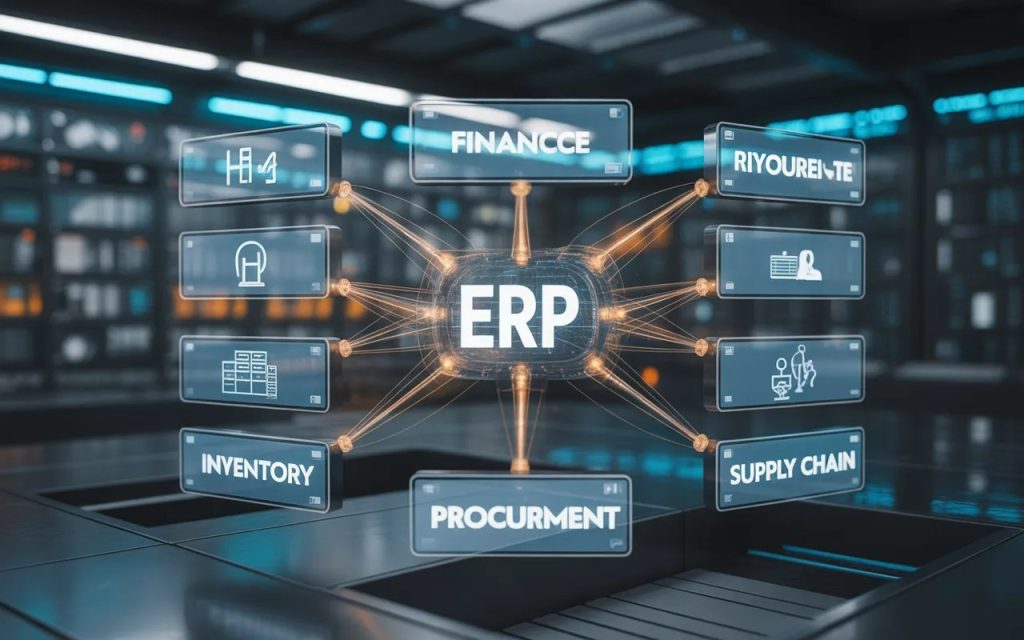
ERP modules are specialised components that manage finance, HR, supply chain, procurement, and other core enterprise business operations within one system.
Financial and Accounting Management
Finance modules form the backbone of most ERP platforms. Integrated financial management systems automate accounting activities such as budgeting, invoicing, expense tracking, and compliance reporting.
Because financial data connects directly with operational transactions, organisations maintain accurate records automatically. ERP improves transparency by linking procurement, payroll, and sales activities to financial reporting systems.
This integration strengthens governance while supporting strategic financial planning. Companies gain real-time insight into profitability, cash flow, and operational costs through unified dashboards.
Supply Chain and Inventory Management
ERP systems significantly improve logistics coordination through advanced supply chain integration. Businesses can track supplier performance, shipment status, and warehouse activity from one platform. ERP enhances inventory and procurement management by automatically updating stock levels based on transactions.
Demand forecasting tools prevent shortages while minimising excess inventory. This synchronisation reduces operational costs and improves customer satisfaction through timely delivery performance. Supply chain visibility has become a critical competitive advantage enabled by ERP adoption.
Human Resource and Workforce Management
ERP platforms streamline workforce operations using human resource management automation. HR teams manage recruitment, employee records, payroll, attendance tracking, and performance evaluations through one system.
Automation improves compliance while reducing administrative workload. Integrated workforce analytics help organisations plan talent development strategies aligned with business goals. ERP ensures that employees, managers, and executives operate within transparent, standardised HR processes.
ERP Deployment Models and Technology Evolution
ERP deployment models include cloud, on-premise, and hybrid solutions delivered through modern Cloud-based enterprise platforms.
Cloud ERP and Scalability Advantages
Cloud technology has reshaped ERP adoption worldwide. Modern ERP solutions operate through Cloud-based enterprise platforms, eliminating the need for expensive infrastructure. Cloud ERP enables remote system access, automatic updates, and faster implementation timelines.
Organisations benefit from scalable business software solutions that allow systems to expand alongside business growth. Cloud deployment also enhances collaboration among distributed teams. Companies adopting cloud ERP gain agility, cost efficiency, and improved disaster recovery capabilities. This flexibility makes cloud ERP the preferred deployment model for modern enterprises.
ERP and Digital Transformation in Enterprises
ERP plays a central role in digital transformation in enterprises. By integrating operational data and automation tools, ERP enables organisations to modernise legacy workflows. ERP supports innovation initiatives such as advanced analytics, artificial intelligence integration, and predictive forecasting.
Through complete end-to-end process visibility, businesses gain control over complex operational environments. Digital transformation powered by ERP improves competitiveness while enabling faster adaptation to market changes. ERP, therefore, becomes a foundation for long-term technological evolution.
The Future of ERP Systems

The future of ERP focuses on intelligent automation, predictive analytics, and deeper enterprise data integration across digital ecosystems.
Intelligent ERP and Advanced Analytics
Next-generation ERP platforms increasingly incorporate AI-driven analytics. These systems analyse operational patterns to recommend process improvements automatically. ERP platforms strengthen operational performance management by predicting risks before disruptions occur.
Advanced analytics enhance forecasting accuracy across finance, supply chains, and workforce planning. Organisations gain continuous optimisation capabilities rather than periodic performance reviews. ERP is evolving into an intelligent decision-support ecosystem rather than a traditional management software system.
ERP as a Strategic Business Platform
ERP systems are transitioning into enterprise innovation hubs. They support seamless cross-departmental collaboration, connecting internal teams with suppliers and partners. Future ERP platforms will integrate IoT data, automation engines, and advanced reporting tools.
This evolution positions ERP as the digital backbone supporting sustainable business growth. Organisations investing in ERP today are preparing for data-driven enterprise ecosystems of tomorrow.
Why ERP Matters More Than Ever
ERP is no longer optional technology—it is essential infrastructure for modern organisations. Understanding what Is an ERP system reveals how businesses integrate operations, automate workflows, and improve strategic decision-making.
From finance and HR to supply chains and analytics, ERP connects every operational layer into one intelligent ecosystem. As markets become increasingly digital, companies relying on disconnected systems risk falling behind. ERP enables efficiency, scalability, and innovation simultaneously.
Organisations that successfully implement ERP gain long-term agility, operational transparency, and competitive resilience in rapidly evolving global business environments.
FAQs About ERP
ERP is software that integrates finance, HR, supply chain, and operations into one system, allowing businesses to manage processes efficiently using centralised data and automated workflows that improve visibility and decision-making across the organisation.
ERP systems help businesses automate workflows, improve collaboration, and provide real-time insights into performance. This enables organisations to reduce operational costs, enhance productivity, and make faster, more informed strategic decisions based on accurate enterprise data.
ERP supports business growth by providing scalable systems that manage increasing operational complexity. Companies gain improved coordination, accurate reporting, and integrated workflows that ensure expansion occurs without operational inefficiencies or data fragmentation.
ERP systems are used across manufacturing, healthcare, retail, logistics, finance, education, and technology sectors. Any organisation managing multiple departments benefits from ERP’s ability to integrate processes and improve operational visibility.
Cloud ERP offers remote accessibility, lower infrastructure costs, automatic updates, and scalability compared to traditional systems. Many organisations prefer cloud ERP because it enables faster deployment and supports modern digital business operations.