

Surpassing many trends and ages, we have stepped into a business environment which moves at lightning speed. In such a speedy landscape, relying on one business strategy or principle cannot save your position from the competitors. Also, every day you will meet new challenges with your investors, customers and even with employees and regulators when it comes to retention. This is where you need to integrate new trends and innovations and adhere to the regulations. Environmental, Social, and Governance (ESG) is a strategic approach that has been widely adopted by companies since 2004. This integration has become an important part to meet the expectations of the above-mentioned parties, and it simply transforms sectors to grow with innovation and gain long-term resilience.
In this article, we explore what ESG is and in which ways this concept can impact your business.
What is ESG? Definition
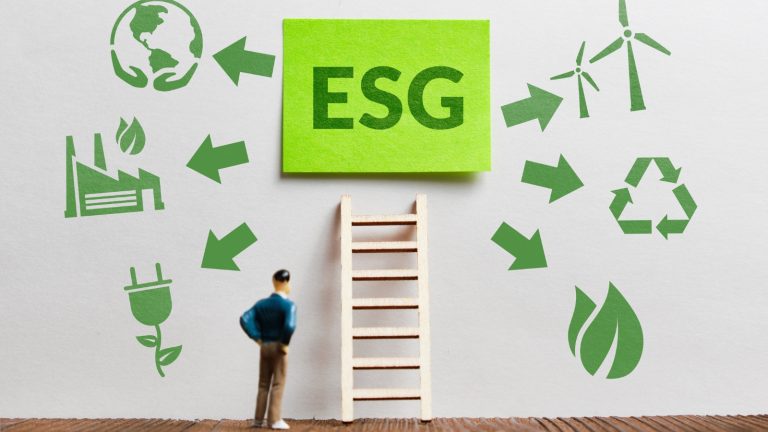
ESG refers to environmental, social and governance, and it offers a framework for businesses to measure an organisation’s environmental and social impact. This set of standards is vital in the context of investing primarily. However, it positively impacts many other aspects such as customers, suppliers, employees, as well as the general public.
Although we tend to talk a lot about this concept in the recent past, the truth is that the ESG framework has been on the business surface as a recognised business concept for over two decades. The United Nations Global Compact introduced the term first, and it targets an organisation’s performance when it comes to environmental impact, social responsibility, and
good corporate governance.
It can be popular in the business management scenario to achieve sustainability and CSR functions, yet they come more as philosophies or end-goals. The difference between those two elements and ESG is that the latter is more tangible.
Further, it involves a set of data and metrics needed to inform decision-making for companies and investors alike.
Key Takeaways
- ESG is important for modern businesses as helps them strike the right balance between ethical governance, profitability and sustainability.
- Opting for a solid ESG framework, coupled with technologies such as AI, predictive analytics and automation, simply enhances risk management, stakeholder confidence and operational efficiency.
- Accurate ESG reporting and compliance are becoming essential as global regulations continue to evolve.
Four Pillar Framework of ESG
Originally, it was a 3-pillar framework, but with time and investments being considered, the fourth pillar has been included in it recently.
Environmental
The environmental pillar is about the way organisations interconnect with nature. This is a wide topic that covers major areas such as renewable energy usage, carbon emissions, resource sourcing, biodiversity conservation, and waste reduction.
Companies are encouraged to keep track of their ecological footprint as it offers them an opportunity to get better positioned when it comes to meeting climate goals and being resilient to environmental risks.
Social
The social pillar focuses on how organisations, employees, consumers, suppliers, and communities interact with people using innovative and sustainable business practices.
In this context, companies are required to show how they prioritise people. It not only strengthens employee loyalty and attracts talent, but it also talks about how they build consumer trust.
Governance
Governance concentrates on expressing a company’s transparency and ethics in decision‑making. Whether it is anti-corruption safeguards, board diversity, executive pay tied to sustainability goals, or clear accountability, a company is bound to clearly show that they adhere to all these elements.
Economic Sustainability
This is the fourth pillar, and in economic sustainability, organisations must walk beyond the traditional three-pillar model. In this venture, adding long‑term business viability comes under the spotlight as a major element.
This covers how a financially sustainable company balances profit with environmental and social responsibility. This fourth pillar simply establishes an enduring value, as well as opening doors for new ways to collaborate with the environment.
Impacts of ESG Framework for Modern Businesses

This is where both the business and its investors benefit from tangible advantages. Businesses will receive the chance of opening a larger pool of capital and establishing a solid brand reputation. When it comes to investors, they can maximise their ROI compared to traditional business approaches if they invest in an ESG-centric brand.
1. Captivate Investors and Lenders
One of the biggest advantages for an organisation is that they get higher opportunities to entice potential investors and lenders in the long run. The point is that any investors or lenders are attracted to a company that implements EGS practices and sustainability strategies because it is indeed a strategic approach that includes ESG reporting in earnings at the end of every financial year.
From the investor’s end, it is a wise decision to pick such a company with high sustainability alignment that shows their commitment to environmental well-being, as they are identified as low-risk investments.
2. Gaining a Competitive Advantage
You can notice that those companies with ESG efforts have a heightened chance of receiving a competitive advantage compared to their business rivals.
In the landscape where regulators, consumers, lenders and employees matter, it is important to keep your ESG metrics tracked and reported. As a company, it offers a good chance to boost various labour conditions and promote diversity. It expresses how a company gives back to the community and eventually ends up strengthening the brand identity.
3. Strengthening Financial Performance
In the above, we explored how ESG reporting and transparency can make a business enticing to potential investors. The result is that it positively impacts an organisation’s overall financial performance.
Imagine this: when a company adheres to an ESG framework, it needs to track key metrics such as raw material usage, waste management, energy consumption, etc. This way, they can actually have a clear understanding of which areas in the business process show more waste and which aspects require optimisation. With the right approaches, a company can reduce its energy bills and waste, which will affect the bottom line and ROI.
As much as many governments offer incentives to organisational sustainability efforts, companies that stay compliant will have less exposure to fines, penalties and other business risks.
4. Establishing Customer Loyalty
Do you know that today’s consumers, especially Gen Z, are highly enthusiastic towards brands that are eco-friendly? If you walk through Deloitte’s ‘2025 Gen Z and Millennial’ survey, you can see that they have discovered some interesting points in this regard.
The survey has found that 65% of Gen Z respondents tend to spend a premium for the products or services that align with sustainability. As it demonstrates, this will be a gold mine for brands with transparent, eco-friendly frameworks to attract consumers.
How Tigernix Acts as Your ESG Compliance Alliance In This Digital Age
As a pioneer software provider in Singapore, Tigernix is always loyal to sustainability and the environment. We offer a sophisticated ‘Enterprise Resource Planning’ software solution, TigernixERP, for organisations that track and trace their ESG compliance as per standard regulations.
With AI analytics, Automation, predictive maintenance, digital twin, etc, our software can analyse your business processes and assets and indicate where improvements are needed to achieve ESG compliance.
With its reporting and Analytics features, you can make your financial audits easy and transparent, avoiding fines or penalties.
Connect with us for more information.
Tigernix-Digitalisation In Your Business
Complying with ESG FOR Optimal Competitive Advantage
There is no doubt that ESG opens doors for businesses to draw a connection between environmental, social, governance, and economic sustainability practices. The organisations that reach the highest point will get the benefits and widely earn trust among lenders, investors, regulators, consumers, as well as employees in the long run.
If your company is about to take the steps forward with integrity and measurable impact, it is the right moment to start your venture today with the right strategies.
FAQs About ESG For Businesses
Yes, ESG is still relevant in 2026; in fact, it is more relevant than ever, with many companies moving towards eco-friendliness, governments drawing closer attention to compliance, and consumers gathering around ERS-compliant brands now.
ESG refers to the basic concepts of Environmental, Social, and Governance. This three-pillar concept revolves around evaluating a company’s ethical impact, risk management practices and the sustainability of investments and companies, which will lead to overall financial performance.
There is a fair chance that ESG will be replaced by AI, yet here, it does not replace systems or people that are involved in the ESG process, but the interfaces. This means AI might change the way ESG software works, not the fundamentals of underlying systems. AI will also automate the reporting process for companies.
In fact, it has already become the present of business ventures. In the future, there will be more complex regulations, standards and stricter protocols that companies must adhere to. While the latter offers innovation and investment opportunities for businesses, it will also offer a new set of challenges.