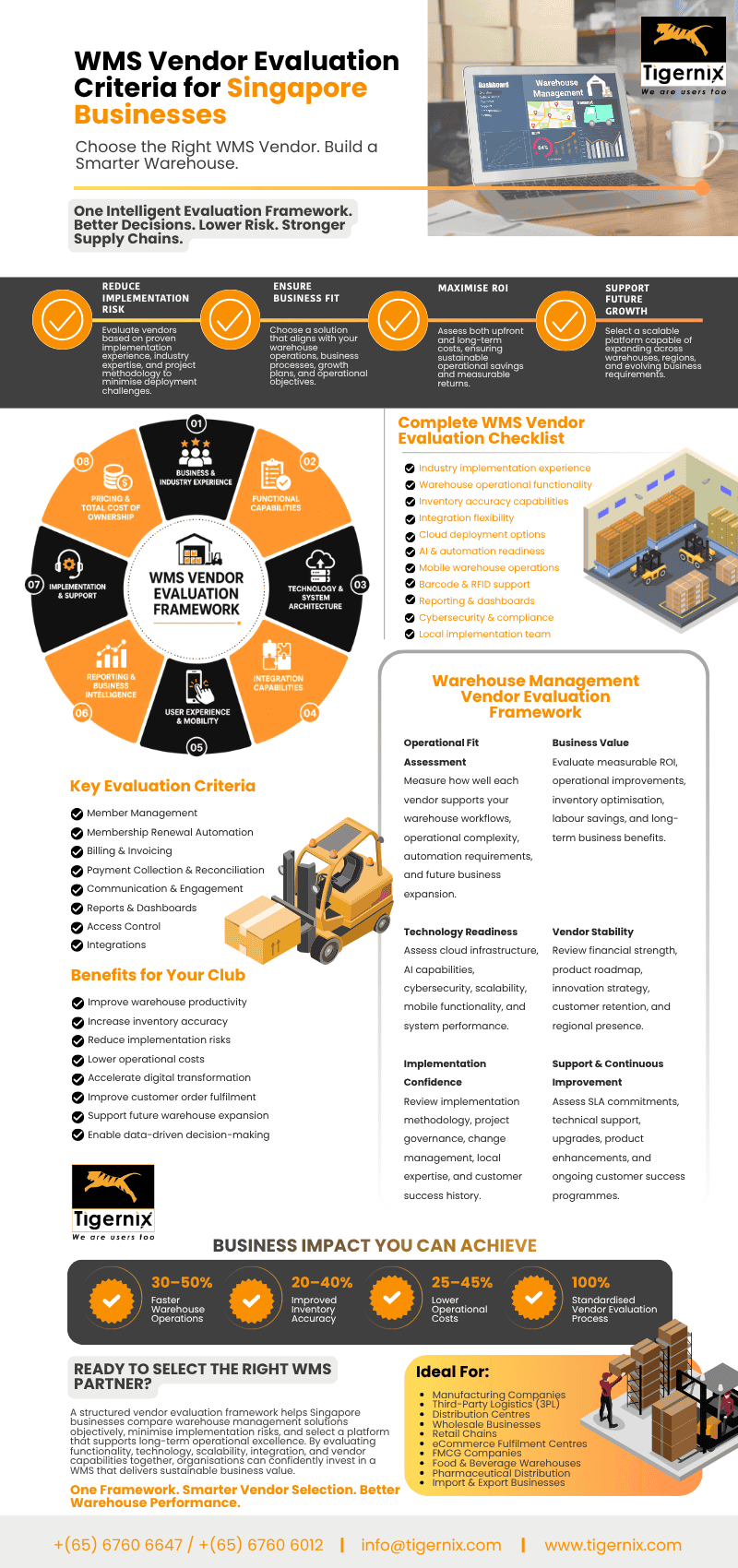

Getting a suitable warehouse onboard for your organisation is not a mere digital upgrade or software purchase. When making a buying decision, it matters more to evaluate and compare the operational excellence you want to achieve through a WMS deployment than to focus only on features and price. This raises a challenge for warehouse operators, control panel operators, investors, and engineers: how do we choose a WMS that suits us?
This infographic guides Singaporean warehouse decision-makers through step-by-step evaluation criteria for assessing a suitable Warehouse Management System vendor for your company’s unique software requirements. It explains how WMS adoption should be a result of assessing warehouse processes, integration requirements, growth plans, functional uniqueness and other aspects before trusting a software vendor blindly for what they offer. Failing to evaluate a vendor against a warehouse’s unique requirements may lead to delays, poor user flexibility, operational disruption, idle time, and other inefficiencies.
Read the infographic below to understand what the ’ right ’ questions are to ask before committing to a long-term trust with a WMS vendor based on operational value rather than uneventful and short-term specifications.