

Choosing an enterprise resource planning (ERP) system is only the beginning of a much larger transformation journey. To truly unlock value, organisations must focus on ERP implementation best practices that guide every phase, from initial planning and stakeholder alignment to system configuration, data migration, and post-go-live optimisation.
A structured approach ensures smoother transitions, minimises operational disruption, and reduces the likelihood of costly errors. By adhering to proven methodologies, businesses can improve user adoption, maintain data integrity, and achieve faster return on investment while avoiding common risks and implementation setbacks.
In this article, we cover ERP implementation best practices in depth.
We will explore
The article covers
- ERP Implementation Overview
- Business Benefits of Implementing an ERP System
- ERP Implementation Strategies
- The Role of the ERP Project Team
- Steps for Planning a New ERP Implementation Project
- Best Practices for Planning a New ERP Implementation
- Prioritize Processes and Capabilities That Matter Most
- Tips for Reducing ERP Implementation Risks
- Tips for Avoiding Extra ERP Implementation Costs
- Measuring the ROI of an ERP Implementation
- When Is ERP Implementation Complete?
- FAQs About ERP Implementation
Overview of ERP Implementation

The first thing to understand about an ERP system implementation is the meaning of ERP: enterprise resource planning.
At its core, ERP connects and manages the essential business functions required to operate a company, including finance, HR, manufacturing, supply chain, services, procurement, and more.
In simple terms, ERP is software designed to unify these processes within a single integrated system, which is why it is commonly known as the central system of record for an organisation.
When an ERP system is not properly implemented, businesses often struggle with disconnected workflows and outdated legacy systems.
This results in slow, error-prone reporting, restricted visibility into real-time data, and the absence of a dependable single source of truth. As a result, organisations of all sizes invest in ERP systems to strengthen decision-making, streamline operations, enhance efficiency, and maintain a competitive advantage while reducing operational risks.
However, integrating an ERP system into existing processes and IT infrastructure is a complex and resource-intensive undertaking. It requires careful planning, a clear understanding of business requirements, and alignment across teams.
Being aware of the benefits, risks, and ERP implementation best practices beforehand can significantly improve the chances of a successful deployment.
Key Takeaways
- ERP implementation success depends on strong planning, the right team, and clear business goals.
- Following ERP implementation best practices reduces risks, costs, and project delays.
- Prioritising core processes ensures faster ROI and better system adoption.
- Continuous optimisation after go-live is essential for long-term ERP value.
Business Benefits of Implementing an ERP System
There are numerous advantages to adopting an ERP system, especially a cloud-based solution, and these benefits can differ depending on the nature of the business. For instance, a professional services firm may prioritise project visibility and billing accuracy, while a manufacturing company may focus on production planning and supply chain coordination.
Despite these differences, several core benefits of ERP implementation are universally experienced across industries and organisational sizes:
Delivers Actionable Insights in Real Time
Making informed decisions becomes difficult when critical data is scattered or delayed. Implementing an ERP system enables organisations to centralise data from multiple departments, providing a unified and accurate view of operations.
Leaders can quickly track financial performance, monitor KPIs, and generate real-time reports.
This empowers faster, data-driven decision-making and helps businesses respond effectively to market changes and operational challenges.
Increases Operational Efficiency
Relying on disconnected systems and manual processes often leads to inefficiencies, higher operational costs, and increased risk of human error.
An ERP system streamlines workflows by automating repetitive tasks such as data entry, reporting, and transaction processing.
This reduces delays, improves accuracy, and enhances productivity across teams, ultimately leading to better customer satisfaction and improved overall profitability for the organisation.
Simplified Deployment, Use, and Maintenance
Managing multiple systems across different locations can create complexity and slow down innovation.
A cloud-based ERP system simplifies deployment by offering scalable infrastructure and centralised access. Updates are automatic, reducing the burden on IT teams, while users can access the system from anywhere.
This ensures the organisation remains up to date with technological advancements without disrupting ongoing operations or requiring extensive maintenance.
Enhances Cross-Department Collaboration
Siloed departments often struggle to share information efficiently, leading to miscommunication and duplicated efforts. An ERP system creates a unified platform where teams across finance, HR, procurement, and operations can access the same data in real time.
This improves coordination, strengthens collaboration, and ensures all departments are aligned toward common business goals and performance outcomes.
Strengthens Compliance and Risk Management
Maintaining compliance with industry regulations and internal policies can be challenging without proper systems in place.
ERP systems provide built-in controls, audit trails, and standardised processes that help organisations meet regulatory requirements. They also reduce risks associated with data inconsistencies, security breaches, and reporting inaccuracies, ensuring better governance and long-term business stability.
ERP Implementation Strategies
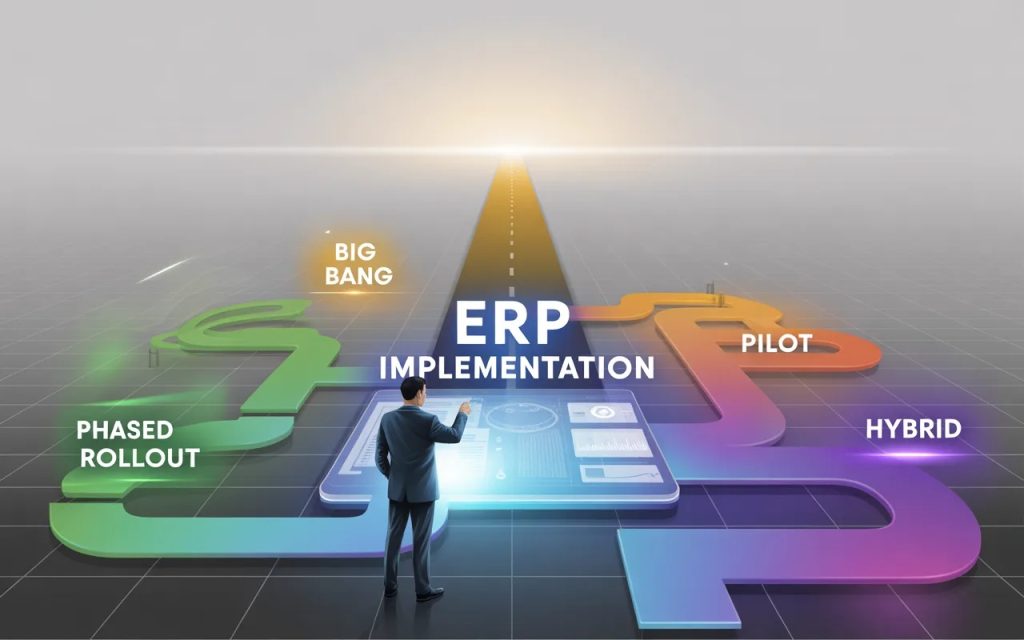
When organisations plan system deployments, they often begin by focusing on specific features or technologies. However, successful ERP implementation strategies go beyond features; they prioritise modernising business processes to support agility, scalability, and faster decision-making.
Technology alone cannot drive transformation unless it is aligned with processes that enable responsiveness and continuous improvement across the organisation.
In many cases, legacy processes are rigid, slow, and unable to meet evolving business demands. Even well-established workflows must be continuously refined to incorporate emerging capabilities such as AI, generative AI, AI agents, and advanced supply chain orchestration.
Keeping processes at the centre of the implementation ensures long-term success. Additionally, the complexity of the organisation significantly influences strategy choice, with larger enterprises requiring more structured, multi-layered approaches.
Below are four widely used approaches that organisations can adopt when planning an ERP implementation project:
Big Bang
The big bang approach involves deploying the entire ERP system across the organisation simultaneously, replacing legacy systems in one coordinated transition. This method can deliver immediate benefits, including unified operations and faster access to integrated data, without the need to maintain parallel systems.
However, this strategy carries a higher level of risk, as any issues during implementation can impact the entire organisation at once. It requires extensive preparation, rigorous testing, and comprehensive user training to ensure success.
Despite its challenges, the big bang approach is often selected when time constraints, competitive pressures, or operational requirements make gradual implementation impractical.
Phased rollout
A phased rollout approach involves implementing the ERP system gradually across departments, business units, or geographic locations.
This method allows organisations to test each stage carefully, identify issues early, and refine processes before moving forward. It significantly reduces operational risk and minimises disruption to daily activities.
By rolling out the system step by step, teams gain time to adapt, receive training, and build confidence in the new environment. This approach also enables organisations to incorporate feedback from each phase, improving subsequent deployments.
While it may extend the overall timeline, a phased rollout ensures a smoother transition, better user adoption, and more controlled change management across complex organisational structures.
Pilot Implementation
Pilot implementation focuses on introducing the ERP system on a smaller scale, typically within a single department, location, or controlled user group. The goal is to evaluate system performance, identify potential gaps, and gather real user feedback before proceeding with a full-scale rollout.
This strategy reduces uncertainty by providing valuable insights into how the system functions in real-world scenarios. It allows organisations to fine-tune configurations, address usability concerns, and improve training programmes.
A successful pilot builds stakeholder confidence and creates a strong foundation for broader deployment, ensuring that risks are minimised and implementation outcomes are more predictable and effective.
Hybrid Approach
The hybrid approach blends multiple ERP implementation strategies to create a customised deployment model that aligns with specific business needs.
Organisations may combine phased rollouts with pilot programmes or use a big bang approach for certain modules while gradually deploying others. This flexibility allows businesses to optimise resources and balance speed with risk management.
By leveraging the strengths of different strategies, companies can respond dynamically to challenges and evolving requirements during implementation. The hybrid model also supports innovation by enabling selective testing of new technologies while maintaining stability in core operations.
This adaptability makes it particularly suitable for organisations with diverse operational requirements and varying levels of digital maturity.
The Role of the ERP Project Team
Regardless of the chosen approach, one factor consistently determines the success or failure of an ERP initiative: the ERP project team. Across numerous implementation case studies, the same conclusion emerges—the effectiveness of the team directly influences outcomes. Even the most advanced system will fall short if the people responsible for delivering it lack alignment, expertise, or commitment from the beginning.
This is because ERP success is not driven by software alone, but by how well it is implemented, configured, and adopted across the organisation.
A capable ERP project team ensures that business requirements are clearly defined, processes are optimised, and stakeholders remain engaged throughout the journey. Without sufficient time, training, or support, even skilled individuals may struggle, leading to delays, cost overruns, and systems that fail to meet operational expectations.
Organisations that encounter implementation challenges often make the mistake of assigning team members based on availability rather than capability.
However, ERP projects demand the involvement of critical personnel—those who deeply understand business processes, collaborate effectively across departments, and hold influence within the organisation.
These individuals bring valuable insights that shape system design, ensure alignment with real-world operations, and drive meaningful transformation outcomes.
Ideally, key members of the ERP project team should be fully dedicated to the initiative or allocate a significant portion of their time each week. Individuals who contribute minimal hours may struggle to stay aligned with project developments, limiting their ability to provide input or resolve issues efficiently. Strong time commitment ensures continuity, faster decision-making, and higher-quality implementation outcomes across all phases.
Key Responsibilities of an Effective ERP Project Team
- Define clear business requirements and align them with ERP system capabilities
- Collaborate across departments to ensure unified process design and integration
- Manage timelines, resources, and project milestones effectively
- Facilitate user training, change management, and system adoption initiatives
- Identify risks early and implement mitigation strategies proactively
- Ensure data accuracy, migration readiness, and system testing quality
- Maintain communication between stakeholders, vendors, and executive leadership
Steps for Planning a New ERP Implementation Project
Every ERP initiative is likely to face unforeseen challenges at different stages. However, following structured ERP implementation best practices helps organisations proactively identify potential issues, resolve them efficiently, and keep both risks and costs under control.
A well-planned approach ensures smoother execution and reduces the chances of disruption during critical phases of the project lifecycle.
It is essential to create a realistic implementation timeline that accounts for the availability of key stakeholders, including leadership teams, department managers, and internal subject matter experts.
Prioritising business-critical requirements allows organisations to focus on high-impact outcomes first, while building a scalable ERP foundation that can evolve alongside future growth and technological advancements.
The Main Steps Involved in ERP Implementation Planning
While specific plans and KPIs vary depending on organisational goals, the following steps are fundamental to most successful ERP implementations:
- Define Business Objectives and Scope
Clearly outlining business goals is the foundation of any ERP project. Organisations must identify what they aim to achieve, whether improving efficiency, enhancing reporting, or enabling scalability. Defining the project scope ensures all stakeholders understand priorities, expected outcomes, and limitations, preventing scope creep and misalignment later.
- Assemble the ERP Project Team
Selecting the right ERP project team is critical for success. This includes business leaders, process owners, IT specialists, and external consultants where necessary.
A strong team ensures that both technical and operational perspectives are considered, enabling better decision-making and smoother implementation across departments.
- Assess Current Systems and Processes
Before implementing a new ERP system, organisations must evaluate existing workflows, technologies, and inefficiencies. This step helps identify gaps, redundancies, and opportunities for improvement.
Understanding the current state ensures that the new system is designed to address real business challenges rather than simply replacing old tools.
- Select the Right ERP Solution
Choosing the appropriate ERP system involves evaluating vendors, features, scalability, and integration capabilities.
Organisations should ensure the solution aligns with their industry requirements and long-term goals.
A well-chosen ERP platform supports flexibility, future expansion, and seamless integration with other business systems.
- Develop a Detailed Implementation Plan
A comprehensive implementation roadmap outlines timelines, milestones, resource allocation, and responsibilities.
This plan acts as a guide for the entire project, helping teams stay aligned and accountable. It also includes risk management strategies and contingency plans to handle unexpected challenges effectively.
- Data Migration and System Configuration
Transferring data from legacy systems to the new ERP environment is a critical step that requires accuracy and validation.
At the same time, the system must be configured to match business processes and requirements. Proper data migration ensures data integrity, while accurate configuration enables the system to function as intended.
- Testing and Quality Assurance
Thorough testing ensures that the ERP system performs correctly before going live. This includes functional testing, integration testing, and user acceptance testing.
Identifying and resolving issues during this phase prevents costly disruptions and ensures a smoother transition when the system is deployed.
- Training and Change Management
User adoption plays a major role in ERP success. Organisations must provide comprehensive training to ensure employees understand how to use the system effectively.
Change management strategies help address resistance, improve engagement, and ensure a smooth transition to new processes and workflows.
- Go-Live and Continuous Optimisation
The go-live phase marks the official launch of the ERP system. After deployment, organisations should continuously monitor performance, gather user feedback, and make improvements. Ongoing optimisation ensures the system continues to deliver value, adapt to changing needs, and support long-term business growth.
Best Practices for Planning a New ERP Implementation

Planning a successful ERP project requires a structured, well-informed approach that minimises risks and maximises outcomes. Following proven ERP implementation best practices helps organisations streamline execution, improve stakeholder alignment, and ensure long-term success. These practices provide a clear roadmap for managing complexity, controlling costs, and achieving a smooth transition.
Choose the Right ERP Implementation Partner
Once ERP software selection is complete, the next critical step is choosing a reliable implementation partner. Since most internal teams lack deep ERP deployment experience, working with a knowledgeable consultant is essential. The partner should have proven expertise with the selected system and a clear understanding of how it supports evolving business processes.
It is also important to validate their experience through references and ensure they have industry-specific knowledge. For global operations, confirm their capabilities in handling multiple currencies, languages, and regulatory requirements. Additionally, their project management tools should align with your internal systems to enable seamless coordination, tracking, and communication throughout the implementation lifecycle.
Define and Break Down All Project Activities
A successful ERP project depends on identifying and structuring every required task in detail. With the support of an implementation partner, organisations can create a comprehensive task list covering all aspects of the project.
This includes planning, configuration, integration, testing, and deployment activities across departments.
Training alone involves multiple layers, such as preparing the ERP project team, upskilling IT personnel, and educating end users. Ongoing training programmes must also be planned for future employees.
Breaking tasks into clearly defined phases ensures better control, improves accountability, and allows teams to track progress effectively while reducing the risk of missed steps or delays.
Estimate Resource Effort and Time Requirements
Accurately calculating the effort required for each task is essential for realistic planning. Organisations must evaluate the complexity of activities and assign estimated work hours accordingly.
This includes considering dependencies, potential risks, and the availability of skilled resources across different phases of the project.
Summing total work hours helps determine whether the current team can handle the workload or requires additional support. Engaging an experienced implementation partner improves estimation accuracy and prevents underplanning.
This step is critical for avoiding scope creep, ensuring proper resource allocation, and maintaining control over project timelines and deliverables.
Build a Practical and Achievable Timeline
Once effort estimates are finalised, organisations must translate them into a realistic project schedule. This often reveals gaps between available capacity and desired timelines, requiring adjustments to expectations. Without proper planning, projects risk delays before they even begin.
To address this, businesses may need to reduce scope, extend deadlines, allocate additional resources, or adopt a phased implementation approach. Executive involvement is crucial at this stage to make informed decisions and balance trade-offs.
A well-structured timeline ensures smoother execution, better coordination, and improved alignment between business goals and implementation progress.
Run a Controlled Pilot Before Full Deployment
Conducting a conference room pilot allows organisations to test the ERP system in a controlled environment before full rollout. This phase helps validate business processes, identify configuration gaps, and ensure the system aligns with operational requirements. It also provides an opportunity to explore system capabilities and refine workflows.
During this stage, the implementation partner typically deploys a pilot version of the system for testing. Feedback from users and stakeholders is used to make necessary adjustments.
This proactive approach reduces surprises during go-live and improves confidence in the system’s performance, ultimately saving time and reducing risks in later stages.
Prepare and Cleanse Data Early
Data cleansing is one of the most time-intensive yet critical aspects of ERP implementation. Organisations must review, validate, and standardise data before migrating it into the new system. Poor data quality can lead to inaccurate reporting, operational inefficiencies, and long-term system issues.
Starting this process early allows teams to identify inconsistencies, remove duplicates, and ensure data accuracy. As business processes evolve during implementation, additional data adjustments may be required. Proper data preparation ensures a smoother transition, improves system reliability, and supports better decision-making after deployment.
Maintain Clear and Consistent Communication
Effective communication is essential to keep all stakeholders informed and engaged throughout the ERP project. Regular updates help highlight progress, address challenges, and ensure transparency across teams. Without consistent communication, misunderstandings and resistance to change can arise.
Weekly updates, supported by visual project tracking tools, allow stakeholders to monitor developments and stay aligned with project goals. Sharing both successes and challenges builds trust and encourages collaboration.
Strong communication practices ensure that everyone remains informed, prepared, and supportive of the ERP implementation journey.
Prioritise Processes and Capabilities That Matter Most
To achieve maximum value from an ERP system, organisations must focus on the processes and capabilities that directly impact performance, efficiency, and growth. Since every business has unique challenges, prioritising the right areas ensures faster ROI and smoother ERP implementation.
Identifying high-impact workflows early helps organisations allocate resources effectively and avoid unnecessary complexity.
Core Financial Management and Accounting Functions
Finance and accounting remain the backbone of any organisation, making them a top priority during ERP planning. Businesses need accurate, real-time visibility into financial transactions, KPIs, and performance metrics across all departments and locations.
Beyond basic accounting, these processes must integrate seamlessly with budgeting, forecasting, cost control, asset management, compliance, and cash flow monitoring. A strong financial foundation within the ERP system enables better decision-making, ensures regulatory compliance, and provides leaders with reliable insights to guide strategic planning and long-term growth initiatives.
Supply Chain and Production Operations Optimisation
Supply chain management (SCM) and manufacturing processes are critical for maintaining efficiency in complex and competitive environments. Businesses must manage tight production schedules, fluctuating demand, and frequent supply chain disruptions while maintaining cost control and service quality.
Effective ERP capabilities allow organisations to collaborate with suppliers, logistics providers, and financial partners in real time.
With mobile access and integrated workflows, teams can monitor operations across multiple locations, respond quickly to disruptions, and improve overall supply chain resilience and production efficiency.
Integrated Customer Relationship and Sales Processes
Customer relationship management (CRM) plays a vital role in connecting various business functions. From sales teams and distributors to e-commerce platforms and service departments, every touchpoint must have access to consistent and up-to-date customer information.
An integrated ERP system ensures seamless data flow between CRM and other functions such as order management, procurement, operations, and finance.
This unified approach improves customer experience, enhances sales performance, and enables organisations to respond more effectively to customer needs across multiple channels.
Workforce and Human Capital Management
Human resources (HR) processes are essential for managing a dynamic and diverse workforce. ERP systems must provide secure, real-time access to employee data related to payroll, benefits, scheduling, compliance, and performance tracking.
In addition to administrative functions, HR capabilities should support recruitment, training, and employee development.
By integrating HR processes within the ERP system, organisations can improve workforce planning, enhance employee engagement, and align talent strategies with overall business objectives.
Advanced Analytics and Business Intelligence Capabilities
Business intelligence tools within ERP systems empower organisations to make informed decisions quickly. Teams require real-time dashboards, automated alerts, and detailed reporting capabilities to monitor performance and identify issues as they arise.
With data stored in a unified system, users can drill down into specific metrics and gain deeper insights without relying on multiple disconnected tools.
This improves responsiveness, supports proactive decision-making, and enables organisations to stay competitive in fast-changing business environments.
Global Operations and Multi-Entity Support
As businesses expand into new markets, managing multiple locations, currencies, and regulatory environments becomes increasingly complex. ERP systems must support multinational operations with consistent processes and standardised reporting across regions.
This includes handling multiple languages, currencies, and compliance requirements while maintaining operational consistency.
Strong global capabilities allow organisations to scale efficiently, enter new markets faster, and maintain control over international operations without increasing complexity.
Mobility and Remote Access Enablement
Modern work environments demand flexibility, making mobility a key ERP capability. Employees need secure access to business systems regardless of location, whether working remotely, travelling, or operating across multiple sites.
Cloud-based ERP solutions enable real-time access to data and applications from any device, improving productivity and collaboration.
This ensures that teams can make decisions, complete tasks, and respond to business needs without being restricted by physical location or traditional office setups.
Tips for Reducing ERP Implementation Risks
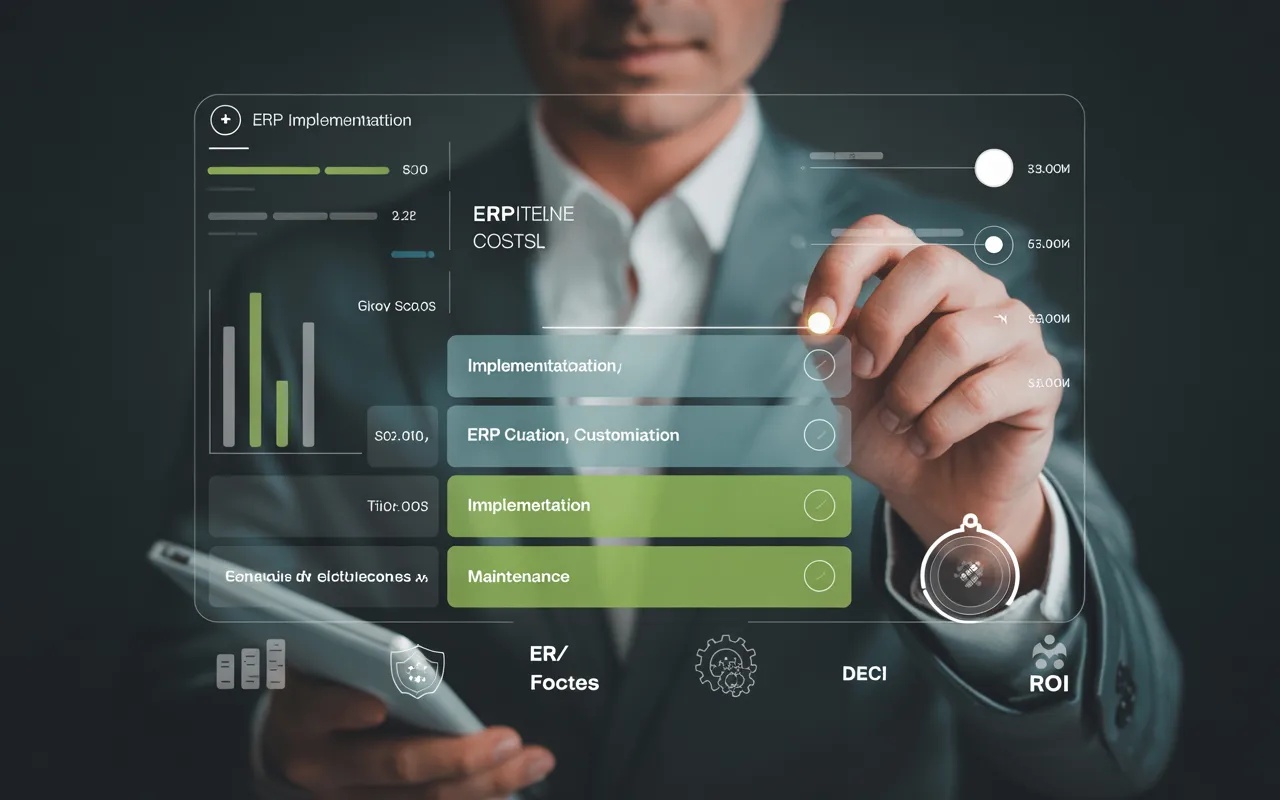
ERP projects often involve complexity, cross-functional coordination, and significant investment, making risk management essential for success. Applying structured ERP implementation best practices helps organisations minimise disruptions, avoid costly mistakes, and ensure projects stay on schedule and within budget.
The following strategies can significantly improve implementation outcomes and long-term system performance.
- Choose Experienced Partners With Industry Expertise
Selecting the right software, consulting, and implementation partners is critical to reducing ERP risks.
Organisations should prioritise partners with proven experience in their specific industry and local market conditions. This ensures a deeper understanding of operational challenges, compliance requirements, and best practices relevant to the business.
It is equally important to validate their capabilities by speaking with references from similar industries.
A knowledgeable partner can guide decision-making, anticipate potential issues, and streamline implementation. Their expertise helps avoid costly missteps while ensuring the ERP system is aligned with both current needs and future growth strategies.
- Replace Legacy Systems and Avoid Outdated Technology
Continuing to rely on outdated systems can limit ERP performance and increase operational risks. Businesses should eliminate legacy, standalone applications and consolidate data into a unified platform that provides a single source of truth.
This improves data consistency, enhances reporting accuracy, and supports better decision-making across departments.
Adopting a clean core ERP strategy further strengthens system stability and scalability. By reducing unnecessary customisations and modernising infrastructure, organisations can innovate more efficiently while lowering maintenance costs.
This approach ensures the ERP system remains flexible, future-ready, and capable of supporting evolving business requirements.
- Ensure Strong Integration and Connectivity Capabilities
Modern businesses rely on seamless integration between internal systems and external partners.
It is essential to verify that the selected ERP vendor offers robust cloud integration capabilities and supports connectivity with supplier networks, customers, and third-party applications.
Effective integration enables real-time data exchange across business units, improving collaboration and operational efficiency. It also ensures that organisations can adapt to digital ecosystems, where interconnected systems drive productivity.
Strong integration capabilities reduce silos, enhance visibility, and support more agile and responsive business operations.
- Control Scope Changes and Manage Project Expansion
Scope creep is one of the most common risks in ERP implementation projects. As new requirements and opportunities emerge, it is easy for projects to expand beyond their original scope, leading to delays and increased costs.
Managing change requests carefully is essential to maintain project control.
Organisations should establish clear governance processes for evaluating and approving changes. Prioritising critical requirements while deferring non-essential features helps keep the project on track.
Effective scope management ensures resources are used efficiently and prevents unnecessary complexity during implementation.
- Ensure Consistent Support Across All Locations
For organisations operating across multiple regions, consistent support is essential for a successful ERP implementation. The chosen ERP vendor should be capable of providing reliable training, deployment, and ongoing support across all business locations.
This often involves coordination between local teams, global consultants, and software providers.
Ensuring consistent expertise and service quality helps maintain standardised processes and reduces implementation risks. It also ensures that users across all locations receive the same level of support, improving system adoption and operational consistency.
Tips for Avoiding Extra ERP Implementation Costs
ERP investments go beyond software as they include time, consulting services, infrastructure, and ongoing operational expenses. Managing these costs effectively is essential to maximise value and avoid budget overruns. A strategic approach helps organisations control spending while ensuring successful implementation outcomes.
- Focus on Total Cost of Ownership (TCO)
Organisations should evaluate ERP investments based on total cost of ownership (TCO), not just initial expenses. This includes implementation, maintenance, upgrades, and operational costs over time.
By analysing both costs and benefits throughout the system lifecycle, businesses can make informed decisions that maximise return on investment. A clear understanding of TCO helps identify cost-saving opportunities and ensures that the ERP system delivers long-term value rather than short-term gains.
- Align ERP With Business Strategy
ERP systems should support existing business goals rather than forcing unnecessary process changes. Misalignment between software and operations can lead to inefficiencies, increased costs, and user resistance.
Organisations should ensure that the ERP solution complements their strategic direction and operational model.
This approach reduces the need for costly adjustments and ensures smoother adoption. Aligning ERP with business objectives improves efficiency while maintaining consistency across processes.
- Prioritise High-Value Core Processes
Focusing on essential business processes helps organisations maximise the impact of their ERP investment.
Activities such as order management, pricing updates, product management, and employee onboarding deliver significant operational value.
By prioritising these core processes, businesses can streamline operations and improve efficiency without overcomplicating implementation. Concentrating on high-impact areas ensures that resources are allocated effectively and that the ERP system delivers measurable improvements across critical functions.
- Minimise Customisation and Leverage Built-In Features
Excessive customisation can significantly increase implementation costs and complexity. Instead, organisations should utilise standard ERP features such as configurable dashboards, workflows, alerts, and business intelligence tools.
Leveraging built-in capabilities allows businesses to adapt quickly without extensive development work. This reduces costs, simplifies maintenance, and ensures compatibility with future system updates.
A configuration-first approach enables flexibility while maintaining system integrity and performance.
- Strengthen Security and Use Cloud-Based Solutions
Security risks, including system breaches and data loss, can result in significant financial and reputational damage. Organisations should prioritise secure ERP deployment, particularly through cloud-based solutions that offer advanced security features.
Ensuring that vendors provide robust security measures, compliance standards, and regular updates helps protect business data.
A secure ERP environment not only reduces risk but also builds trust with stakeholders and supports uninterrupted business operations.
Measuring the ROI of an ERP Implementation
Evaluating the success of an ERP system begins with understanding its return on investment (ROI).
Organisations must assess both measurable financial benefits and intangible improvements to determine whether the system delivers expected value. A structured approach ensures a comprehensive and accurate evaluation.
The process starts by identifying key performance indicators (KPIs) aligned with business objectives, such as improved efficiency, reduced operational costs, increased revenue, and better decision-making.
Tracking these metrics before and after implementation provides clear insights into performance improvements. For example, reductions in inventory costs or faster order processing can be directly attributed to ERP system effectiveness.
It is also important to compare these benefits against the total cost of ownership (TCO), including software, infrastructure, training, and ongoing support costs. This ensures a balanced evaluation of financial performance.
Additionally, intangible benefits—such as improved data accuracy, enhanced compliance, and better customer satisfaction—should be considered using a balanced scorecard approach. This provides a more complete view of ERP success beyond purely financial metrics.
When Is ERP Implementation Complete?
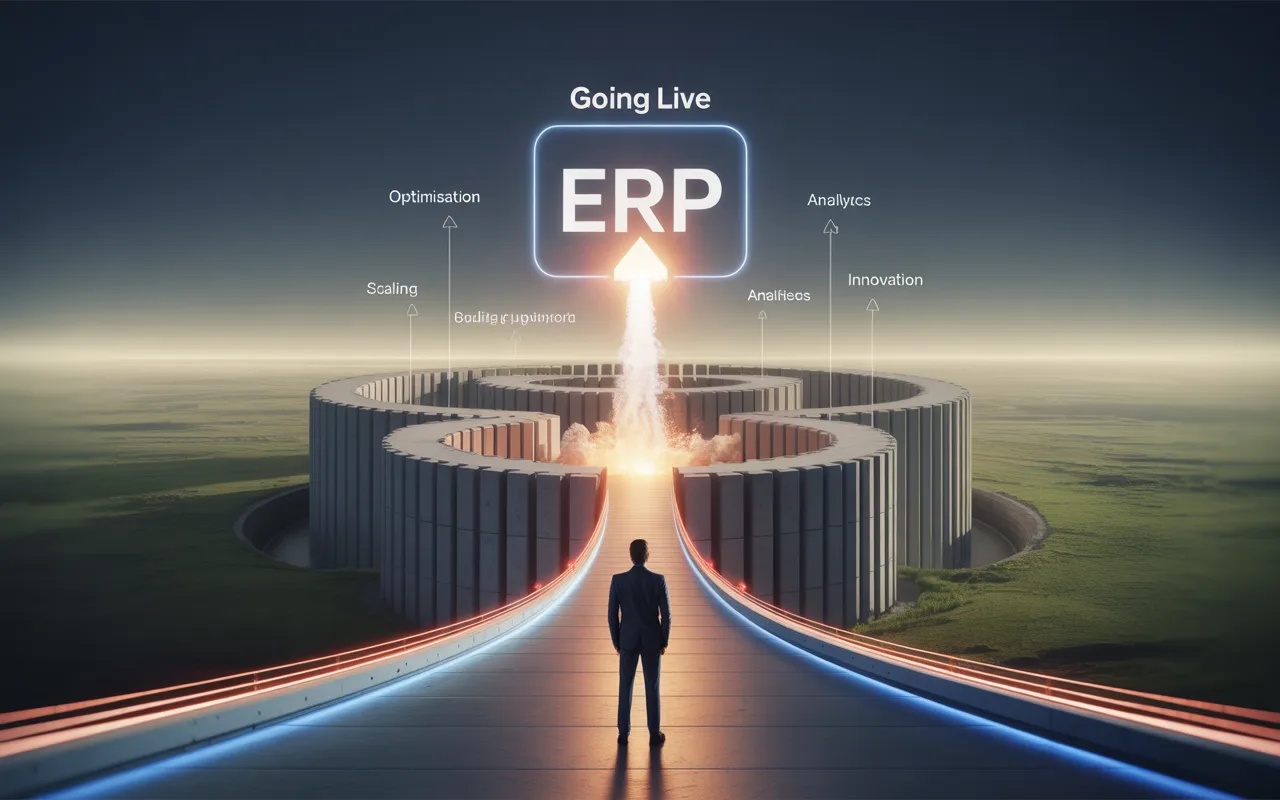
An ERP implementation is generally considered complete once the system goes live and begins supporting daily business operations. At this stage, organisations transition from legacy systems to the new ERP platform and start realising initial benefits.
However, this milestone represents only the beginning of the ERP journey.
In reality, ERP implementation is an ongoing process of continuous improvement and optimisation. Businesses must regularly enhance the system by adding new features, supporting expansion into new markets, and adapting to evolving operational needs.
As organisations grow and change, the ERP system must evolve alongside them.
Therefore, while go-live marks a significant achievement, long-term success depends on continuous innovation, system updates, and process refinement. Treating ERP as a dynamic, evolving platform ensures sustained value and competitive advantage over time.
ERP Implementation: Driving Long-Term Business Value
ERP implementation is a strategic initiative that extends beyond system deployment. When guided by ERP implementation best practices, organisations can streamline operations, reduce risks, and improve decision-making.
A well-executed approach ensures scalability, efficiency, and sustained performance. By aligning technology with business goals, ERP systems become a foundation for continuous optimisation, innovation, and long-term organisational growth.
FAQs About ERP Implementation
ERP implementation best practices are proven methods that help organisations successfully deploy ERP systems. They include proper planning, selecting the right implementation partner, defining clear objectives, managing scope, and ensuring strong team involvement. Following these practices reduces risks, controls costs, and improves overall project success and long-term system performance.
ERP implementation timelines vary depending on business size, complexity, and scope. Small to mid-sized projects may take 3 to 9 months, while large enterprise implementations can take 12 to 24 months or more. Proper planning, resource allocation, and clear timelines are essential to ensure timely and successful deployment.
The most common ERP implementation risks include scope creep, poor data quality, lack of user training, weak project management, and insufficient executive support. These risks can lead to delays, cost overruns, and system inefficiencies. Managing risks proactively with structured ERP implementation best practices is critical for project success.
ERP implementation costs depend on factors such as software type, business size, customisation level, and deployment model. Costs typically include software licensing, consulting, training, data migration, and ongoing maintenance. Focusing on the total cost of ownership (TCO) helps organisations evaluate long-term value and control expenses effectively.
The first step in ERP implementation planning is defining clear business objectives and project scope. Organisations must identify key goals, challenges, and expected outcomes before selecting software or partners. This ensures alignment across stakeholders and provides a strong foundation for a successful and efficient ERP implementation process.