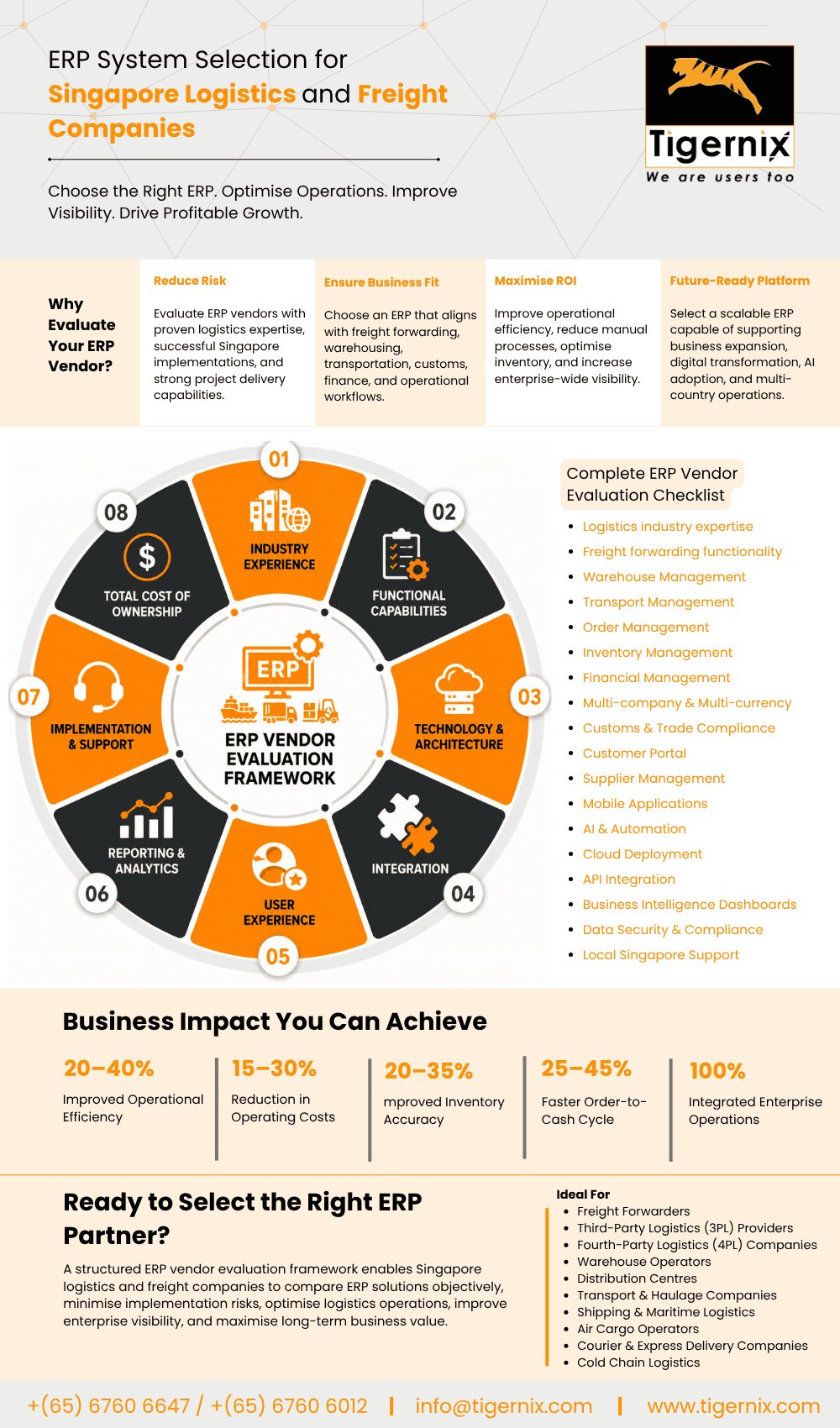

Did you know that Enterprise Resource Planning (ERP) systems are not a one-size-fits-all system? That is why, if you operate in the logistics and freight industries, you need to understand the tools, modules, integration protocols, and framework ecosystems an ERP requires to meet your organisation’s unique operational demands.
For example, a logistics- and freight-centric ERP would consider integrating data across fragmented silos. A logistics company can have excellent warehouse, transport and finance teams yet still struggle with visibility when each function operates on disconnected systems. Understanding how to adopt the best ERP for logistics is therefore a system selection process that requires consideration of AI and automation requirements, compliance, freight forwarding operations, BI demands, data security rules, and other dimensions relevant to any type of business in Singapore.
Connect with today’s infographic article to understand what results are expected of an ERP in Singapore, how you should understand your company’s operational models, what factors to check in an ERP vendor, what functionalities and features you should expect of your ERP and more.