

Businesses today are no longer built on full-time employees alone, and that shift is happening faster than most leaders expected. According to recent workforce studies, over 40% of companies now rely heavily on non-traditional talent models. This is where the concept of the external workforce becomes critical. From freelancers to outsourced teams, organisations are redefining how work gets done.
Understanding the external workforces is not just a trend; it is a competitive necessity. Companies that leverage the contingent workforce and embrace workforce flexibility are scaling faster, reducing costs, and accessing global talent pools like never before.
In this guide, we will break down what an external workforce really means, how it works, and why mastering external workforce management is essential for long-term success.
What Is an External Workforce And Why It Matters Today

An external workforce refers to all workers who are not directly employed by an organisation but contribute to its operations. This includes contract workers, freelancers, consultants, and outsourced teams. Unlike traditional employees, these individuals are part of a non-employee workforce and are often engaged on a temporary or project basis.
The rise of the gig workforce and remote external workforce models has transformed how companies operate. Businesses are no longer limited by geography or rigid hiring structures. Instead, they can tap into a freelance workforce or third-party workforce to meet specific needs.
One of the biggest advantages of adopting an external workforce strategy is workforce scalability. Companies can quickly scale up or down depending on demand without long-term commitments. This is particularly useful in industries with seasonal fluctuations or project-based workloads.
Additionally, workforce cost optimisation becomes easier. Hiring full-time employees involves salaries, benefits, and overhead costs, whereas leveraging a temporary workforce or outsourced workforce reduces financial burden while maintaining productivity.
Another key factor is access to specialised skills. Through external talent management, businesses can bring in experts for niche tasks without investing in long-term training or hiring processes.
In today’s fast-paced market, relying solely on internal teams can slow innovation. Companies that integrate external employees into their ecosystem gain agility, speed, and a competitive edge.
Key Takeaways
- The external workforce enables businesses to achieve greater workforce flexibility and adapt quickly to changing market demands.
- Leveraging models such as the contingent, freelance, and outsourced workforce helps organisations scale efficiently and access specialised talent.
- Effective external workforce management is essential to ensure productivity, compliance, and seamless collaboration across internal and external teams.
- A strong external workforce strategy drives workforce cost optimisation, innovation, and long-term business growth.
Types Of External Workforce Models Businesses Use Today
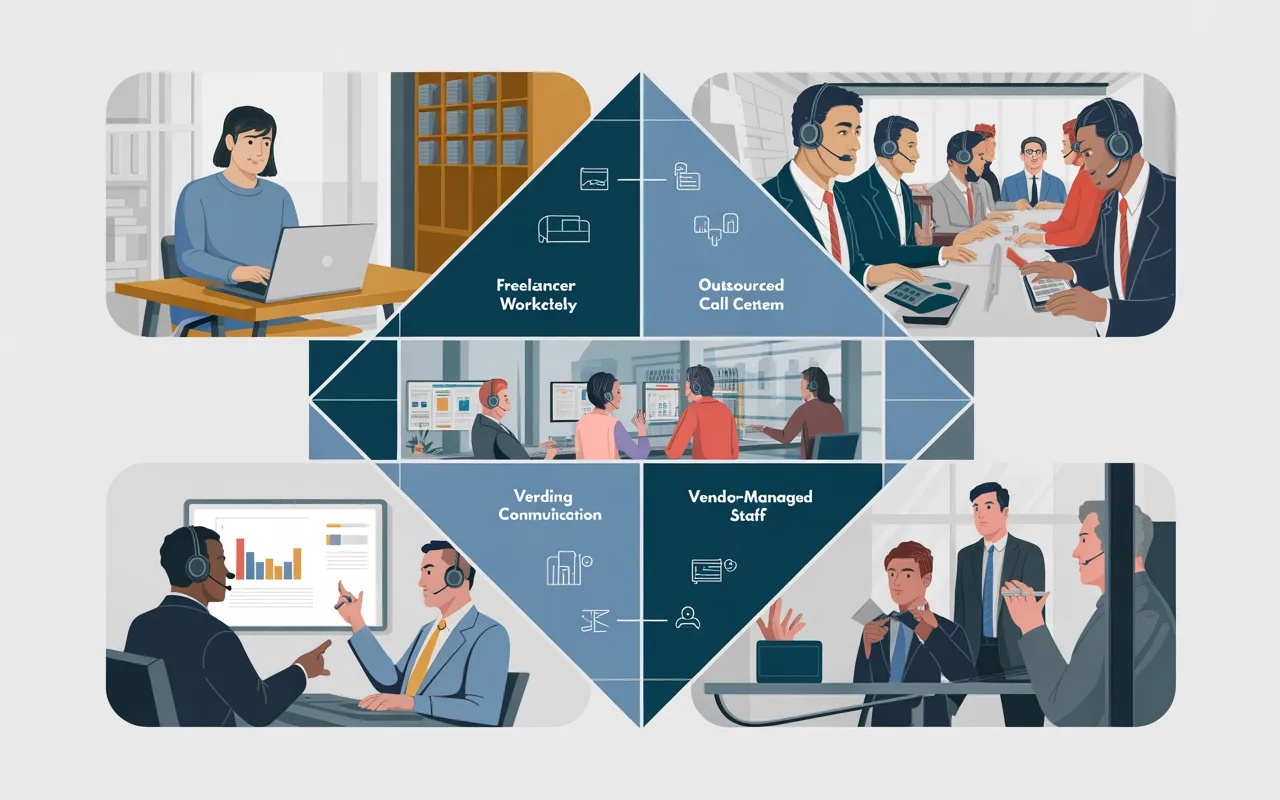
Understanding the different types of external workforces is essential for building an effective external workforce strategy. Not all external workers operate the same way, and choosing the right model depends on your business goals, operational needs, and long-term vision.
Contingent Workforce
The contingent workforce includes workers hired on a short-term or project-specific basis.
These may include contract workers, consultants, or specialists brought in to handle urgent or highly skilled tasks. This model is ideal for businesses that need flexibility without committing to permanent hires.
By leveraging a contingent workforce, organisations can quickly respond to market demands and reduce hiring time. They can also maintain productivity without increasing long-term workforce costs or administrative burdens.
Freelance And Gig Workforce
The freelance workforce and gig workforce are growing rapidly, especially with the rise of digital platforms and remote work opportunities. These professionals operate independently and are typically hired for creative, technical, or specialised roles such as design, development, or marketing.
Moreover, businesses benefit from accessing a global talent pool while maintaining cost efficiency. Integrating a gig workforce into your external workforce model allows companies to stay innovative, agile, and competitive in fast-changing industries.
Outsourced Workforce
An outsourced workforce involves delegating entire functions or business processes to external service providers. This is common in areas such as IT services, customer support, and manufacturing operations.
Through workforce outsourcing, companies can focus on their core competencies while external partners handle operational tasks. This model not only improves efficiency but also supports workforce cost optimisation.
It enables businesses to scale operations without investing heavily in internal infrastructure or long-term staffing commitments.
Vendor And Third-Party Workforce
The vendor workforce management model includes workers supplied through agencies, staffing firms, or service vendors.
These workers form part of the third-party workforce and are usually managed through structured agreements and service-level contracts. Effective vendor workforce management ensures consistency in quality, performance tracking, and accountability.
This model is particularly useful for large organisations that require a steady supply of skilled talent while maintaining control over their external workforce operations.
Temporary And Hybrid Workforce Models
A temporary workforce is typically used to address short-term business needs, such as seasonal demand or project-based work.
In contrast, a hybrid workforce model combines internal employees with an external workforce to create a balanced and flexible structure.
This approach allows organisations to maintain stability while benefiting from external expertise. By adopting a hybrid workforce model, businesses can achieve greater workforce scalability, improve efficiency, and adapt quickly to evolving market conditions.
Key Benefits of an External Workforce For Modern Businesses

The external workforce helps businesses become more flexible, scalable, and cost-efficient while gaining access to global talent. By leveraging models like the contingent workforce, outsourced workforce, and remote external workforce, organisations can quickly adapt to change, reduce operational costs, and focus on core business goals.
Effective external workforce management ensures better productivity, innovation, and long-term growth in a competitive market.
Workforce Flexibility That Adapts To Business Needs
One of the biggest advantages of an external workforce is workforce flexibility.
Businesses can quickly adjust to changing demands without the delays associated with traditional hiring. Whether it is scaling up for a project or reducing workforce size during slow periods, the external workforce offers unmatched adaptability.
This flexibility allows companies to remain responsive to market changes while maintaining operational efficiency. By integrating a contingent workforce or temporary workforce, organisations can ensure they always have the right talent at the right time without long-term commitments.
Workforce Scalability For Rapid Business Growth
Workforce scalability is a critical factor for modern businesses aiming to grow quickly.
An external workforce enables organisations to expand operations without the complexities of hiring permanent employees. This is especially valuable for startups and fast-growing companies that need to respond to market opportunities.
By leveraging a freelance workforce or third-party workforce, businesses can scale their teams up or down as needed.
This ability to adjust resources efficiently ensures that companies can maintain productivity while managing growth effectively.
Workforce Cost Optimisation Without Compromising Quality
One of the most compelling reasons to adopt an external workforce is workforce cost optimisation. Hiring full-time employees involves high costs, including salaries, benefits, and infrastructure. By using an outsourced workforce or external staffing solutions, businesses can reduce these expenses while maintaining high-quality output.
This approach allows organisations to allocate resources more strategically, focusing on areas that drive growth.
Additionally, working with a gig workforce or contract workers ensures that companies only pay for the work they need, improving overall financial efficiency.
Access To Global Talent Through Remote External Workforce
The rise of the remote external workforce has opened doors to a global talent pool.
Businesses are no longer limited by geographical boundaries when hiring skilled professionals. This means companies can access top talent from anywhere in the world, improving the quality and diversity of their workforce.
When they leverage a freelance workforce or gig workforce, organisations can bring in specialised skills that may not be available locally. This global approach enhances innovation, creativity, and competitiveness in today’s digital economy.
Specialised Expertise Through External Talent Management
External talent management allows businesses to access specialised skills without investing in long-term training or recruitment.
Instead of building expertise internally, companies can bring in professionals who already possess the required knowledge and experience.
This is particularly useful for complex or niche projects where specialised skills are essential. By leveraging an external workforce, organisations can ensure high-quality results while maintaining efficiency.
This approach also reduces the time and cost associated with developing internal capabilities, enabling faster project execution.
Improved Focus On Core Business Functions
Managing an external workforce enables organisations to focus on their core competencies. By delegating non-core tasks to a third party workforce or outsourced workforce, businesses can concentrate on strategic initiatives that drive growth.
This improves productivity and ensures that internal teams are not overwhelmed with tasks outside their expertise.
A well-managed external workforce strategy helps companies streamline operations while maintaining high performance across all business functions.
Faster Project Execution And Time-To-Market
An external workforce helps businesses accelerate project timelines and reduce time-to-market. With access to a contingent workforce and contract workers, companies can quickly assemble teams for specific projects.
This eliminates the delays associated with recruitment and onboarding. Faster execution allows businesses to respond to market demands more effectively and gain a competitive advantage. By leveraging the speed and efficiency of an external workforce, organisations can deliver results more quickly without compromising quality.
Enhanced Innovation And Fresh Perspectives
Bringing in an external workforce introduces new ideas and perspectives that can drive innovation. External professionals often have experience across multiple industries, enabling them to bring fresh insights into business operations.
This diversity of thought encourages creative problem-solving and continuous improvement. By integrating a gig workforce or freelance workforce, companies can foster innovation while staying adaptable.
This makes the external workforce a powerful tool for businesses looking to stay ahead in competitive markets.
Reduced Risk Through Flexible Workforce Models
Using an external workforce helps reduce business risks associated with long-term employment commitments.
Companies can adjust their workforce based on market conditions, reducing financial and operational risks. By leveraging a temporary workforce or non-employee workforce, organisations can avoid the liabilities associated with permanent staffing.
This flexibility allows businesses to remain resilient during economic uncertainty while maintaining operational stability and efficiency.
Better Resource Allocation And Operational Efficiency
An external workforce enables better resource allocation by allowing businesses to focus their internal teams on high-value tasks. By outsourcing routine or specialised functions to an outsourced workforce, organisations can optimise their operations.
This leads to improved efficiency, as tasks are handled by professionals with the right expertise.
A well-planned external workforce strategy ensures that resources are used effectively, resulting in better performance, cost savings, and long-term business success.
How To Manage External Workforce Effectively For Maximum Results

Managing an external workforce requires a structured approach to ensure efficiency, compliance, and productivity. Without proper external workforce management, businesses may face challenges such as miscommunication, quality issues, and lack of control.
Establish Clear Workforce Strategy
A strong external workforce strategy is the foundation of success.
Businesses must clearly define roles, responsibilities, and expectations for their external employees to avoid confusion and ensure alignment with organisational goals. This includes setting performance metrics, communication guidelines, and deliverable timelines.
When organisations take the time to structure their external workforce properly, they create a system where both internal teams and external contributors can collaborate effectively, driving better outcomes and long-term value.
Implement Workforce Augmentation Techniques
Workforce augmentation allows companies to seamlessly integrate external workers into existing teams without disrupting workflows. Instead of treating external contributors as separate entities, businesses can embed them into projects where their skills are most needed.
This approach enhances collaboration between internal staff and the external workforce, ensuring knowledge sharing and improved productivity.
When done correctly, workforce augmentation helps organisations scale operations efficiently while maintaining consistency in performance and quality across all teams.
Use Vendor Workforce Management Systems
Effective vendor workforce management is essential when working with agencies or third-party providers.
Businesses must establish clear contracts, performance expectations, and communication channels with vendors supplying a third-party workforce.
Using digital tools and platforms enables organisations to track deliverables, monitor performance, and manage relationships efficiently. A structured vendor workforce management system not only improves accountability but also ensures that the external workforce consistently meets business standards and project requirements.
Ensure Compliance And Risk Management
Managing a non employee workforce involves various legal and compliance considerations that businesses cannot afford to overlook. From contract agreements to tax regulations and labour laws, organisations must ensure that all aspects are handled correctly to avoid penalties and reputational risks.
Clear documentation, regular audits, and proper onboarding processes are essential when working with an external workforce. By prioritising compliance and risk management, companies can build a secure and sustainable model for managing their external workforce effectively.
Leverage Technology For External Workforce Management
Technology plays a crucial role in external workforce management, enabling businesses to streamline operations and improve communication.
Platforms that support real-time collaboration, project tracking, and performance monitoring allow organisations to manage their external workforce with greater visibility and control.
Advanced tools can also provide insights into productivity, helping businesses optimise their external workforce strategy. By leveraging the right technology, companies can ensure seamless coordination, faster decision-making, and improved overall efficiency.
The Workforce Revolution Has Already Begun

The external workforce is no longer a backup plan; it is the backbone of modern business agility. As industries evolve, companies that master external workforce management and embrace a dynamic external workforce strategy will lead the future.
This is not just about hiring differently; it is about thinking differently. Those who adapt will scale faster, innovate smarter, and grow stronger in a world where flexibility defines success.
FAQs About External Workforces
An external workforce refers to workers who are not full-time employees but support business operations. This includes freelancers, contract workers, consultants, and outsourced teams. These workers are part of a non employee workforce and are usually hired for specific tasks or projects.
An external workforce is a broad term that includes all non-employee workers. A contingent workforce is a subset of this, referring specifically to temporary or project-based workers, such as contractors. Both help businesses achieve workforce flexibility and scalability.
Businesses use an external workforce to improve workforce flexibility, reduce costs, and access specialised skills. It allows companies to scale quickly, respond to market changes, and optimise operations without the long-term commitments that come with hiring full-time employees.
Effective external workforce management helps businesses improve productivity, reduce risks, and ensure compliance. It also enhances collaboration, tracks performance, and supports better decision-making, allowing organisations to maximise the value of their external workforce strategy.
Companies manage an external workforce by using clear contracts, setting expectations, and leveraging technology. Strong external workforce management practices, including vendor workforce management and communication tools, ensure smooth collaboration, better performance, and long-term success.