
Have you noticed that in recent times, the business world seems to be dominated by a broad spectrum of circumstances, such as supply chain disruptions, overnight market shifts, varying expectations of consumers, and rapid development of technologies? This way, it is unnecessary to say that running a business without planning is like a sailor sailing without a compass! Every single action executives make, let’s say from budgeting and recruiting to setting sales objectives as well as the production plans, is based on just one formula, which is future assumptions.
This is where the concept of ‘Business Forecasting’ shines bright as a wheel that can transform those mere assumptions into some educated insights. With this concept, the businesses do not have to go blindly with guessing. Instead, they can use analytics, employ data, and expert judgment to forecast future events accurately and plan in advance.
In this article, we explore the concept of business forecasting deeply and its importance for modern-day businesses.
What Is Business Forecasting?
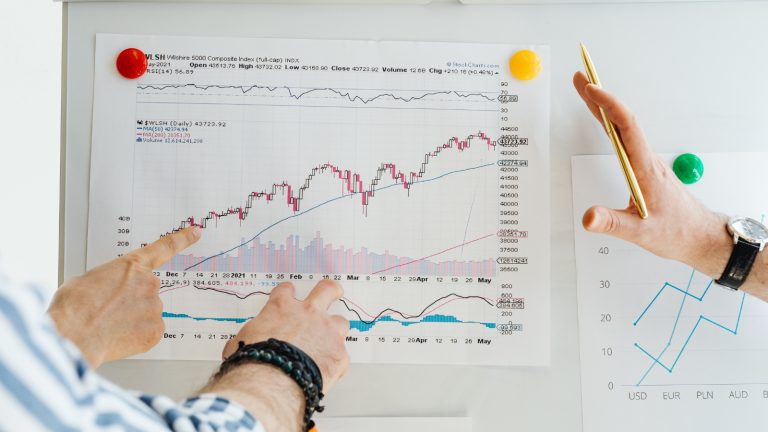
Business forecasting is known as a systematic mechanism that involves analysing historical data to recognise existing and potential trends. This process is carried out by using statistical models and judgment-based insights, and they are employed to estimate future company situations. Therefore, forecasting is an advanced step towards reducing uncertainty in business. It walks beyond limitations to offer powerful insights for leaders may make confident, more importantly, evidence-based choices.
Forecasting comes in two basic categories:
Qualitative Forecasting
Qualitative forecasting is different from substantial numerical data, as it is simply based on intuition, experience, and expert insight. There can be some instances where the businesses have a limited amount of past data. Or the data they receive can be very variable. For example, take circumstances like entering a new market, launching a totally new product or experiencing unexpected economic swings, etc. This is where the qualitative forecasting comes into play.
Businesses mainly opt for qualitative methodologies such as market research, expert panels and the Delphi procedure. These techniques are good when the plain numbers may lack of potential to offer contextual insight.
Quantitative Forecasting
Quantitative forecasting is built on a basis of a variety of mathematical and statistical approaches, and its prime focus is to find trends in past data and project them ahead. When the companies have large datasets and regular patterns, these strategies are best suited for them.
As you can see, many companies tend to employ techniques for a quantitative approach, ranging from trend projection, time series analysis, to regression models and moving averages. In the landscapes of financial and operational planning, quantitative forecasting is frequently more objective and repeatable, according to the experts.
However, extracting the best out of both, nowadays many businesses take a hybrid strategy to achieve the best possible outcome. This combined technique comes as the best strategy to improve accuracy as it captures both statistical signals and real-world experience under one roof.
How Business Forecasting Works- Step-by-Step Process

Step 1- Define the Objective
Before initiating forecasting, one thing organisations must specify exactly is their intention, which means what they intend to anticipate. For example, are they looking into the revenues for the upcoming quarter? Estimating annual revenue? Or is the company predicting consumer demand or capacity requirements? Likewise, flowing with a well-defined target surely keeps the forecast tightly focused and more relevant.
Step 2- Collect and Prepare Data
The accuracy of a forecast is built on the kingdom of data that supports it. This is where the businesses should see the vitality of gathering historical data such as financial accounts, previous sales, production data, economic trends, market indicators, and customer behaviour insights. In this step, they need to make sure that the data is organised, cleansed, and verified to avoid distortions in the final result.
Step 3- Select the Appropriate Method
Choosing the correct forecasting approach is determined by a number of factors. This varies from the forecasting horizon, data availability, company complexity, and related industry circumstances. However, when opting for quantitative models, they demand clean and consistent datasets; on the other hand, qualitative approaches are better suited to circumstances in which judgment-based insights are more valuable. The truth is that in many circumstances, organisations usually use more than one way to improve accuracy.
Step 4- Build and Run the Forecast
Once the company has selected the ideal approach, its analysts use dynamic software platforms, statistical tools, or expert evaluations when developing forecasts. If you notice, you will see that modern forecasting primarily revolves around employing ERP platforms, business intelligence systems, predictive analytics tools, or AI-powered algorithms since they can detect trends that are unseen to traditional analysis.
Step 5- Monitor, Compare, and Adjust
It is a certain fact that forecasting is not something you do once. Businesses have to constantly compare actual outcomes to expected results. Also, they have to change the model when gaps emerge. This is when monitoring performance allows you to revise assumptions and increase model accuracy with time. With that knowledge, you can update future projections with more confidence.
Why Business Forecasting Is Important

Enables Strategic Planning and Long-Term Vision
It is of utmost importance for the organisations to have the right goals. This is where forecasting is used by organisations, and it sort of helps them to set realistic goals. Plus, it aids in developing business development plans and decides the right spot to allocate their valuable resources.
When arriving at strategic choices, such as releasing new goods, expanding into new markets, or deciding on capital investments, everything is based on an assessment of expected future consequences. Forecasting acts as a powerful weapon that enables business leaders to foresee opportunities and spot difficulties rather than react to them after everything occured.
Improves Decision-Making Across the Business
Data-driven forecasts pave the way for better and faster decision-making in the business domain. With such a robust tool, leaders do not see the necessity to rely on speculations or impulse. They can smoothly base their judgments on data, trends, and foresight.
This boosts confidence in them during the decision-making time as it decreases the risk of expensive errors. As much as they go for a more detailed planning, it benefits all departments, including marketing, finance, operations, and human resources.
Enhances Budgeting and Financial Planning
One of the main aspects modern-day businesses require forecasting is budgeting, which signifies financial forecasting. This includes areas such as capital planning, cash flow management, and performance evaluation.
If the company is able to establish an accurate financial forecasting, it will enable firms to manage debt responsibly, foresee periods of excess or shortage, ensure financial stability and plan investments. Banks and investors rely on such projections to assess business sustainability; therefore, forecasting is critical for acquiring finance.
Strengthens Operational Efficiency
Operational forecasting is what ensures that firms have the appropriate resources at the correct moment. As the first step, predicting demand helps them to optimise production schedules and manage inventory levels. It also aids in allocating workers, avoiding stockouts or overstocking and eliminating waste.
When operations function smoothly, there is no doubt that customer satisfaction increases. Eventually, the expenses fall, resulting in a significant competitive advantage.
Improves Risk Management
It is unnecessary to say that every firm encounters risks. These risks can vary from evolving consumer preferences, economic downturns, pricing variations, and supply chain interruptions.
This is when the latter enters the frame to enable organisations to prepare for undesirable scenarios through its ability to detect possible risks early on. With such power, businesses may develop contingency plans and diversify supply chains easily. They will be able to adapt pricing tactics and change operations well before a crisis worsens.
Offers Competitive Advantage
Organisations that anticipate effectively receive the arm to recognise market trends early. This also means that they can respond quickly to new opportunities and remain ahead of the competition.
Business forecasting helps businesses to determine where demand is headed, which goods or services are gaining momentum, and most importantly, how consumer expectations are changing. This adaptability lays the foundation for high-performing enterprises.
Best Practices for Effective Business Forecasting

Businesses have the opportunity to enhance the accuracy and usefulness of their forecasts when they follow proven best practices as follows:
- They can opt for a hybrid approach by linking quantitative models and qualitative insights.
- It is a simple strategy to update forecasts regularly to be able to reflect market changes, new data, and operational shifts.
- It is better to document assumptions to help decision-makers understand the context behind projections.
- Businesses can employ robust technology such as BI systems, forecasting software, and machine learning tools.
- It is advisable to develop multiple scenarios (best case, worst case, base case) to prepare for different outcomes.
- It is advisable to continuously evaluate accuracy and refine models based on real performance.
Business Forecasting through the Robust BI Tools for the Expected Outcome
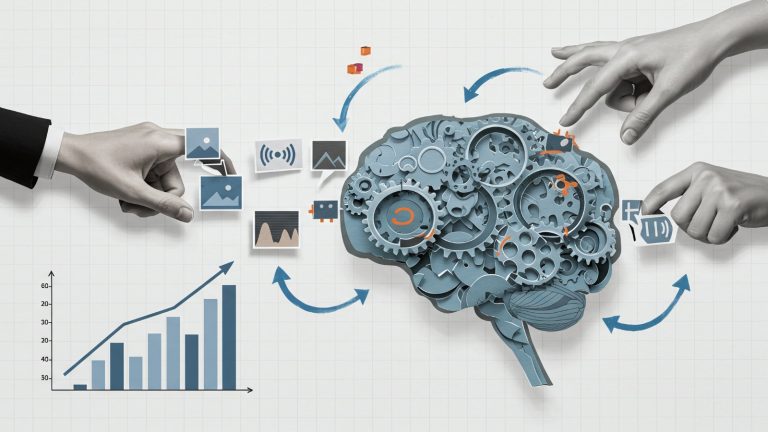
Business forecasting is a powerful tool for handling uncertainty and planning for the future. Forecasting helps organisations predict trends, reduce risks, enhance financial and operational planning, and increase strategic decision-making by integrating data, analytical methodologies, and expert insight.
This is why the experts insist that you employ the best Business Intelligence tools that are coupled with analytics for accurate insights. TigernixBI-Business Intelligence System with real-time data analytics is your ideal destination to receive top-notch analysis, predictions and insights all under one roof.
Explore TigernixBI today to make your business journey smooth. Connect for a free demo.