
Think about the last time a payment dispute caused a headache in your business. Maybe a client claimed they never agreed to that price. Maybe a vendor insisted the delivery was made and payment was overdue, but your records told a different story. Maybe your accounts team spent hours reconstructing a transaction because the paperwork was inconsistent or incomplete.
In almost every case like this, the root of the problem was the same: the sales invoice was missing, wrong, or never properly understood in the first place.
A sales invoice is one of the most fundamental documents in business, and yet it is also one of the most frequently misunderstood. It is not just a bill. It is a legal record, a bookkeeping entry trigger, a tax compliance document, and a communication tool between buyer and seller. Getting it right matters far more than most people realise until something goes wrong.
This guide covers what a sales invoice is and how it is defined in accounting, what every sales invoice must include, the main types you will encounter, the purposes it serves in your business, and how it differs from related documents like a regular invoice or an official receipt.
What is a Sales Invoice?
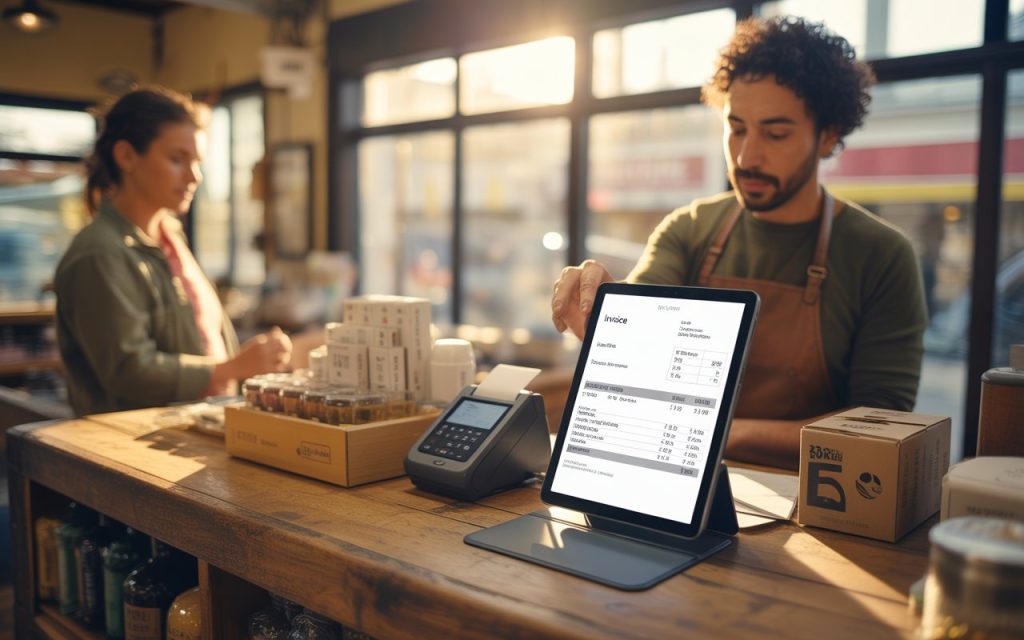
A sales invoice is a document issued by a seller to a buyer that formally requests payment for goods delivered or services rendered. It is generated after the transaction has taken place and serves as the official record of what was sold, at what price, under what terms, and when payment is expected.
The word ‘sales’ in the name is simply the seller’s perspective. The same document, from the buyer’s side, becomes a purchase invoice in their accounts. This is worth understanding because it means the same piece of paper performs different accounting functions depending on which side of the transaction you are sitting on.
Most businesses today generate invoices electronically, either through accounting software or dedicated invoicing platforms. Paper invoices still exist in some smaller operations, but the direction of travel is clearly digital, particularly in Singapore where the InvoiceNow e-invoicing mandate is progressively rolling out across GST-registered businesses.
What Does Faktur Penjualan Mean?
For readers familiar with Bahasa Indonesia or doing business with Indonesian partners, the term faktur penjualan refers to a sales invoice. Faktur means invoice or bill, and penjualan means sales. So faktur penjualan adalah is the Indonesian phrase for ‘a sales invoice is’ — and it carries the same meaning and function as a sales invoice in the English business context.
Indonesian businesses are required to issue faktur penjualan for all taxable transactions, and the document must comply with the Direktorat Jenderal Pajak (Directorate General of Taxes) requirements for tax invoices. For businesses in Singapore working with Indonesian suppliers or customers, understanding this term is useful for ensuring your invoice documentation aligns across both jurisdictions.
What is Included in a Sales Invoice?
| Field | Why It Matters |
| Invoice Number | A unique identifier for tracking and referencing the transaction. Critical for both parties to locate the document during disputes or audits. |
| Invoice Date | Establishes when the invoice was issued. Important for payment terms, GST reporting periods, and revenue recognition. |
| Date of Service or Delivery | Confirms when the goods were delivered or the service was performed. In accrual accounting, this is when revenue is recognised, not the payment date. |
| Seller Name, Address and Contact | Identifies who is issuing the invoice. Required for legal validity and for the buyer to process the payment to the correct party. |
| Buyer Name, Address and Contact | Ensures the invoice is addressed to the correct entity. Important for accounts payable processing and for tax purposes. |
| Purchase Order Number (if applicable) | Links the invoice back to the buyer’s original purchase order. Enables three-way matching in the buyer’s accounts payable process. |
| Itemised List of Goods or Services | Describes exactly what was sold. Each line item should include a description, quantity, unit price, and line total. |
| Tax Rate and Tax Amount | For GST-registered businesses, the applicable tax rate and total tax charged must be clearly stated. This is required for the buyer to claim input tax credit. |
| Total Amount Due | The final amount payable including all taxes, clearly stated in the relevant currency. |
| Payment Terms and Due Date | Defines when payment is expected and under what conditions (e.g. Net 30, early payment discount). Reduces ambiguity and payment disputes. |
What is the Accounting Definition of a Sales Invoice?
For accounting professionals and business owners who want to understand how a sales invoice functions beyond its surface appearance, the accounting definition adds an important layer of precision.
In double-entry bookkeeping, issuing a sales invoice creates two simultaneous accounting entries. The accounts receivable account is debited, reflecting that money is now owed to your business. The sales revenue account is credited, reflecting that revenue has been earned. This recording happens at the point the invoice is issued, not when the cash is received, because most businesses operate on accrual accounting principles.
This is an important distinction. Under accrual accounting, revenue is recognised when goods are delivered or services are performed, regardless of when the customer actually pays. The sales invoice is the document that triggers and supports this recognition. It is the evidence that the transaction occurred and that the revenue has been legitimately earned.
From the buyer’s perspective, the same document creates the opposite entries. Their accounts payable is credited (reflecting an obligation to pay), and their expense or asset account is debited (reflecting the cost incurred). This is why accurate, detailed sales invoices matter to both parties in a transaction, not just to the seller.
Sales invoices also feed directly into key financial metrics. Outstanding invoices form your accounts receivable balance on the balance sheet. Total invoiced sales form the revenue line of your income statement. Overdue invoices affect your cash flow forecasting. In this sense, the health of your sales invoicing process is a direct indicator of the health of your financial reporting.
What Are the Main Types of Sales Invoices?
Not every transaction calls for the same type of invoice. Understanding the different invoice types helps you issue the right document in each situation, which matters both for professionalism and for compliance.
Pro Forma Invoice
A pro forma invoice is issued before a transaction is finalised. It states the seller’s commitment to deliver specific goods or services at an agreed price, but it is not a demand for payment and does not create an accounts receivable entry. Pro forma invoices are commonly used in international trade to help the buyer arrange financing or complete customs clearance before the actual shipment. Think of it as a confirmed quote rather than a bill.
Commercial Invoice
A commercial invoice is used in international trade to declare the value of goods being exported across borders. Customs authorities use it to assess duties and taxes, and it serves as the definitive record of the transaction between importer and exporter. If your business ships goods internationally, the commercial invoice is one of the most important documents in your export paperwork.
Credit Note
A credit note is issued when a seller needs to reduce the amount a buyer owes, most commonly because goods have been returned, a billing error has occurred, or a discount was agreed after the original invoice was issued. The credit note references the original invoice and reduces the outstanding accounts receivable balance accordingly. It is the clean, professional way to correct an invoicing mistake or process a return.
Timesheet Invoice
A timesheet invoice is used when services are billed on an hourly or daily basis rather than as a fixed fee. It details the time spent on specific tasks, the applicable rate, and the total amount due. Common in consulting, legal, engineering, and creative services, this invoice type provides the transparency that clients need to verify what they are being charged for.
Retainer Invoice
A retainer invoice is issued when a client makes an advance payment before work begins. The advance is held and progressively deducted against the final invoice as the work is delivered. Retainers are common in professional services where the scope of work is agreed upfront but delivery occurs over time.
Recurring Invoice
A recurring invoice is issued at regular intervals for the same amount, typically for subscription services, ongoing maintenance contracts, or regular supply arrangements. Most accounting and invoicing software can automate recurring invoices, eliminating the need to manually generate the same document every month and reducing the risk of missed billings.
What is the Difference Between a Sales Invoice and a Regular Invoice?
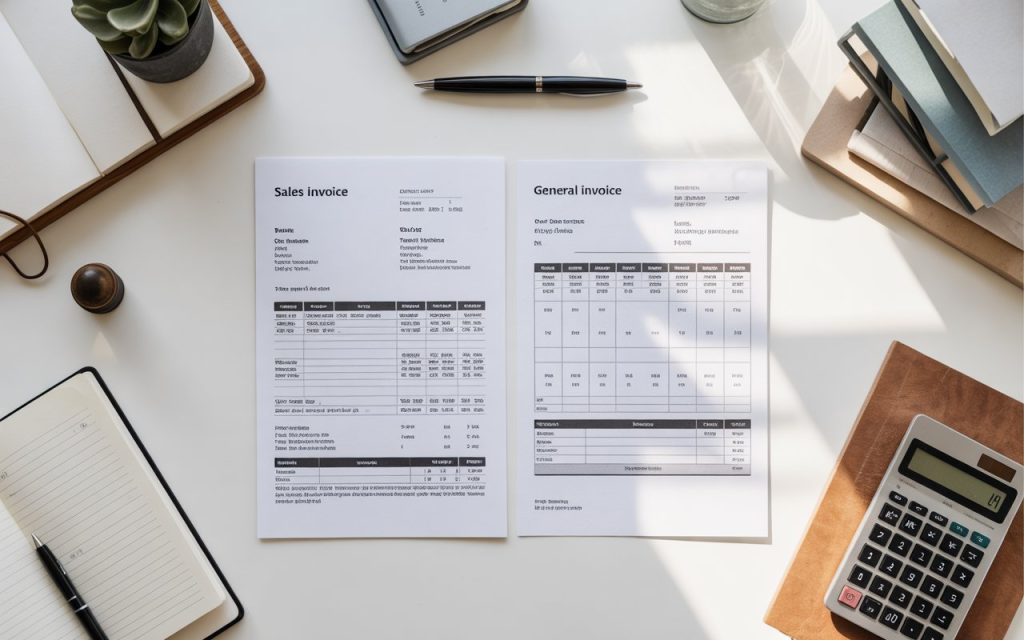
This is a question that trips up a lot of people, and the answer is simpler than it might seem.
All sales invoices are invoices. But not all invoices are sales invoices. The term ‘invoice’ is the broader category. A sales invoice is specifically the document issued by a seller to a buyer to request payment for goods sold or services rendered. It is the most common type of invoice in business.
Other types of invoices include purchase invoices (invoices you receive from suppliers, which are sales invoices from their perspective), tax invoices (invoices that include specific GST details required for input tax claims), and pro forma invoices (which are not demands for payment at all). The term ‘sales invoice’ specifically denotes the standard outgoing payment request from seller to buyer.
What is the Difference Between an Official Receipt and a Sales Invoice?
This comparison matters particularly in Southeast Asian business contexts, where official receipts carry specific legal and regulatory significance alongside sales invoices.
A sales invoice is issued by the seller at the time of sale. It is a request for payment and a record of what was sold. An official receipt is issued after payment has been received. It is proof that money has actually changed hands.
In simple terms: the invoice says ‘you owe us this amount for these goods or services.’ The official receipt says ‘we confirm that you have paid this amount.’ They serve different moments in the transaction lifecycle and both have their place in a complete records system.
In Singapore, an official receipt is not a required legal document in the same way a tax invoice is. For GST purposes, it is the tax invoice that supports input tax claims, not the receipt. However, businesses that issue official receipts as confirmation of payment do so for good practice and customer service reasons, particularly for cash sales.
How is Sales Invoicing Changing in Singapore in 2025?
For businesses operating in Singapore, sales invoicing is entering a new phase. IRAS is rolling out the GST InvoiceNow requirement, which mandates that GST-registered businesses transmit structured invoice data electronically to IRAS via the Peppol network, rather than relying on PDF or paper invoices alone.
The rollout is phased. From May 2025, early voluntary adoption began for GST-registered businesses. From November 2025, mandatory compliance applies to newly incorporated companies with voluntary GST registration. The mandate will progressively cover all GST-registered businesses in subsequent phases.
What this means practically is that businesses using InvoiceNow-ready accounting software can transmit invoice data directly from their system to IRAS at the point of invoicing. The process is automated, structured, and significantly reduces the manual effort required for GST return preparation. For businesses still issuing PDF invoices and manually reconciling GST data, the transition to an InvoiceNow-compatible system is not just a compliance requirement. It is a meaningful operational improvement.
Why Does Getting Sales Invoicing Right Matter More Than Most People Think?

A sales invoice might look like a simple document. A few lines of product description, a number at the bottom, and a payment deadline. But by this point you can see that it is doing significantly more work than that.
It is recording your revenue in real time. It is supporting your GST compliance. It is protecting you legally if a dispute arises. It is feeding your inventory data. It is building the paper trail that makes your year-end accounts and tax filings coherent rather than chaotic. And if you are paying attention, it is telling you things about your customers and your business that no other document can.
Getting sales invoicing right is not just good housekeeping. It is one of the simplest things a business can do to protect itself, run more efficiently, and make better decisions. And in 2025, with Singapore’s e-invoicing mandate reshaping how invoice data is transmitted and stored, there has never been a better time to make sure your invoicing process is working the way it should.
Tigernix provides accounting and procurement management solutions that handle sales invoicing, tax invoice compliance, and InvoiceNow integration for businesses across Singapore and Southeast Asia. If your current invoicing process feels more manual than it should be, we would be glad to show you what a connected system looks like in practice.
FAQs
A sales invoice is a document issued by a seller to a buyer that formally requests payment for goods delivered or services rendered. It serves as the official record of the transaction and includes details such as the items sold, quantities, prices, applicable taxes, payment terms, and the total amount due.
In accounting, a sales invoice is the source document that triggers a debit to accounts receivable and a credit to sales revenue in the seller’s books under double-entry bookkeeping. It supports revenue recognition under accrual accounting, recording revenue at the time goods are delivered or services are performed, regardless of when payment is received.
Faktur penjualan is the Indonesian language term for a sales invoice. Faktur means invoice or bill, and penjualan means sales. Indonesian businesses are required to issue faktur penjualan for taxable transactions in compliance with Direktorat Jenderal Pajak (Directorate General of Taxes) requirements.
All sales invoices are invoices, but not all invoices are sales invoices. A sales invoice specifically refers to the document a seller issues to a buyer requesting payment for goods sold or services rendered. Other invoice types include purchase invoices (from the buyer’s perspective), tax invoices (which include GST details for input tax claims), and pro forma invoices (which are not demands for payment).
A sales invoice is issued at the point of sale as a request for payment and a record of the transaction. An official receipt is issued after payment has been received as confirmation that payment was made. The invoice says ‘you owe this amount.’ The receipt says ‘you have paid this amount.’ For GST purposes in Singapore, it is the tax invoice, not the receipt, that supports input tax claims.
A complete sales invoice must include: a unique invoice number, invoice date, date of service or delivery, seller name and contact details, buyer name and contact details, an itemised description of goods or services with quantities and unit prices, applicable tax rate and tax amount, total amount due in the relevant currency, and payment terms including the due date.
InvoiceNow is Singapore’s national e-invoicing initiative, built on the Peppol standard and mandated by IRAS. It requires GST-registered businesses to transmit structured invoice data electronically to IRAS rather than relying on PDF or paper invoices. The rollout began with voluntary early adoption in May 2025, with mandatory compliance for new voluntary GST registrants from November 2025. Businesses using InvoiceNow-ready accounting software can automate this transmission directly from their invoicing system.