
Did you know that for many organisations, procurement accounts for more than 70% of total company spending? In today’s competitive business environment, organisations must maintain tight control over their finances while still enabling teams to operate efficiently. This is where spend management plays a crucial role. Spend management is the structured process of tracking, controlling, and optimising a company’s spending across procurement, purchasing, supplier relationships, invoices, and payments.
Without a centralised approach to managing expenses, companies often face fragmented financial data, uncontrolled purchasing, duplicate vendor payments, and reduced visibility into how budgets are being used. Modern spend management systems address these challenges by integrating procurement management, expense management, supplier management, and financial analysis into a unified digital platform.
When they use tools such as spend analytics, automated invoice processing, supplier lifecycle management, and procurement automation, organisations can gain a clear view of their spending patterns. This visibility helps businesses identify inefficiencies, reduce supply costs, enforce compliance policies, and improve decision-making across finance and procurement teams.
Additionally, modern spend management software integrates with enterprise systems such as ERP platforms, accounts payable automation tools, and payment processing systems. These integrations create a single, consistent record of spending across departments and cost centers. As a result, organisations gain real-time spend visibility, enabling finance teams to monitor budget consumption, detect anomalies, and optimise procurement strategies before financial issues arise.
Ultimately, spend management is not only about reducing costs. It is about ensuring that every dollar spent aligns with business priorities and contributes to long-term financial stability and growth.
We will explore
- What Is Spend Management?
- Why Spend Management Is Important for Modern Businesses
- Key Components of an Effective Spend Management Process
- Technologies That Power Modern Spend Management
- Challenges Organisations Face in Spend Management
- The Strategic Benefits of Spend Management Software
- FAQs About Spend Management
What Is Spend Management?
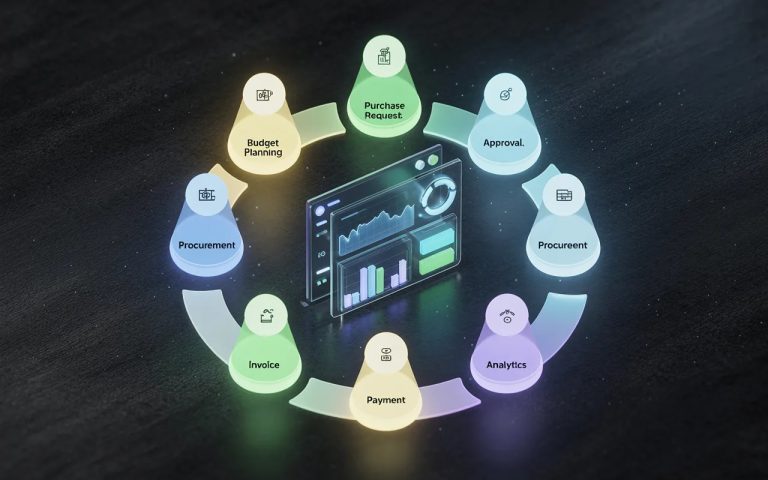
Spend management is the practice of managing and optimising all business expenditures across the entire spend lifecycle—from the moment a purchase is requested to the final payment and reporting stage. It combines procurement management, expense management, supplier management, and financial analytics into a single framework that helps organisations control spending while improving operational efficiency.
So, how is this different? Unlike traditional financial management methods that analyse transactions after they occur, spend management focuses on controlling spending before, during, and after purchases are made.
This proactive approach allows organisations to enforce purchasing policies, monitor budgets in real time, and ensure that all procurement decisions align with company objectives.
Spend management begins with budget planning and cost center management, where spending limits are defined based on departments, projects, or operational needs. Once budgets are established, spending requests move through structured approval workflows that ensure purchases comply with company policies and procurement guidelines.
A key part of spend management is procurement automation, which simplifies purchasing processes and helps employees buy goods and services from approved suppliers at negotiated prices. By centralising vendor management and supplier governance, organisations can build stronger supplier relationships while reducing supply chain risks.
Another critical element is spend analysis and reporting. Through spend analytics and financial data analysis, companies can monitor how funds are allocated across categories, vendors, and departments. These insights help identify cost reduction opportunities, detect inefficiencies, and improve long-term financial planning.
As you can see, spend management provides organisations with a comprehensive framework to track spending, enforce compliance, and maximise the value of every business transaction.
Key Takeaways
- Spend management provides complete visibility and control over business spending.
- Automated procurement and financial workflows improve efficiency and reduce errors.
- Spend analytics helps organisations identify cost-saving opportunities and optimize budgets.
- Modern spend management software integrates procurement, finance, and supplier management systems.
Why Spend Management Is Important for Modern Businesses
As businesses grow, spending becomes increasingly decentralised across departments, teams, and locations. Without an effective spend management strategy, financial data becomes fragmented, making it difficult for finance teams to track expenses, enforce procurement policies, and control budgets effectively.
One of the main reasons why spend management is essential is that it improves spend visibility.
When companies use centralised spend management systems, they gain real-time insights into procurement activities, supplier transactions, and operational expenses. This visibility allows decision-makers to understand exactly where money is being spent and identify opportunities to reduce unnecessary costs.
Another key benefit is cost control and financial governance. By implementing structured procurement processes and automated approval workflows, organisations can prevent unauthorised purchases and ensure that all spending aligns with approved budgets. This reduces financial risks and helps companies maintain compliance with internal policies and regulatory requirements.
Spend management also strengthens supplier management and vendor relationships. When businesses centralise supplier data and contract information, they can negotiate better pricing, monitor supplier performance, and ensure consistent purchasing practices. Effective supplier governance improves collaboration between procurement teams and vendors while reducing operational risks.
Additionally, spend management improves process efficiency across finance and procurement departments. Automation technologies such as invoice automation, accounts payable automation, and payment processing systems eliminate manual tasks, reduce errors, and accelerate financial workflows.
Finally, spend management supports strategic decision-making. By analysing historical spending patterns and real-time financial data, organisations can forecast future spending trends, optimise procurement strategies, and align budgets with long-term business goals.
Key Components of an Effective Spend Management Process

Effective spend management relies on multiple interconnected processes that work together to maintain visibility, control, and accountability across the entire spending lifecycle.
Budget Planning and Cost Center Management
The foundation of spend management begins with budget planning. Organisations establish budgets for departments, projects, and operational units, ensuring that spending limits are clearly defined before purchases occur. Cost center management allows finance teams to track spending against specific operational activities, improving accountability and financial oversight.
Procurement and Purchasing Management
Procurement management governs how organisations source and purchase goods or services. This includes vendor selection, supplier negotiations, and purchase order management. By implementing procurement automation and digital purchasing workflows, companies can ensure that employees buy from approved suppliers at negotiated prices, improving cost control and supplier governance.
Supplier Management and Vendor Governance
Supplier management focuses on maintaining strong relationships with vendors while ensuring compliance with contract terms. Through centralised supplier lifecycle management systems, organisations can monitor vendor performance, track contract obligations, and reduce risks associated with unreliable suppliers.
Invoice Processing and Payment Management
After purchases are made, organisations must process invoices and payments accurately. Automated accounts payable systems help match invoices with purchase orders, identify discrepancies, and streamline approval workflows. Payment automation also improves cash flow management and allows businesses to capture early payment discounts.
Spend Analysis and Financial Reporting
Spend analysis is a crucial component of spend management. Using advanced spend analytics tools, organisations can evaluate spending patterns across vendors, categories, and departments. These insights help finance teams identify inefficiencies, uncover cost-saving opportunities, and optimise procurement strategies.
Technologies That Power Modern Spend Management

Modern spend management technology has transformed how organisations control and analyse their financial activities. Digital platforms now integrate procurement, expense management, and financial reporting into a unified system that provides real-time insights into business spending.
- Automation: One of the most significant technological advancements in spend management is automation. Procurement automation tools streamline purchasing workflows by automatically routing purchase requests through approval processes and enforcing policy compliance. Automation reduces manual tasks, prevents unauthorised purchases, and improves operational efficiency.
- AI-Powered Analytics: Another important innovation is AI-powered spend analytics. Advanced analytics platforms analyse historical spending patterns and identify trends that help organisations make better financial decisions. These tools can detect anomalies, identify cost-saving opportunities, and provide predictive insights that support strategic planning.
- Cloud-Based Systems: Cloud-based spend management platforms also play a crucial role in modern financial operations. Cloud systems allow employees to submit purchase requests, track expenses, and approve transactions from anywhere. This accessibility ensures that financial controls remain effective even in decentralised or remote working environments.
- Robust Integration: Integration capabilities are another critical feature of modern spend management technology. Platforms can connect directly with ERP systems, accounting software, procurement tools, and payment processing systems. These integrations create a single source of financial data, reducing reconciliation errors and improving transparency across the organisation.
Mobile Accessibility: Mobile accessibility further enhances the effectiveness of spend management systems. Employees can submit expenses, approve purchases, and monitor budgets directly from mobile devices, ensuring that spending decisions are made quickly while still complying with company policies.
Challenges Organisations Face in Spend Management
Despite its benefits, implementing effective spend management can be challenging for many organisations. One of the most common issues is fragmented financial data. When procurement systems, expense management platforms, and accounting tools operate independently, financial information becomes scattered across multiple systems.
This lack of integration makes it difficult for finance teams to gain accurate insights into spending patterns. As a result, organisations may struggle with incomplete financial reports, delayed approvals, and inefficient procurement workflows.
Another major challenge is policy compliance and governance. Without automated approval workflows and policy enforcement mechanisms, employees may bypass procurement processes and make purchases outside approved systems. These off-contract purchases can increase costs and reduce visibility into company spending.
Supplier management is another area where organisations often face difficulties. Without centralised supplier governance systems, companies may work with multiple vendors for the same products or services, leading to inconsistent pricing and inefficient procurement practices.
Manual financial processes also pose significant challenges. Traditional invoice processing and expense tracking methods rely heavily on manual data entry and paper-based documentation. These processes increase the risk of errors, delays, and duplicate payments.
Finally, organisations often face resistance to change when implementing new spend management systems. Employees accustomed to legacy processes may find it difficult to adapt to digital procurement platforms and automated workflows. Successful implementation requires proper training, clear communication, and strong leadership support.
The Strategic Benefits of Spend Management Software

Adopting modern spend management software provides organisations with numerous strategic advantages.
Real-Time Spend Visibility
One of the most significant benefits is real-time spend visibility. Digital platforms consolidate financial data from procurement, accounts payable, and expense management systems, providing a comprehensive view of company spending.
This visibility allows finance teams to monitor budgets continuously and identify potential overspending before it occurs. By tracking spending commitments in real time, organisations can maintain better control over financial resources and improve forecasting accuracy.
Process Efficiency
Another major advantage is process efficiency. Automated procurement workflows eliminate manual approvals, reduce paperwork, and accelerate purchasing cycles. Finance teams spend less time processing invoices and reconciling transactions, allowing them to focus on strategic financial planning.
Strengthening Supplier Relationships
Spend management software also strengthens supplier relationships. Centralised supplier management systems store contract details, pricing agreements, and vendor performance data in one place. Procurement teams can evaluate supplier performance, negotiate better terms, and reduce supply chain risks.
Turning Finance and Procurement Teams Into Strategic Business Partners
Additionally, these systems improve financial compliance and audit readiness. Automated approval trails, transaction records, and compliance checks ensure that all purchases follow company policies and regulatory requirements. This reduces fraud risks and simplifies audit processes.
Improving Financial Compliance and Audit Readiness
Ultimately, spend management software transforms finance and procurement teams into strategic partners within the organisation. By providing accurate financial insights and automated workflows, these systems enable companies to optimise spending while supporting long-term growth and innovation.
Why Effective Spend Management Is Essential for Financial Control
Spend management has become an essential capability for organisations seeking to control costs, improve financial transparency, and optimise procurement operations. By integrating procurement management, expense management, supplier governance, and financial analytics into a unified framework, businesses can gain a complete view of how money flows through their operations.
Modern spend management systems provide real-time visibility into financial activities, enabling organisations to enforce policies, monitor budgets, and identify cost-saving opportunities before financial issues arise. Automation, cloud technology, and AI-powered analytics have further strengthened the effectiveness of spend management by simplifying workflows and delivering actionable financial insights.
As organisations continue to expand and financial operations become more complex, implementing a comprehensive spend management strategy will be critical for maintaining financial discipline and operational efficiency. Companies that embrace modern spend management technologies will be better positioned to make informed financial decisions, strengthen supplier relationships, and achieve sustainable growth.
FAQs About Spend Management
Spend management is the process of planning, controlling, and analysing how a company spends money across its entire spending lifecycle. It integrates budgeting, procurement, supplier management, invoice processing, and payment workflows into a single system. This approach improves spend visibility, enforces purchasing policies, and helps organisations optimise costs while maintaining financial control.
Spend management is important because it provides organisations with clear visibility and control over company spending. By centralising procurement, expenses, and payments, businesses can monitor budgets in real time, reduce unnecessary costs, improve supplier relationships, and ensure compliance with financial policies and regulatory requirements.
Procurement focuses specifically on sourcing and purchasing goods or services from suppliers. Spend management, however, oversees the entire spending lifecycle—from budget planning and purchase requests to invoice processing, payments, and financial analysis. In simple terms, procurement is one component within the broader spend management framework.
The key components of spend management include budget planning, procurement management, supplier lifecycle management, invoice processing, payment management, and spend analysis. These processes work together to track business spending, maintain financial discipline, and generate insights that support better financial decision-making.
Organisations use spend management software, procurement platforms, accounts payable automation systems, and spend analytics tools to manage business spending. These technologies integrate with ERP and accounting systems to provide real-time spend visibility, automate financial workflows, and improve control over procurement and supplier payments.