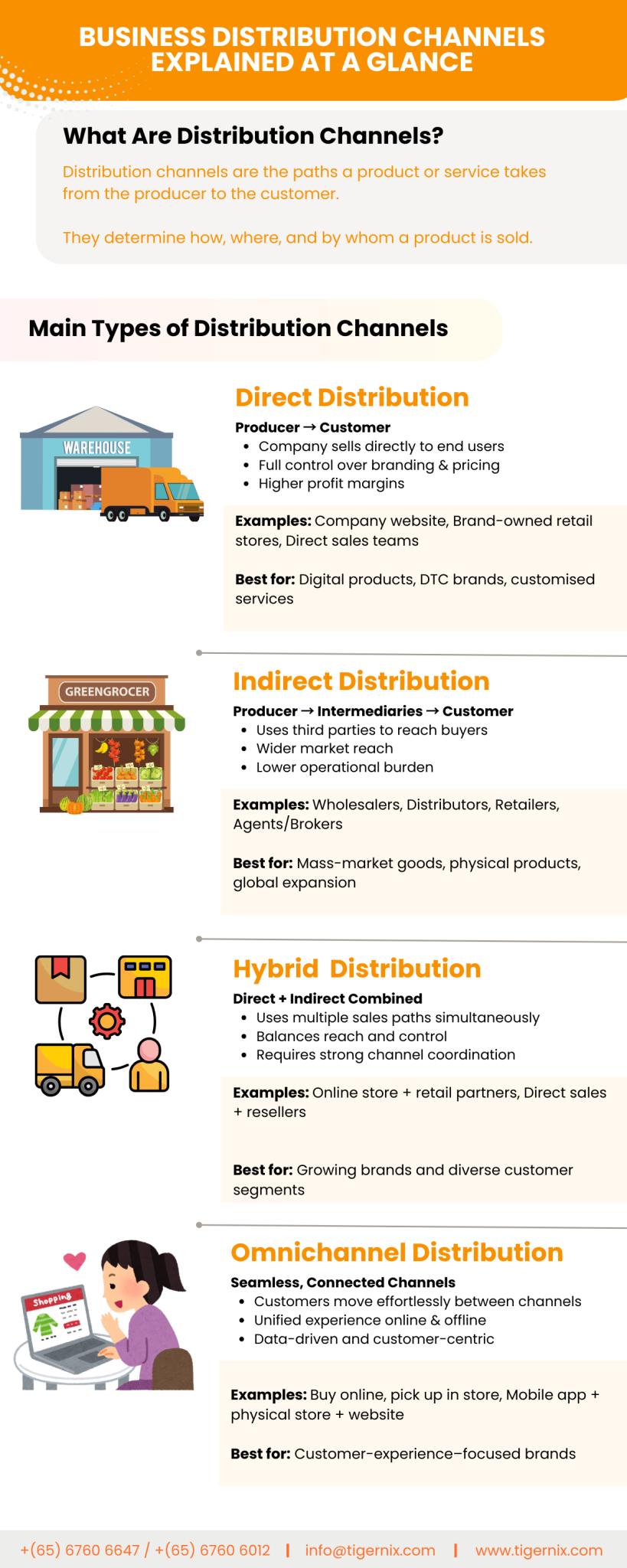

How a product reaches the customer is just as important as the product itself. Distribution channels determine the path goods and services take from producer to end user, shaping pricing, customer experience, and overall profitability. Businesses today can choose from direct distribution, indirect distribution, hybrid models, or fully integrated omnichannel strategies—each offering distinct advantages and challenges. Direct channels provide control and higher margins, while indirect channels expand reach through intermediaries. Hybrid and omnichannel approaches combine flexibility with seamless customer experiences across platforms. Selecting the right distribution strategy impacts brand positioning, operational complexity, and long-term growth potential. As markets become more competitive and digitally connected, companies must carefully align their channel strategy with their target audience and business objectives. Understanding these models is critical for building sustainable market presence and maximizing revenue opportunities. To explore each distribution model in a clear, visual breakdown, learn more by reading the infographic below.