Data is just flowing across every nook and corner of the contemporary business world. It does not take much effort to create a fresh data point as each customer interaction, every click, transaction and new sale just points in one direction. But do you think you can ever make sense of the data alone? Unfortunately, the data alone means nothing until it turns into insights. This is the root of better business decision-making after all.
In a way, business insights takes away the gap between numbers and knowledge. It simply narrates a story for the organisation of what happened, the reasons for what happened, what is coming up, and even what the business can do next. It is overall wisdom, and that is why businesses in this fast-moving world put this much weight on business insights.
This article covers everything about the main types of business insights and explains how each insight helps your business walk away from hindsight to foresight.
What Are Business Insights?

- Let’s clarify what this means. A business insight represents a valuable finding made after a course of analysing various data. That builds a complete story hidden behind the data, and that is what helps drive decisions, not simply those raw numbers or flashy charts.
- Sales data, for example, is not entirely informative and does not give a clear picture. However, when you realise that sales have been increasingly sinking down because a rival has reduced pricing in a certain location, this understanding carves an insight. It urges you to take action.
- Not relying on one or a few sources, a variety of points, including operations, employee performance, finance, consumer behaviour and market trends, yields business insights. The most distinguishing quality of them is their capacity to transform data in one direction.
- To make sense of it all, experts separate these insights, considering how sophisticated they are and their practicality, ranging from descriptive to prescriptive.
The Insight Spectrum: From Descriptive to Prescriptive
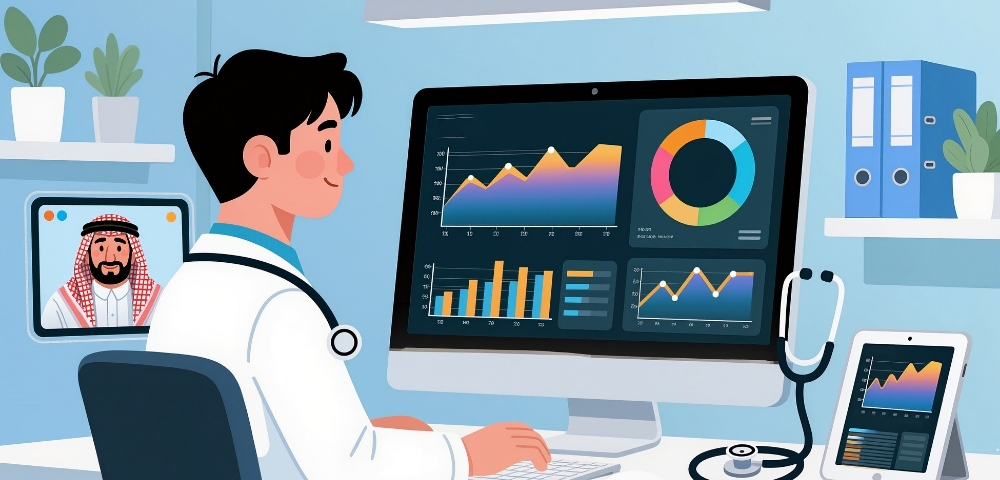
Every business embarks on an insight journey. Some depend mostly on descriptive insights—reports that indicate what happened last month or quarter. Others go even farther, employing advanced analytics to forecast what will happen next or indicate the best course of action.
Here is how the spectrum looks in simple terms:
| Type of Insight | Key Question | Purpose |
|---|---|---|
| Descriptive | What happened? | Summarises past performance |
| Diagnostic | Why did it happen? | Explains the reasons behind the results |
| Predictive | What might happen next? | Forecasts future trends and outcomes |
| Prescriptive | What should we do? | Suggests actions and strategies |
Each phase increases insight and value, assisting a corporation in transitioning from knowing the past to designing the future.
The Key Business Insights Deep Dive

Descriptive Insights – What Happened?
For the majority of organisations, descriptive insights are what lay the foundation for further steps. In this stage, the insights describe what has already occurred. There might be a broad spectrum of methods that you can receive them, such as reports, dashboards, and performance summaries.
They help answer the most fundamental queries, such as:
- How much revenue did the company produce last quarter?
- Which product had the highest sales?
- How many new clients enrolled last month?
Not to mention that these insights provide a clear picture of prior performance. This knowledge makes the way for identifying trends, tracking goals, and measuring progress on a deeper level.
For example, you might observe that website traffic grew by 20% last month. That is useful to know since it provides context and direction. Spreadsheets, data visualisation systems such as Power BI and Tableau and business intelligence dashboards are the most used tools to receive insights.
However, the drawback comes with the fact that descriptive insights only narrate to you what happened, not why. No doubt that these are fantastic for raising awareness, but they do not lead to deeper action.
Diagnostic Insights – Why Did It Happen?
Now you know what has occurred, the next question would be why it happened, right? This is where the diagnostic insights come as the best way to find answers for that. Their main duty is to delve into the root causes and relationships formed between those data patterns.
For example, imagine the sales dropped in one region. If you incorporate diagnostic insights, they help you discover whether it occurred because of the poor marketing strategies, low stock, or, most fearfully, the regularly changing customer preferences.
These insights come through a variety of sources, such as customer engagement rates, sales and marketing spend or churn, and their prime focus is to discover what influenced the results.
From drill-down reports, correlation analysis, to root-cause analysis and segmentation are commonly used as techniques to offer insights in this method.
Predictive Insights – What Might Happen Next?
Predictive insights are what offer a magnifying glass for your organisation to make a shift from looking backwards to looking forward. They accomplish this by analysing past data collected and deploying statistical models to predict what will occur in the future.
For example, an organisation can utilise these insights to answer which consumers are most likely to make another purchase, how much demand we can anticipate to see next month, and what potential dangers exist in their supply chain, etc.
As predictive insights foresee outcomes based on prior data trends, it simply supports companies to prepare more effectively and implement preventive measures.
In most cases, we can see that regression analysis, data modelling, and machine learning are the techniques employed. However, like the other insights we mentioned above, this also comes with some challenges. You have to admit that no prediction is ever flawless. They rely on high-quality data and appropriate models. Yet, merely an 80% correct prediction can significantly influence corporate strategy.
Prescriptive Insights – What Should We Do?
Experts agree that prescriptive insights are the most sophisticated degree of decision help. They not only predict what may occur, but also recommend the best course of action.
For example, let’s consider a logistics business that forecasts that gasoline prices will grow over the next six months. When they incorporate prescriptive insight, it could advocate that they should reroute cargo or switch to more fuel-efficient transportation methods.
These insights rely on scenario simulations, optimisation techniques, and AI-powered suggestions. Prescriptive insights build a solid foundation for a company’s executives to arrive at data-driven choices faster. There is no doubt that this type of insight improves results, saves time, and minimises assumptions.
However, the problem lies in its requirement for a solid data foundation. It also requires the correct tools and a culture that values analytics.
How to Build an Insight-Driven Business

Strengthen Your Data Quality
It is not a secret that poor data generates poor insights. This is why your company needs to ensure that your data is correct, clean, and up to date. It is better if you could automate data collection whenever feasible, if you expect to reduce human error.
Define Clear Business Questions
Insights are only useful when they point out important questions. For example, a question like’ What information do we need to make a decision?’ is undoubtedly a clear query, and it will lead to intense analysis.
Use the Right Tools
Modern analytics solutions pave the way to create and visualise what they have found. This is why it is necessary to begin with simple dashboards for descriptive information. After a while, as you grow, you can progress to predictive tools.
Encourage a Data-Driven Culture
You will agree that even the finest ideas become meaningless if no one takes action on them. Do not keep insights in hand without making any move forward. You must encourage teams to base their choices on evidence, not preconceptions. It is advisable to share dashboards, teach workers fundamental analytics skills and recognise data successes.
Start Small and Scale Gradually
If you think you will require some complex AI models right away, it is not true! Instead, you are always encouraged to begin by strengthening your reporting and diagnostic procedures. If you have solid data, it will not be problematic to acquire predictive and prescriptive insights as they come easily.
Monitor and Improve Continuously
You must keep in mind that business insights need ongoing work. This is why a company needs to keep changing its models, examining its data sources, and learning from the outcomes. The objective is to develop continuously rather than to achieve perfection.
Achieving Success with Robust Business Insights

We have stepped into an information era. In here, only the firms that can translate raw data into meaningful action will have the potential to succeed. This is why your company must incorporate a robust Business Intelligence System that offers clear indications for smart decision-making through insights combining descriptive, diagnostic, predictive and prescriptive all together. It is just one tool you need to bridge the gap between the insights and action.