
With an unstoppable wave of challenges varying from supply chain disruptions, climate changes, tariff hikes, to cyber attacks, businesses in modern times struggle to reach the top levels of success every single year. Will these risks ever see a destination? Never! That is the truth in the business world. This is where the notion of ‘risk management’ comes into play as the rescuer. Is it actually your pillar of strength in managing hazards, or is it just a fancy abstraction?
In this article, we explore what risk management is and why it is important for enterprises.
We will look into
What is Risk Management in Simple Words?
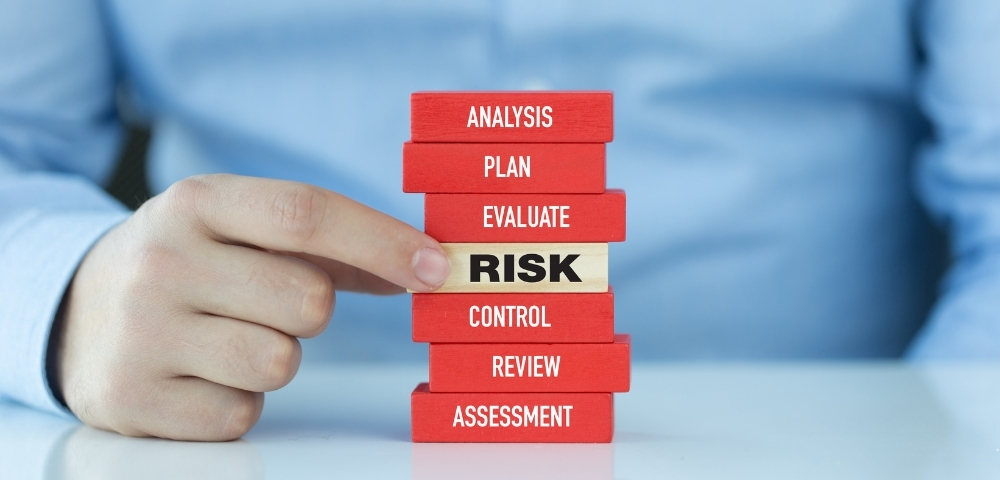
- Risk management in business goes beyond a simple hypothesis, to be honest. It is a complex mechanism of identifying risks to assessing the impacts, and generating some controlling strategies to keep the businesses away from any harm.
- In the business realm, risks are known as events or circumstances that lead the business into financial loss, reputational damage, or operational disruptions.
- Not limited to one or two types, these business risks come in various shapes. This signifies financial risks where the business loses money, operational risks where it escalates into equipment failures, market risks where the business faces unbearable levels of competition and change of demand, legal risks when the company struggles with compliance issues and the worst reputational risks where an enterprise loses customer trust.
- This is why the business world believes in continuous monitoring and reviewing of risks, as it offers them the power to ensure that they are strategically positioned to act upon new challenges. When risk management is implemented within a company, it can smoothly function through hard times as well.
Why is Risk Management Important in Business?
Protects Business Assets
Risk management lays the base for all types of businesses when it comes to protecting their valuable assets. In the sense of valuable assets, businesses have many resources such as machinery, cash, technology, buildings, and some other intellectual property, and all of them are vital to maintain a smooth operational workflow.
If the company does not keep a watchful eye on these resources regularly, there is a high potential for them to be subjected to breakdowns, theft, accidents, or damage.
The whole point of establishing a risk management mechanism is to give the company the ability to either minimise or prevent those pre-identified risks. That way, they can reduce the loss that can happen to the business.
This is when the companies tend to install security systems, opting for insurance plans, safeguarding company data with tight layers of data protection policies, etc. In one way, risk management supports company financial health; in another way, it helps with smooth operational orchestration.
Reduces Financial Losses
Even though there are many other reasons, businesses always go with risk management due to one solid point. That is undoubtedly the financial loss. Not to mention that in today’s world, businesses have to struggle with various uncertain situations like tariff challenges, economic downturns, fraud, market and demand changes, etc. If the companies do not function with a well-carved risk management plan, the above-mentioned burdens will direct them to large losses, expenses or bankruptcy at some point.
The main purpose of identifying these risks in advance is to reduce the weight on the company’s finances. For instance, in order to minimise the burden, many companies tend to develop some emergency funds or opt to buy insurance nowadays. On the other hand, after identifying potential risks, it is easier for the companies to implement stronger controls to prevent errors or fraud. Each of these strategies revolves around one question: ‘Why do we have to waste money on preventable risks?’.
Ensures Regulatory Compliance
In a business landscape where every company have to adhere to government laws and industry-related laws, risk management acts as the shield when it comes to protecting businesses. Due to the risk management protocols a company has, there are almost zero chances of them not complying with laws and regulations.
No matter whether it is safety, data privacy, taxation or environmental laws, risk management takes every loophole into consideration and seals the gaps immediately. Otherwise, the businesses will end up facing unnecessary penalties or legal disputes.
It is a compulsory step in the risk management mechanism to spot the areas where compliance may be at risk. As part of risk handling, it indicates the necessary measures to meet regulatory standards.
Whether it is updating policies, regular audits, employee training, or revamping procedures, the primary focus is to let the company function with 100% confidence.
Improves Decision-Making
Risk management clearly opens doors for decision-making in business quietly. If we look into a regular business framework, what we can spot is that every business decision, even the tiniest ones, comes with several risk factors.
Whether it is launching a new product or a company entering a new market, risk dynamics are all over the business map. If the stakeholders turn their heads away from the potential risk factors and decide to carry on with operations, it will ultimately lead to operational and financial losses.
Since the latter process offers valuable insights and data to do estimations on the upcoming issues, it makes the way for businesses to evaluate their impacts on each scale.
As they have a good understanding of what is going on and what will happen in the next stages, they can make informed decisions.
Enhances Reputation
There must be a well-thought-out risk management strategy when protecting and enhancing a company’s reputation. In customers’ eyes, a company’s reputation is hidden not only inside their products, but in the ways they handle business challenges.
There can be many challenges and crises a business encounters, such as data breach issues, safety incidents, or product failures, etc. Nobody denies the fact that it harms the company’s brand name and image that they have built for decades.
However, risk management acts as a magnifying lens in such situations, giving opportunity for businesses to anticipate and prepare for potential issues. This step will offer solid ground for the company to decrease the likelihood of public crises.
It is easier to destroy trust with small mistakes, yet it is nearly impossible or takes another decade to rebuild the trust of customers. With every risk they manage, companies express professionalism, reliability, accountability and responsibility, and that is what lays the foundation for customer loyalty and trust.
Supports Business Continuity
This is one strategy to guarantee the company functions through thick and thin. This means risk management backs up business continuity. Even during the worst times like COVID-19, the companies who has implemented risk management policies have the capacity to keep operating. For example, there can be many other natural disasters, cyberattacks, power outages, or supply chain failures that can pause the button for the operations. The end result will be financial and reputational loss.
This is where the businesses use different methods to foresee the prospective systemic disturbances and keep themselves prepared for the worst times in the operational architecture. For example, if it is a manufacturing company, they can keep some rare raw materials at stores to be used during disruptions. This does not mean that overstock is a good tactic. However, if that specific material can be used in the future, there is no wrong in keeping it in the stores.
Plus, the companies can develop backup systems, emergency procedures, or alternative supply sources, like opting for different or local vendors, to keep the operations smooth. When the risk management plan is in place, there is always a guarantee that procedural execution occurs without friction.
Risk Management with Heightened Precision for Seamless Organisational Resilience

Even though identifying and preparing for business risks are important for success, it is not always easy to do this evaluation accurately. Tigernix Business Intelligence System with Data Analytics enters the business world in order to offer accurate, data-driven insights that streamlines the entire process of risk management and decision-making a strategic fruition. With data-sensitive wisdom you receive through the robust technology brings the organisational resilience levels to the top.