

It is commonly said that mentors are vital for career success. Have you also heard of this? Let’s see what the evidence actually says. We have seen the transformative power of a good mentoring relationship first-hand, as long as we can remember. But the truth is that you need more than anecdotes to make the case for mentorship as an HR executive. Yes, this means that you need data to justify your expenditure. Fortunately, research spanning over 30 years provides a clear and convincing picture of the real impact of mentoring.
This article draws upon decades of academic studies, including major meta-analyses, to provide you with evidence-based insights.
We will explore what the research shows about mentoring effectiveness for protégés, mentors themselves, and organisations overall. In every aspect of these schemes or programmes, you will grasp more deeply: from job satisfaction and retention right through to diversity and inclusion. After you read the whole article, you will have a clear roadmap for creating your own mentoring programs that produce visible results.
This article explores
- What Does Research Over 30 Years Reveal About Mentoring Effectiveness?
- How Do Protégés Benefit From Mentoring?
- What Are the Advantages for Mentors?
- How Effective Is Mentoring in Corporate Settings?
- Should Organisations Prioritise Informal or Formal Mentoring?
- How Does Mentoring Support Psychological and Health Outcomes?
- What Role Does Mentoring Play in Diversity, Equity, and Inclusion?
- How Widely Are Mentoring Programs Adopted Today?
- What Is the ROI of Mentoring Programs?
- What Are the Long-Term Career Impacts of Mentoring?
- Build a Culture of Mentorship
What Does Research Over 30 Years Reveal About Mentoring Effectiveness?

[1][2] When we appreciate the value of mentoring, we must turn our focus to large-scale studies that combine the findings from hundreds of individual research papers. These meta-analyses provide a bird’s-eye view of robust patterns and the consequences of mentorship in the workplace.
Multidisciplinary Meta-analyses (Eby et al., 2008)
Did you know that the most extensive research on this topic was a 2008 meta-analysis by Eby and colleagues? It was analysed and reviewed for 116 independent samples from studies published between 1985 and 2006. This extensive review (part-funded by The Work Foundation), which included 43 studies with restricted samples in workplace settings, gave us some clear insights into where mentoring really works.
Effects on Job Satisfaction, Motivation, and Relationships
What does this reveal to us?
The study found that mentoring has a small but significant overall positive impact on critical employee attitudes. Mentored students reported greater job satisfaction and greater motivational involvement.
They reported feeling more connected to the work and the organisation. The research also emphasised the relational benefits, demonstrating that mentorship increases professional connections and workplace relationships.
Insights into Engagement vs. Performance Outcomes
It became a captivating little certainty that the connection between mentoring and direct measures of performance, such as productivity and sales figures, was more tenuous. This is an important finding that should be used to inform realistic expectations. Mentoring is not a cure-all for turning out higher output overnight.
Rather, its value stems from helping build a happy, engaged, and committed workforce. This implies that superior mentoring programs aim to provide psychosocial support and establish meaningful connections, resulting in a more committed and resilient staff.
How Do Protégés Benefit From Mentoring?
[3] People might say that having a mentor is life-changing. The evidence makes it clear that these benefits are not merely in the mind but are real and measurable, with significant effects on career progress.
Career Satisfaction, Promotions, and Compensation (Allen et al., 2004)
Allen et al. (2004) published a landmark meta-analysis of timeless protégés and systematically analysed findings across decades. The results were unmistakable: people with mentors reported greater career satisfaction. They felt more satisfied and optimistic about their career paths.
Plus, mentored employees fared better in terms of objective success, regardless of how they felt. They were also more likely to be promoted and paid better than their peers who did not receive guidance. Although the effect size varied across plays, a general trend emerged. Mentoring results in a significant boost in career advancement.
Increased Organisational Commitment and Retention
Protégés also showed more organisational attachment. It helps to have a senior colleague who you feel supports and directs you throughout the organisation. And this heightened organisational commitment directly correlates with higher retention rates, which is a key metric for any HR leader.
When employees see a way forward and are appreciated, they are much more likely to stick around.
Designing Mentoring Programs to Maximise Protégé Growth
If you wish to capitalise on these benefits, it is critical that your organisation create mentorship programs that focus on the development of the protégés. This means going deeper than introductions.
Good programs allow these resulting relationships to be both transactional and transformational by matching mentors with protégés based on career goals, skill needs, and strengths. Inserting structure, such as goal-setting forms and check-in prompts, ensures the relationship stays on course and provides tangible evidence of the protege’s improvement.
What Are the Advantages for Mentors?

[1][4][5] Mentoring is a reciprocal relationship. Although attention normally falls on the protégé, studies show that mentors also benefit from their professional and personal development.
Job Satisfaction and Professional Fulfilment (Ghosh and Reio, 2013)
Ghosh and Reio (2013) found that mentoring is positively related to job satisfaction and organisational commitment in their meta-analysis. Mentoring a junior colleague can also breathe new life into the career of a senior staff member and add that sense of purpose back.
It is sort of an adventure, where skills are shared, and a protégé’s road is clear to shine. It is a kind of professional satisfaction that no other day-to-day chore can compare to.
Career Mentoring as a Tool for Personal Growth
This proves that mentoring encourages mentors to flourish. It forces them to reflect on the steps they have taken in their own careers, develop their leadership skills, and stay current with what is new and different from the perspectives of those disciples.
This reverse-mentoring feature tends to keep experienced staff active and learning.
Understanding Limits: Turnover and Retention Impacts
It is important to acknowledge the complexity of research.
The study by Ghosh and Reio (2013) found that mentees’ satisfaction commitment was higher, but a mentor’s intention to leave the organisation decreased insignificantly.
That suggests that, good as it is as an engagement tool, mentorship will not protect senior colleagues from the other factors that lead to attrition: Money or bad leaders. Mentoring should be one component of a cross-generational plan to keep excellent folks around.
How Effective Is Mentoring in Corporate Settings?
[6] Like all other investments, companies might want to know one thing: Does the return justify the effort of investing in mentoring programs? This is where Underhill (2006) undertook a meta-analytical assessment of corporate mentoring programmes and found that, whilst not always stunning, the outcomes were always positive.
Career Outcomes, Job Satisfaction, and Promotions (Underhill, 2006)
It also showed that corporate mentoring enhances overall career success; for example, this is reflected in an analysis by Underhill, which covered 14 studies.
The greatest effects were seen in two categories: job satisfaction and promotions. Those employees with formal or informal mentoring were more satisfied with their jobs and more likely to grow within the company.
Non-Significant Effects: Income and Tenure
It found weaker, non-significant effects on earnings and tenure.
For example, the mentored group received promotions more often than non-mentored employees, but these promotions did not always translate into measurable monetary gains in any of the studies investigated.
It also made no difference to the length of time an employee remained at the organisation. This reaffirms the idea that the benefits of mentorship are typically assessed based on engagement and career progression, rather than on direct financial outcomes.
Structured Evaluation and Evidence-Based Program Design
These results emphasise the importance of systematic program design and evaluation. Here is where HR directors should set up evidence-based programs that justify the expense.
You can use metrics such as promotion rates, internal mobility, employee satisfaction scores, and other measures to demonstrate the impact of mentoring and ongoing buy-in from leadership.
Should Organisations Prioritise Informal or Formal Mentoring?

[7][8] Whether HR leaders should set up a structured, formal mentoring program or simply create an environment where informal relationships can flourish remains one of the burning questions. These findings will provide you with some guidance in this domain.
Comparison of Effect Sizes for Informal vs. Formal Programs
In his meta-analysis, Underhill (2006) reported one remarkable finding: informal mentoring relationships had a significant positive effect on outcomes, whereas formal programs did not significantly affect the outcomes assessed.
You need to understand that this does not mean formal programs are not needed. It means that the natural connections that arise from informal mentorships often create more meaningful partnerships.
How Organic Relationships Enhance Engagement
The research also indicates that informal mentorship generally arises from chemistry and mutual respect. These organic relationships often require a higher level of trust and personal engagement, and therefore a different set of expectations for mentor and protégé.
Since nobody can force a relationship, the engagement is often much more genuine, leading to solid psychosocial support and career mentoring.
Practical Strategies for Combining Formal Structure with Informal Pairings
The best method seems to be a hybrid approach. It includes a formal structure to start the process, a provision for resources, and the possibility of preliminary interactions within organisations. But they should also be flexible enough to allow organic partnerships to arise.
Here are Several Strategies
Group Mentoring: Start with some group activity or ‘mentoring circles’ where the potential mentors and protégés can meet in a low-pressure environment
Opt-In Matching: Instead of pairing mentors with whoever you think is best suited, create a library of mentors, stay flexible, and let protégés have a say in who they would like to work with.
Multiple Mentoring: Avoid a single adviser and help employees build a personal network of informal mentors.
With this mixed-method approach, you can scale and monitor like a formal program while also preserving the genuine appeal of informal connections.
How Does Mentoring Support Psychological and Health Outcomes?
[9] Mentoring not only helps employees in career enhancements but also in employee well-being. In today’s demanding work environment, supporting mental health is not a mere embellishment but a business necessity.
Reduced Stress and Improved Self-Perception (Eby et al., 2008)
Eby et al. One of the largest meta-analyses was conducted by Cohen et al. (2008) and included some psychological outcomes.
They found that protégés with mentors reported lower psychological distress and higher self-esteem.
When you have an adviser you can trust and lean on when dealing with your professional problems. Mentors can offer perspective, serve as a sounding board, and build the confidence proteges need to manage difficult circumstances.
Mentoring as a Buffer Against Workplace Burnout
Mentoring is a secret weapon that can fight burnout by reducing stress. And if your employees are feeling lonely, overwhelmed, and unsupported, their chance of burnout skyrockets.
The mentor acts as an oracle of wisdom and guides the person in the right direction for managing the workload, navigating organisational politics , and achieving a work-life balance.
Implications for Long-Term Employee Resilience
Further, mentoring plays a major role in the lasting psychological strength of employees and provides psychosocial support. Workplace success today helps you succeed in your future career.
Employees who are skilled at coping with work-related stressors and have strong professional networks will be better equipped to meet subsequent challenges. This resilience translates into the organisation, leading to a more stable, flexible, and productive talent.
What Role Does Mentoring Play in Diversity, Equity, and Inclusion?

[8][9] Besides being extremely effective in achieving diversity and inclusion goals, mentorship helps overcome the roadblocks that hinder individuals’ talent. It seeks to overcome systemic hurdles faced by underrepresented talent.
Improving Retention and Career Progression for Underrepresented Groups (Lewis et al., 2018)
Lewis et al. (2018) found that mentoring was crucial to achieving higher retention and success for underrepresented scholars. Mentors can offer ‘insider’ guidance on how to fit in with the organisation, speak up for their charges in important meetings, and provide an introduction to job-defining skill sets that are needed outside any class or seminar.
Tailored Mentoring for DEI Impact
To optimise DEI, mentoring should be tailored to the specific needs of different populations. This may involve:
Cross-Cultural Mentoring: Matching older employees with younger ones from different backgrounds to build understanding and erase prejudices.
Sponsorship Programmes: Taking advising a step further to full advocacy, where senior leaders leverage their influence on behalf of their proteges for promotions and choice assignments.
Affinity Group Mentoring (AGM) is the development of mentoring programs within ERGs to provide focused support and community.
Best Practices to Enhance Promotion Rates for Women and Minorities
Research and industry estimates suggest that focused mentorship and sponsorship can significantly increase promotion rates among women and minorities, with gains of up to 38% for some groups, including 15% for women.
Organisations can intentionally build a more diverse and equitable leadership pipeline through active leadership pathways.
How Widely Are Mentoring Programs Adopted Today?
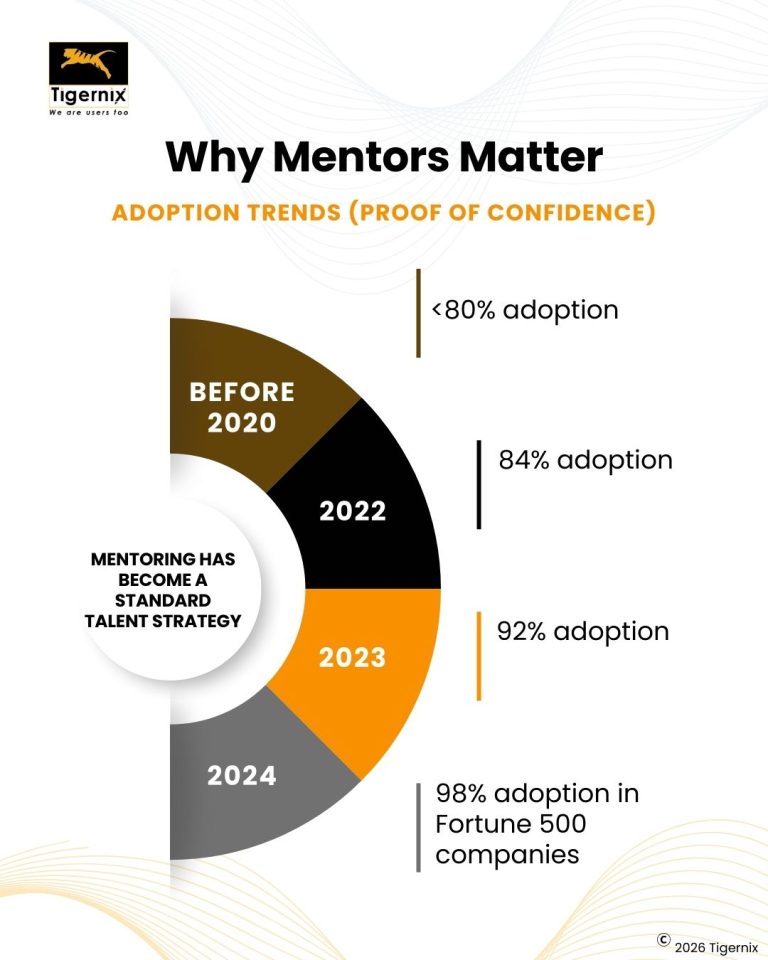
[10] [11] The business community is paying attention to modern research. Mentoring has gone from being a niche benefit to an integral part of practically every leading organisation’s ‘Talent Management’ strategy.
Trends Among Fortune 500 Companies (2024 Benchmarks)
The adoption rate of top companies is jaw-dropping. It is estimated that 98% of the Fortune 500 companies in the United States had some form of mentorship programme in 2024.
This widespread agreement suggests that everyone recognises the benefits of mentoring the workforce to grow internal talent and capture competitive advantage.
Increasing Adoption Rates Over 30 Years
It is a pattern that has been developing for decades. Adoption has been on the rise over the past several benchmarks, but never punched past 80% until 2022, when 84% of changemakers reported using Slack, and in 2023, it was 92%.
The continuous rise indicates an improved understanding of how mentoring is effective in enhancing employee engagement, leadership development, and retention.
Lessons for Small and Medium-Sized Organisations
The lesson for small and medium-sized enterprises (SMEs) is obvious. It proves that mentoring is no longer the preserve of ‘big companies’.
The best thing is that mentoring software platforms and flexible program models now exist, so organisations of all sizes can (and should) implement mentoring programs that attract, develop, and retain top talent.
What Is the ROI of Mentoring Programs?
[12] [13] One of the most common questions asked regarding any HR initiative is the ROI (return on investment) equation. Do you agree?
Although determining an exact ROI for mentoring can be challenging, the study indicates substantial monetary returns.
Quantifying Returns via Retention and Engagement Metrics (Chronus)
Chronus, a top mentoring software provider, uses its data to show that the potential for positive ROI from effective mentoring programs can exceed 1000%. It is primarily fueled by both employee retention and productivity, and this number is unbelievable.
Some studies suggest that employees with a mentor stay at their jobs 50% longer than those without one.
Linking Mentoring to Reduced Turnover and Recruitment Costs
You know that whenever someone quits, the organisation needs to spend a lot of money on finding someone to fill the vacancy and recruiting, training, etc. Mentoring reduces these costs directly through lower turnover.
A mentoring program pays for itself tenfold if it retains even just a handful of critical employees from walking out the door each year.
Strategic Value for HR and Organisational Planning
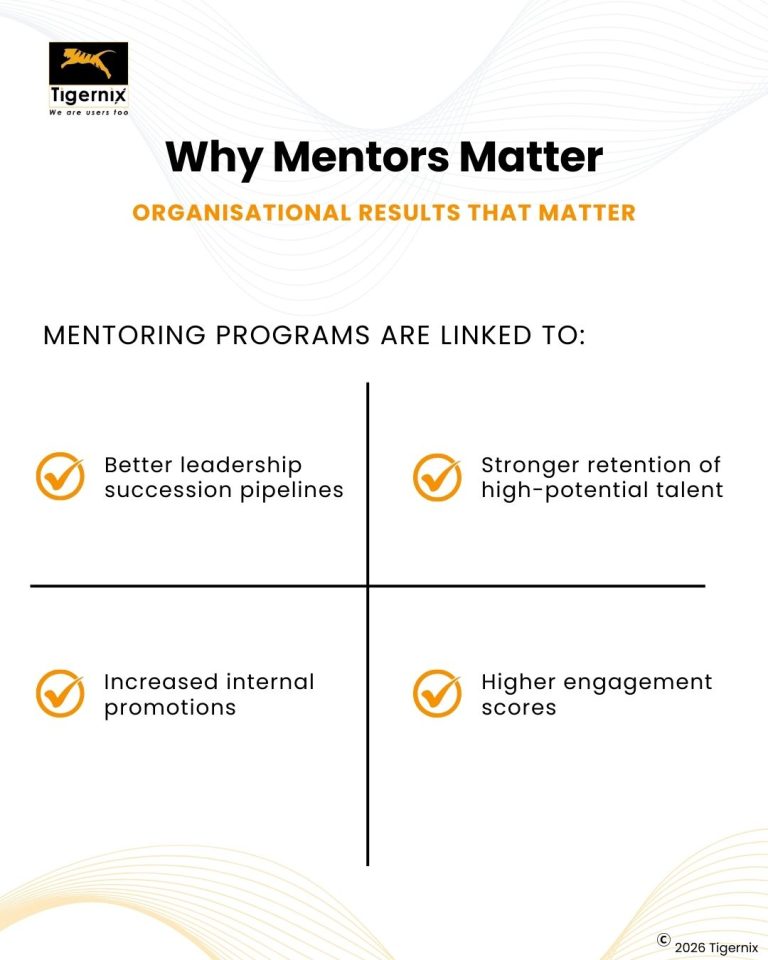
Aside from the obvious economic benefit, mentorship adds significant strategic business value. It plays a vital role in succession planning by identifying and grooming future leaders.
It strengthens all pillars of organisational culture by uniting around principles and fostering collaboration. Those are important components of the total ROI calculation, and the strategic benefits often accrue over time.
What Are the Long-Term Career Impacts of Mentoring?

[12] There is no doubt that an amazing mentor can influence someone’s career and finances for a lifetime.
Insights from Big Brothers Big Sisters (2025) and Youth Mentoring Studies
Data from longitudinal studies, such as those conducted by Big Brothers Big Sisters, can yield important insights. Let’s explore some of them.
Based on 30 years of data, a 2025 study shows that youth with a mentor at a young age are more likely to pursue higher education. Such early exposure prepares them for later career opportunities.
Education, Income, and Social Service Outcomes
We cannot ignore the long-term return on investment, as it is even more impressive.
These studies found that mentored individuals earn more money, with evidence of a 15% increase over 20-25 years in comparison to non-mentored persons. They also access social services less frequently, suggesting they are in a better economic position and more self-sufficient.
The Case for Ongoing, Sustained Mentorship Programs
These results provide vital evidence that mentorship should be viewed as an ongoing process rather than a one-off. The most successful professionals often have a couple of mentors at different stages of their careers.
It means that organisations can contribute to employees’ long-term growth and success by fostering a culture of continuous mentoring.
Build a Culture of Mentorship

As we approach the end, one thing is certain. Statistics compiled over the last three decades show that mentoring works!
It encourages career growth, boosts job satisfaction, enhances mental well-being, and offers a great return on investment. From the budding protégé to the wise mentor, and to a whole organisation, it is simply a win-win.
This is something you, as an HR leader in your organisation, have a great opportunity to preserve. Leverage this research to build a business case. You can design flexible, data-driven programs that align with your organisation’s strategic goals. It is a long-term investment in a culture of growth, support, and connection, where the mentoring program is just the start.
References
[1] https://www.sciencedirect.com/science/article/abs/pii/S0001879107000401?via%3Dihub

[2] https://pmc.ncbi.nlm.nih.gov/articles/PMC2352144/

[3] https://www.womeninhealthcare.org/app/uploads/2021/03/Career-benefits-associated-with-mentoring-for-men_2013_Journal-of-Vocational.pdf

[4] https://www.researchgate.net/publication/319198940_What_Career_Benefits_can_Mentoring_Truly_Bring_for_Protege_Evidence_from_Meta-Analysis

[5] https://pmc.ncbi.nlm.nih.gov/articles/PMC3652362/

[6] https://www.sciencedirect.com/science/article/abs/pii/S0001879109000335?via%3Dihub

[7] https://www.sciencedirect.com/science/article/abs/pii/S0001879105001077?via%3Dihub

[8] https://www.sciencedirect.com/science/article/abs/pii/S0001879105000680?via%3Dihub

[9] https://www.studeersnel.nl/nl/document/universiteit-van-amsterdam/incentives-and-control/cohen-et-al-2008-artikel/9281422

[10] https://www.mentorcliq.com/blog/mentoring-stats

[11] https://www.mentorcliq.com/blog/mentoring-impact-report

[12] https://www.bbbs.org/impact/

[13] https://get.chronus.com/rs/910-YDI-216/images/The-ROI-of-Mentoring-Coaching-and-other-Employee-Development-Programs.pdf