

The warehouse of today is more than a storehouse! It is a dynamic, data-rich environment where speed and accuracy make the difference between business as usual and a successful future. With supply chains growing in complexity and customer demands on the rise, companies are under pressure to explore augmented reality and virtual reality applications in warehouse management to remain competitive. Did you know that using AR and VR to train workers can save 52% to 64% over traditional classroom approaches?
What used to be futuristic technology is now showing up on the warehouse floor to address very real problems of efficiency and order fulfilment. From eliminating picking errors to supercharging workforce training, immersive technologies are transforming the warehouse. Collectively, they are transforming productivity, safety, and intelligence in the warehouse. Sounds promising, right?
This article examines how AR and VR are redefining the warehouse of tomorrow, the real-world use case scenarios that are changing operations today, and why your business can anticipate changes in its operations alongside technological developments.
We will explore
- Understanding Augmented and Virtual Reality in Warehouse Management
- Key Augmented Reality Applications in Warehouse Operations
- Virtual Reality Applications in Warehouse Management
- AR and VR in Warehouse Layout Planning and Optimisation
- The Role of Wearable and Immersive Technologies in Warehousing
- Business Benefits of AR and VR in Warehouse Management
- Challenges and Considerations When Implementing AR and VR
- The Future of AR and VR in Warehouse Management
- Real-World Applications of AR and VR Across Warehouse Functions
- Integrating AR and VR with Existing Warehouse Systems
- Workforce Adoption and Change Management for Immersive Warehousing
Understanding Augmented and Virtual Reality in Warehouse Management
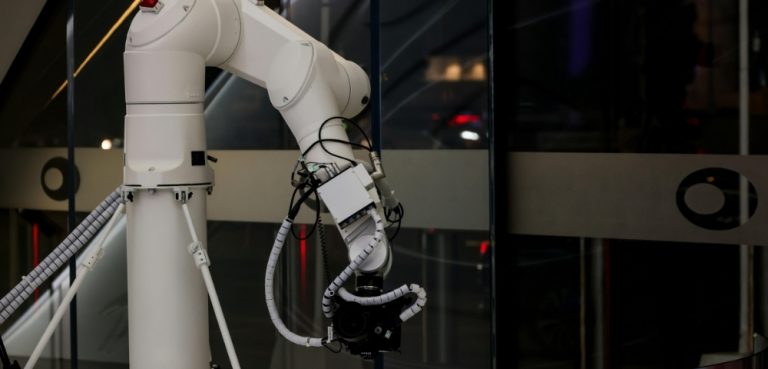
Augmented reality in warehouse management uses digital overlays, such as visuals, directions, and data, superimposed over a worker’s real-world view. With this, your workers in warehouses can get real-time guidance through smart glasses or on-device with handheld devices without having to pick up a screen or paper.
Virtual reality, on the other hand, immerses users in a fully mediated space where they can learn, plan, and test out warehouse situations without taking any physical risks.
Moreover, these technologies are becoming the building blocks of smart warehouse technologies that can process information rapidly and provide more human-like interactions with complex systems. Instead of replacing the WMS your company has already invested in, AR and VR make that system better by providing data more easily understood and acted upon.
Guess what is next! The result is a ‘humanised’ warehouse operation that is more reactive and human-focused.
Key Takeaways
- AR/VR technology can transform warehouse management operations with immersive guidance and immediate awareness, improving productivity, precision, and safety.
- AR enhances daily tasks, such as picking and inventory management, and layout visualization, while VR allows for safe training, scenario testing, and planning.
- Combining AR and VR within Industry 4.0-based warehouse management systems enhances the usability of AR by linking immersive experiences with live data.
- By adopting immersive technology earlier, a facility can operate at scale in resilient, human-centric ways that differentiate it from its peers in the emerging supply chain.
How AR and VR Differ from Traditional Warehouse Systems
The old warehouse systems rely heavily on screens, scanners, and manual input. Effective though these are, they tend to be invasive of workflow and constrain situational awareness.
AR and VR are the logical progression in warehouse automation and digitalisation, moving beyond screen-based interaction to engage with the environment. Your workers should not have to think about transforming data, instructions, warnings, or insights.
They appear as a layer above their workspace, instead of having to constantly make a mental conversion, which cuts down on cognitive drag and inaccuracy.
Key Augmented Reality Applications in Warehouse Operations
Augmented reality warehouse operations enrich everyday tasks with real-time contextual information on-site, where you need it. AR allows your workers to perform tasks faster and with fewer mistakes, especially in high-volume warehouses where speed matters most.
AR for Order Picking and Packing Accuracy
Another value-driving AR application is the warehouse picking optimisation. This is where the AR-based picking systems show visual indicators to guide workers to the right storage location, item, and quantity.
Not to mention that this lowers the time taken to search, and lowers the number of mistakes in picking, which would otherwise lead to a very hard process and take more time.
Further, inventory management with AR helps your warehouses attain near-perfect stock accuracy and faster fulfilment cycles. Visual verifications and automatic validations mean nothing if they get in the way of the products that should be moving through your facility.
AR-Assisted Inventory and Space Management
AR also makes real-time warehouse visualisation possible, so that your managers and workers can instantly look at inventory levels, for example, bin locations or space utilisation. Warehouses are no longer forced to make decisions reliant on static reports, as teams have the ability to visualise warehouse conditions dynamically, enhancing slotting and congestion reduction.
During periods of high demand, when changes need to be made quickly, this feature is especially beneficial.
Virtual Reality Applications in Warehouse Management
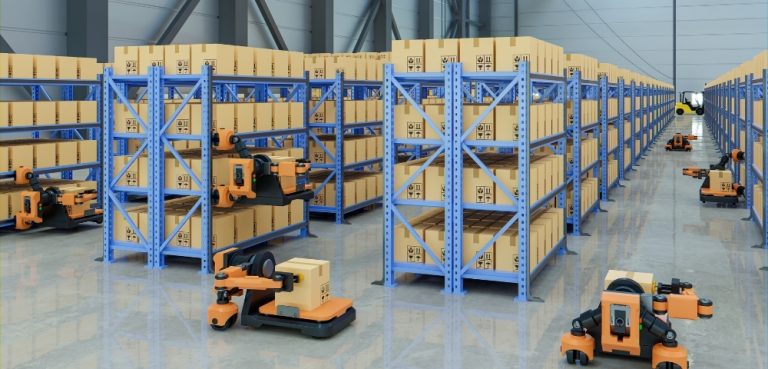
Whereas AR is an enabler of live operations, virtual reality applications in warehouses focus on training and planning. VR enables engaging environments for your warehouse staff and managers to walk around virtual warehouse models without causing any disruption to real operations.
Virtual Reality for Warehouse Training and Onboarding
Virtual reality for warehouse training enables your new hires to understand processes without the risks. Your trainees can exercise picking, packing, and operating equipment without slowing active workflows.
This method has proven to greatly enhance retention and decrease ramp time.
By utilising immersive warehouse training solutions, businesses can standardise their training process and maintain quality standards, whether there are two or ten different locations involved. The best part is that seasonal or temporary workers who require quick productivity gains can benefit from VR-based learning.
VR-Based Safety and Risk Management
We know that warehouses are inherently dangerous, and safety training is crucial. VR provides the ability to replicate unsafe scenarios so you can conduct convenient VR safety training for the warehouse workforce.
What is more, your workers can ‘live through’ dangerous situations–like a machine failure or an emergency evacuation–until they get it right, without risk, better bracing them for the real deal in order to foster compliance.
AR and VR in Warehouse Layout Planning and Optimisation
In this digital age, we can see that the use of AR VR warehouse solutions is significantly growing for designing and optimising warehouses. Warehousing teams can now walk through the virtual layouts, testing workflows, and pinpointing bottlenecks before any physical changes are executed, instead of only relying on blueprints.
Using Digital Twins with AR and VR
One strong progression is the digital twin for warehouse operations. Have you heard of it?
Digital twins recreate the physical warehouse environment in digital format, allowing them to be constantly monitored and refined. When augmented with AR and VR technologies, digital twins can show leaders the implications of layout changes, equipment upgrades, or demand shifts in real time.
The Role of Wearable and Immersive Technologies in Warehousing
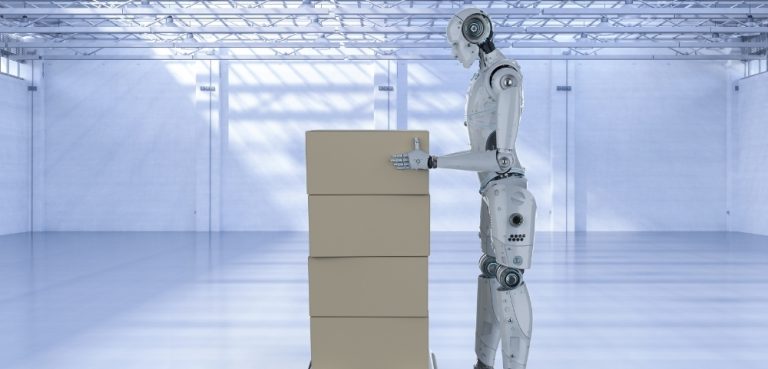
The wide-scale use of immersive technologies in warehouse management is based on wearable devices, including smart glasses and head-mounted displays. These wearable AR devices in warehouses are hands-free by design and bring someone the information they need to know right into their line of vision.
This frictionless experience ensures better ergonomics and fewer distractions.
In the heart of that change lies better human-machine interaction in warehouses, and we are not just talking about warehouses filled with smart systems that bend to people rather than making people bend.
This change makes the device easier to use and enables faster adaptation across different types of workforces.
Business Benefits of AR and VR in Warehouse Management
The adoption of AR VR in warehouse management provides some measurable business value. Key benefits include:
- It offers higher productivity.
- It allows for fewer mistakes.
- Faster training is made possible by AR and VR.
- It improves workforce engagement.
These are warehouse productivity improvement technologies that make things more intuitive to workers, directly affecting efficiency and customer satisfaction.
Challenges and Considerations When Implementing AR and VR
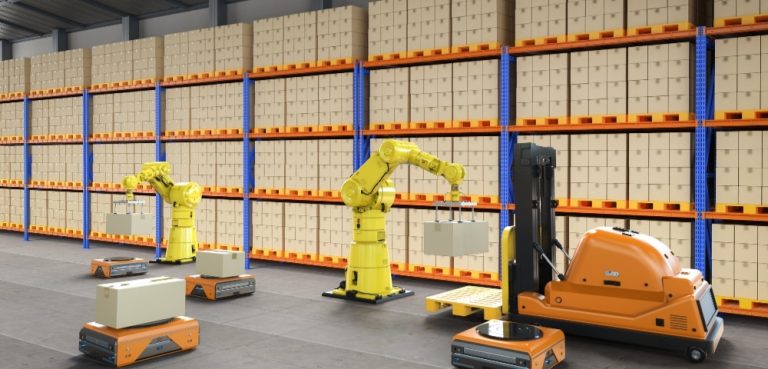
This comes with its own set of obstacles when deploying virtual reality in warehouse operations. And you need good planning on the hardware, systems integrations, and change management.
Moreover, AR and VR solutions are best combined with AI-enabled warehouse management systems that support immersive experiences based on actual, up-to-the-moment data.
Companies also have to focus on the readiness of their workforces, so employees know that these new tools are not a substitute for what they do.
The Future of AR and VR in Warehouse Management
The future of AR VR technology in logistics and warehousing is more comprehensive when integrated with AI, IoT, and robotics. In Industry 4.0 in warehousing, immersive technologies will allow for predictive operations and automated decision-making.
Plus, progress in spatial computing in logistics will continue to demolish the divide between the physical and digital realms, and ongoing logistics technology innovations will democratise AR and VR for warehouses of all shapes and sizes.
Real-World Applications of AR and VR Across Warehouse Functions
The realisation of applying warehouse management using augmented reality can be seen by analysing just how these technologies help concrete activities carried out in the warehouse. Instead of being used as a single solution, AR and VR are woven into the fabric of daily workflows, providing assistance to workers, managers, and planners.
The following are specific areas of functionality where immersive technologies already demonstrate tangible value.
AR-Guided Receiving and Put-Away Processes
During the receiving process, AR systems provide workers with visual guidance to the appropriate put-away bins based on item type, size category, and priority. It saves decision time and avoids inventory misplacement.
Also, visual confirmation reduces errors from the beginning of the operation in the warehouse, leading to enhanced capabilities for downstream applications.
Quality Checks and Error Detection Using AR
Using AR, warehouse workers can check product specifications, packaging requirements, and compliance rules on the spot.
Visual notifications alert to discrepancies before items are moved on, minimising returns and rework while adhering to service-level agreements.
VR-Based Equipment Familiarisation
In VR, workers can operate forklifts in a virtual environment or work with conveyors and automated systems. This instils confidence and proficiency in the treasured workforces prior to them using actual equipment, minimising damage and downtime.
Supervisor Decision Support with Immersive Dashboards
However, supervisors can utilise immersive consulting interfaces to visually identify workload distribution, congestion points, and task finish status. They have a hierarchical view of warehousing performance, acting in a more fluid environment than static paperwork.
Scenario Testing for Peak and Seasonal Demand
Using VR, managers can practice peak-season volumes, staffing levels, and layouts. These simulations enable warehousing teams to see what risks are on the horizon and plan for them out-of-band, before they disrupt live services.
Integrating AR and VR with Existing Warehouse Systems
To succeed with immersive strategies, AR VR warehouse solutions need to work with the other digital tools in place. Yes, this indicates that augmented and virtual reality are not a replacement for Warehouse Management Systems, Enterprise Resource Planning platforms, or automation tools.
They are an experience layer that improves how people engage with those systems.
Integration means that visual guides, simulations, and perceptions are always printed based on correct data. Since AR and VR derive their information straight from core systems, warehouses prevent data silos and ensure operational consistency.
This strategy also means that unforeseen scaling becomes easier, as your technology stack does not have to be re-architected for organisations to expand immersive offerings across sites.
Workforce Adoption and Change Management for Immersive Warehousing
Technology only works when people trust and adopt it. With the proliferation of augmented reality warehouse operations, your company needs to prepare its workforce and align its culture.
When employees can see that immersive tools definitely reduce the effort, errors, and stress involved in their work, they tend to regard them in a positive light. Hands-free guidance, intuitive visual generation, and a realistic training environment create simplicity rather than complexity in daily work. Speaking clearly and having staged rollouts and in-hand demos can foster trust and speed adoption.
More importantly, immersive tools should be positioned as support systems, not surveillance or replacement mechanisms. Once your warehouse employees are aware that their skills and safety will be augmented by AR and VR, uptake is organic rather than enforced.
How Industry 4.0 Powered TigernixWMS Combines Augmented Reality Virtual Reality Applications in Warehouse Management
Industry 4.0 enabled TigernixWMS is a robust Warehouse Management System in Singapore that unifies both augmented reality virtual reality applications in warehouse management into one intelligent platform that is sure to revolutionise the way modern warehouses function.
Rather than being appended to systems already in place as an AR or VR accessory, TigernixWMS features immersive technology at the heart of its key warehouse processes.
In live operations, augmented reality guides workers visually in the picking and put-away process and inspections without having to look at a monitor or paper. Virtual reality enhances this by allowing an immersive simulation of the operation, layout, and process as a training tool and to test scenarios without impacting actual operations.
Employing real-time information, automation, and engaging experiences, TigernixWMS enables warehouses to go faster and increase accuracy and control. This Industry 4.0–enabled direction ensures that technology works for people and establishes ways in which warehouse teams can work smarter, safer, and more productive within complex supply chain environments.
Call for a free demo now.
Tigernix- One Solution for All Warehousing Operations.
FAQs About Augmented and Virtual Reality in Warehouse Management
What are Augmented and Virtual Reality Applications in Warehouse Management?
Augmented and virtual reality applications enhance warehouse operations by providing real-time visual guidance, immersive training, and virtual simulations. These technologies improve accuracy, safety, and productivity by making data more intuitive and accessible for warehouse workers.
How Does Augmented Reality Improve Warehouse Productivity?
Augmented reality improves productivity by guiding workers visually during picking, packing, and inventory tasks. This reduces errors, minimizes search time, and allows faster task completion without interrupting workflows.
Why is Virtual Reality Effective for Warehouse Training?
Virtual reality is effective because it creates immersive, risk-free environments where employees can practice tasks repeatedly. This accelerates learning, improves retention, and reduces the need for supervised on-the-job training.
Are AR and VR Suitable for Small and Mid-Sized Warehouses?
Yes. As hardware costs decrease and software becomes more modular, AR and VR solutions are increasingly accessible. Many vendors now offer scalable solutions tailored to smaller warehouse operations.
What is the Long-Term Impact of AR and VR on Warehousing?
In the long term, AR and VR will become standard tools for operations, training, and planning. They will play a key role in building intelligent, adaptive warehouses that can meet future supply chain demands.