

Waste, many view as a total burden, yet if wisely handled, is not a problem at all. Hospitals face the constant challenge of disposing of their waste in a responsible way. The regulations they need to adhere to are universal, as every medical facility follows the WHO guidelines as well, or they can be different according to the country, state and local laws.
This article covers everything you need to know about hospital waste management and how new technologies pave the way for effective garbage disposal.
We will look into
What is Hospital Waste?

- When it comes to the healthcare industry, you cannot take waste lightly. Waste in a hospital environment, specifically, is more than just that. It is known as a complicated combination of unwanted materials, yet if not managed properly, it can pose serious risks.
- Hospital waste, also referred to as biomedical waste, comprises medical waste which ranges from different categories, such as sharp, chemical, contagious, to expired pharmaceutical items, etc.
What is Healthcare Waste Management?

It takes more than just a simple disposal to control this trash. A medical disposal procedure involves various stages, like separating trash at the source, managing it securely, processing it suitably, and then getting rid of it in a way that causes the least amount of environmental damage.
The number one reason that hospitals must manage their trash efficiently is that medical waste has the highest potential to carry different infections and is usually significantly damaging to the environment around it. Going beyond what we can see, there can be many other consequences of not aligning with the government health standards, including health risks, penalties, or harm to the healthcare facility’s name in the end.
It is good that approximately 85% of the garbage produced by health care operations is ordinary, non-hazardous waste, which is equivalent to household waste. However, the remaining 15% is regarded as dangerous material, which might be radioactive, toxic, or pathogenic.
In a hospital landscape, using the right method aids in the accurate, safe, and dependable completion of all associated responsibilities. Also, when they employ advanced tools and mechanisms, they can track down waste handling procedures, review them, and ideally improve with the help of the data collected.
This is where in the medical facilities, they have established procedures for disposing of garbage, which are transparent. On the one hand, it facilitates staff work and ensures patient safety. On the other hand, it helps with regulatory compliance.
Types of Hospital Waste
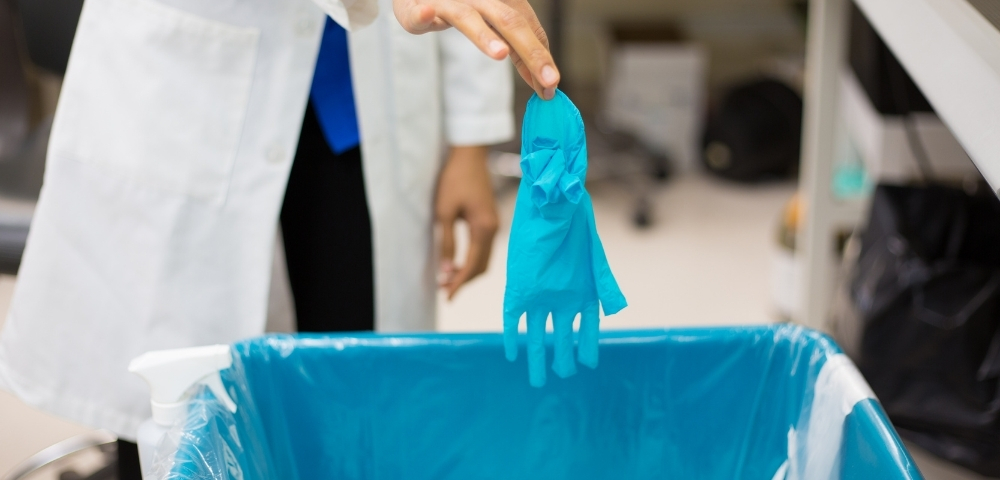
If you look into the categories of hospital garbage, you will be surprised to see how diverse it is., The other important factor is that each form requires unique processing to minimise safety risks and environmental damage. The main reason the authorities separate the waste in hospitals is that when they are categorised, it is easy for them to properly dispose, transport, and destroy them, aligning with medical standards.
Domestic-Like Commercial Waste
This shows the garbage that is ordinary, non-threatening trash that does not endanger human health or the environment by any means. The only requirement for this waste is that it needs to be disposed of in conventional residual waste containers. This type of waste does not need any special treatment other than this.
This means a variety of trash, varying from paper, packaging, or food scraps from cafeterias and hospital kitchens, plastic that is not contaminated, such as sterile medical supply wrappers and other garbage from normal maintenance, office supplies, or broken furniture, etc.
Blood, Fluids, or Excrement-Containing Waste
There is some waste in hospitals that contains biological elements such as blood, body fluids, or excrement. They can be infectious, yet have not been shown to contain highly infectious microorganisms. Such trash falls into this category.
These types of waste frequently stem from common medical operations or non-infectious patients. They must still be handled carefully to prevent infection, though.
It is recommended that hospital staff avoid direct touch when processing this kind of trash.
This is when they need to should use aprons, gloves, and masks. It is a must that they use leak-proof bins or yellow bags when disposing of this type of garbage. Hospital authorities normally sterilise or burn them to eliminate any remaining chance of contamination.
From blood-soaked gauze or bandages, suction canisters filled with body fluids, to patient-used nappies or bedpans fall into this category.
Infectious Waste
This is when the medical facilities produce garbage that comes out with a high risk of being contaminated with infectious disease-transmitting microorganisms. Although not 100% confirmed all the time, there can be a significant probability or suspense.
Whenever the hospitals dispose of them, the authorities isolate them in separate wards or laboratories, and they keep trash such as materials immediately exposed to pathogens in isolation wards or laboratories. Also, when they encounter such infected trash among patients who can be infected, they need to dispose of it according to the WHO standards and must take safety precautions.
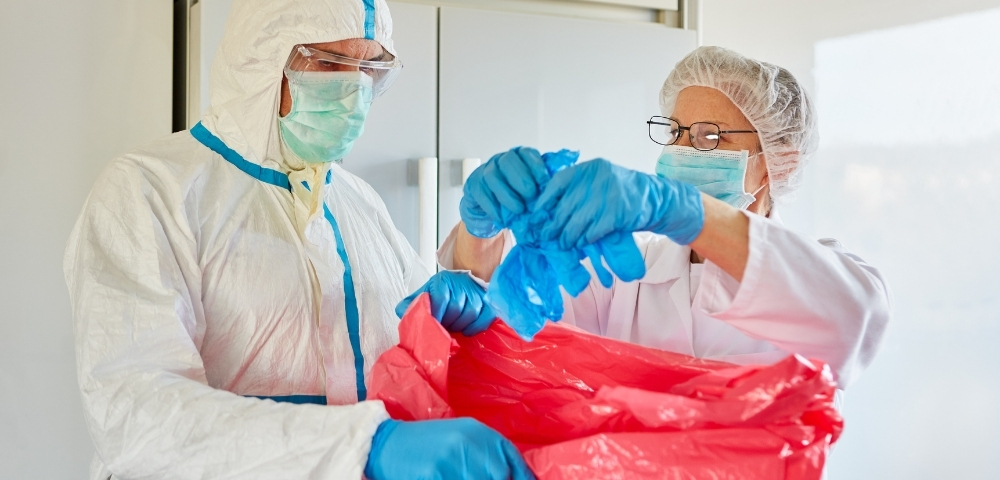
Since it is vital to eradicate any pathogenic agents, hospital workers burn them at high temperatures or autoclave them (sterilise with high-pressure steam), It is also recommended that workers use biohazard containers to seal them and ensure the containers are without punctures and leaks.
This means used scalpels, syringes, or other sharp objects tainted with infected patient blood or fluids, surgical gloves, swabs, or contaminated dressings or testing specimens or lab cultures carrying germs, etc.
Waste that Needs to be Examined
This type of waste mainly contains chemicals, harmful compounds, or other elements that harm the environment. The alarming situation is that, if not monitored well, this can endanger both humans and the environment in the long run. This is why the authorities tend to comply with the strict government regulations and ensure they store such waste, aligning with medical industry standards.
Another point is, the medical industry has implemented regulations for the medical facilities to store such garbage in spaces or rooms that are isolated from public sewer systems. Otherwise, if a leak occurred, it would be difficult to handle the consequences. Hospitals must follow accurate labelling and monitoring methodologies to prevent them from getting mixed with other waste.
This includes chemicals like formaldehyde that are used in laboratory work, cleaning, and sterilisation, cytotoxic medications used in chemotherapy and Mercury-containing products, such as malfunctioning thermometers or fluorescent lights.
Ethical Waste
This includes debris, including bodily parts and tissue remnants. It is necessary to handle this kind of garbage with dignity. This has ethical and emotional implications in addition to the practical ones.
Either specialised incineration plants or the same stringent protocols that apply to infectious garbage are used to handle this.
For example, this indicates the body parts removed by surgery, tissues or organs removed during surgery, placental waste and postpartum umbilical cords, etc.
The Importance of Proper Waste Management in Hospitals

It is nearly impossible to limit the importance of having a proper waste management mechanism in hospitals.
The major reason is it when the proper measures are taken, it is easy to stop the spread of the diseases. When the hospitals are not responsible enough to dispose of infectious trash according to the health regulations, it can spread illnesses, endangering patients, healthcare professionals, and the general public.
The other reason is that it supports protecting the environment around the medical facilities. When the disposal of waste is not up to par, there is a high chance that the air, soil and water around the facility to be toxic and infected. This will eventually impact the natural habitats and humans who live near the hospital. Even the humans live far from the facility, the germs can be transmitted through water.
The scariest, practical and visible consequence is undoubtedly the legal requirements. Every local, state and central government has implemented regulations for the medical facilities to prevent irresponsible waste disposal. If the facilities do not adhere to them, they might have to face the penalties, suspension orders and destroyed reputation in the end.
How AI Can Help with Biomedical Waste Management
Separation of Waste into Categories Accurately
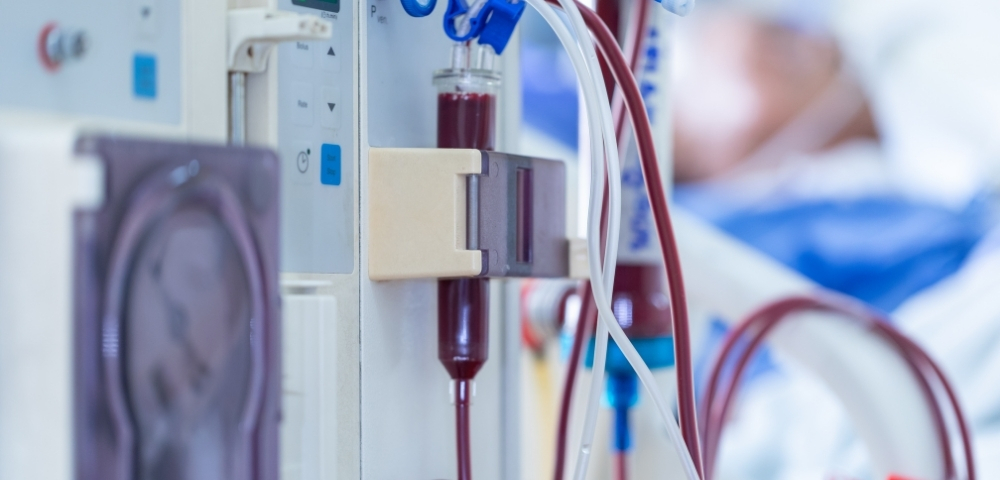
AI has been developed with the ability to go through a large set of data in order to understand its patterns. This capacity is what streamlines the segregation process. It separates and sorts the waste according to the pre-defined guideline with 100% accuracy, which will end up in reducing the potential human errors. On the other hand, it will save time on waste management.
There are smart bins that can smartly identify the difference between clinical, pharmaceutical, and general waste and sort them accordingly. The best thing is that they can adjust their storage capacities according to the amount of waste they keep storing.
AI-Driven Analytics
Since these AI tools come with analytical capabilities, they help the hospital authorities to enhance their resource allocation. For example, they indicate where the maximum number of labourers is needed right at a certain time. Also, it shows the potential waste storage challenges with immediate alerts.
AI-Powered Financial Modelling
When you look into the deeper mechanism of AI waste management tools, you may feel like it goes beyond your budget with its smart sensors and smart bin functionalities. However, if you compare the initial implementation costs with your daily labour fees, you will realise the cost benefits you receive. Since the AI tools automate waste sorting procedures, the hospitals do not have to keep cross-checking the accuracy again and again.
How the Best Software Solution Can Help with Responsible Biomedical Waste Management
Tigernix has developed a robust Waste Management System that can be customised for any industry, including manufacturing, retail, hotel, healthcare, etc. Since our software is powered by Industry 4.0 capabilities such as AI, Digital Twin, IoT, Sensor networks and all, the medical facilities can receive real-time updates on their waste management framework. Since Tigernix has a decade of experience in the software landscape, you no longer have to worry about the reliability of the software solution you purchase.